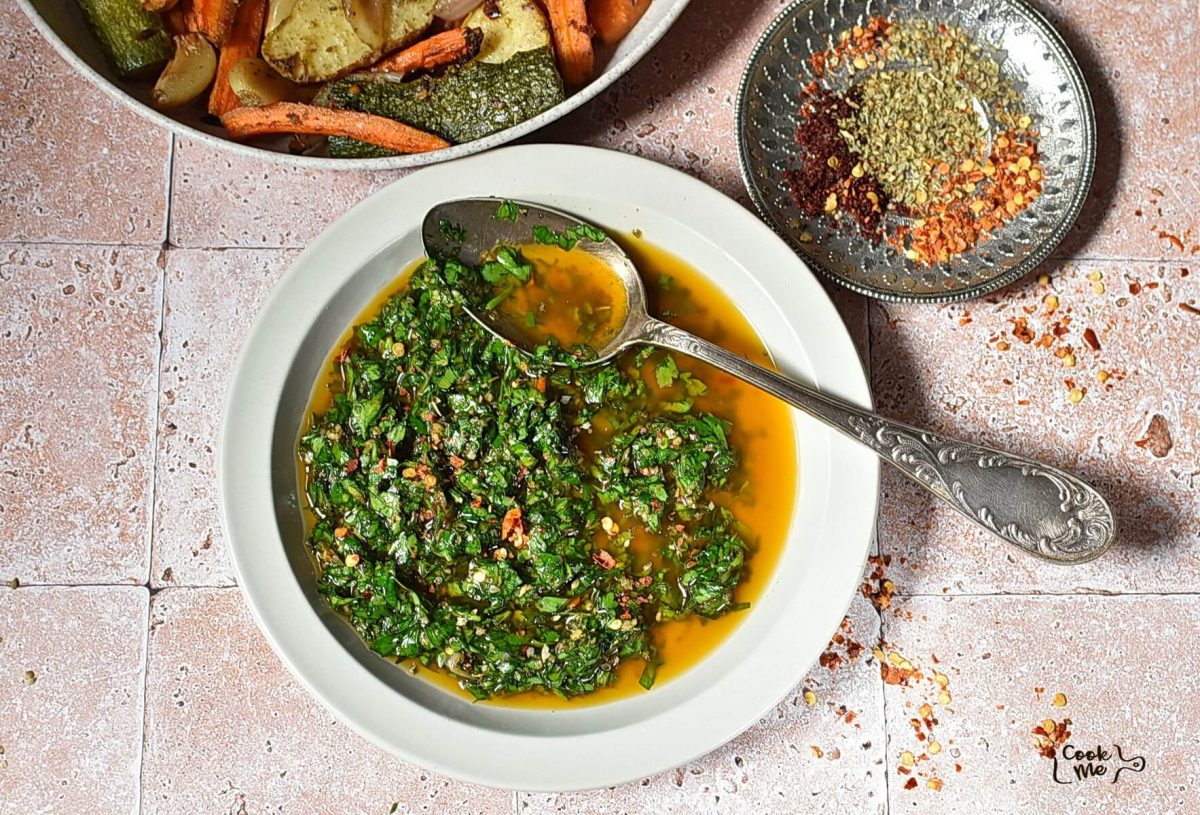
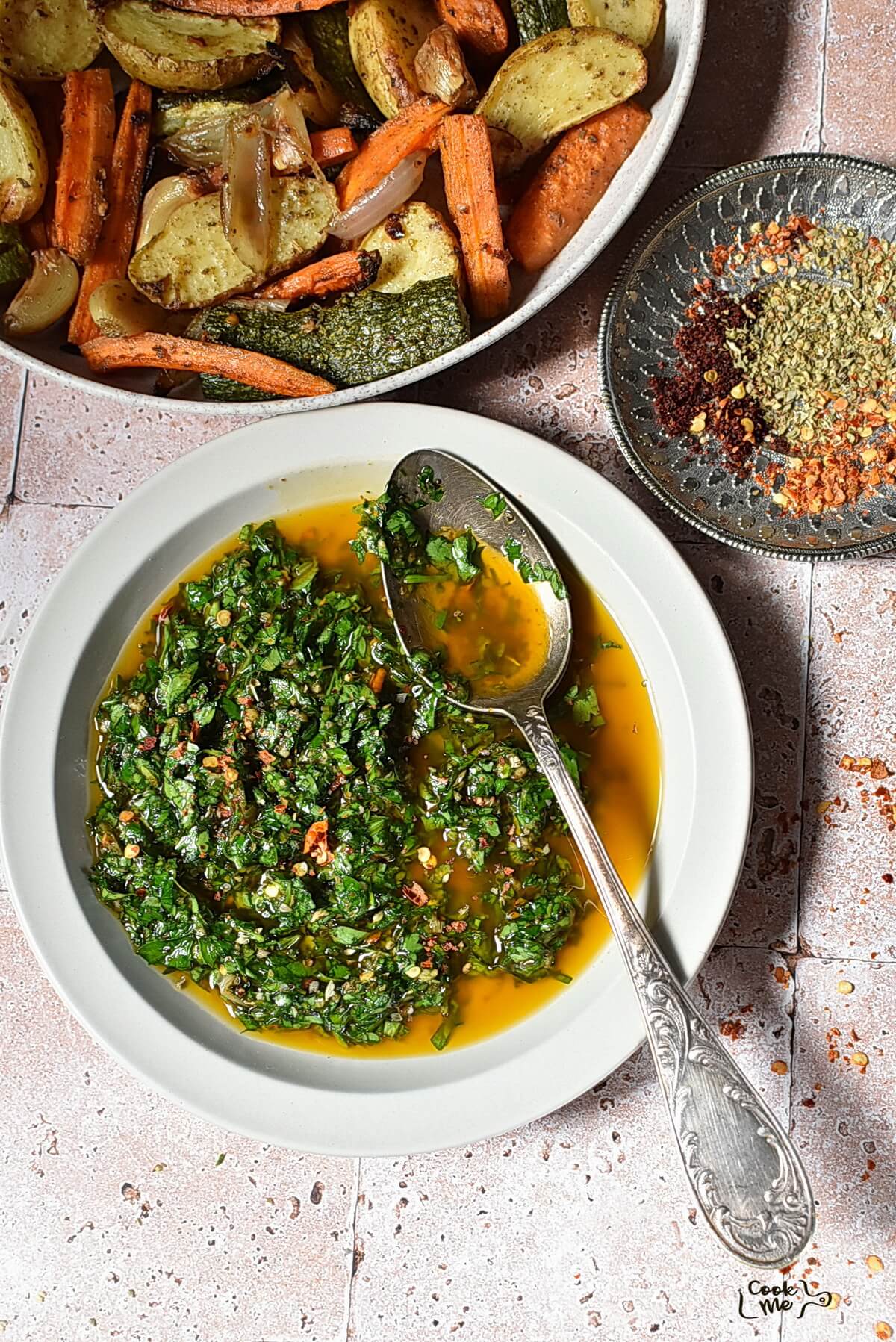
Friends, this one is rooted in fog and green things. I first started throwing this together on a sticky Port Townsend morning, fingers stained with parsley from my mom Meilin’s garden. Her rule was simple: smell before you slice. For this sauce, that ritual is everything. I still lean in to inhale a bunch of parsley and if it smells sharp and alive, I know I am on the right track.
What keeps me coming back is how forgiving it is. You can be exact if you want, but you do not have to be. Salt a little more, add a clove of garlic or two, taste as you go. And yes, if you are wondering how to make chimichurri sauce from scratch, this is the version I teach in classes: plain tools, honest herbs, and a rhythm that feels like sketching lines on paper. It makes ordinary roasted veg feel like something that was planned with care.
I like the balance here: the vinegar gives a clean note that cuts through the olive oil with the kind of precision my dad once used on a set of draft plans. The smoked paprika is not showy, it is the memory of an Austin grill, giving a low ember warmth while oregano and red pepper flakes keep the sauce lively. No cooking, just bright, direct flavor that reads as fresh herb sauce more than a heavy condiment.
Honestly, bottled stuff works in a pinch. Actually, scratch that. Bottled can be fine if the grocery shelf is all you have. But if you have two minutes and a bowl, this hits differently. It feels like home, like my mum dropping a dash of sesame oil into something by instinct. Give it a go. You will probably stop buying the jars, for good reasons that are mostly about smell and memory.
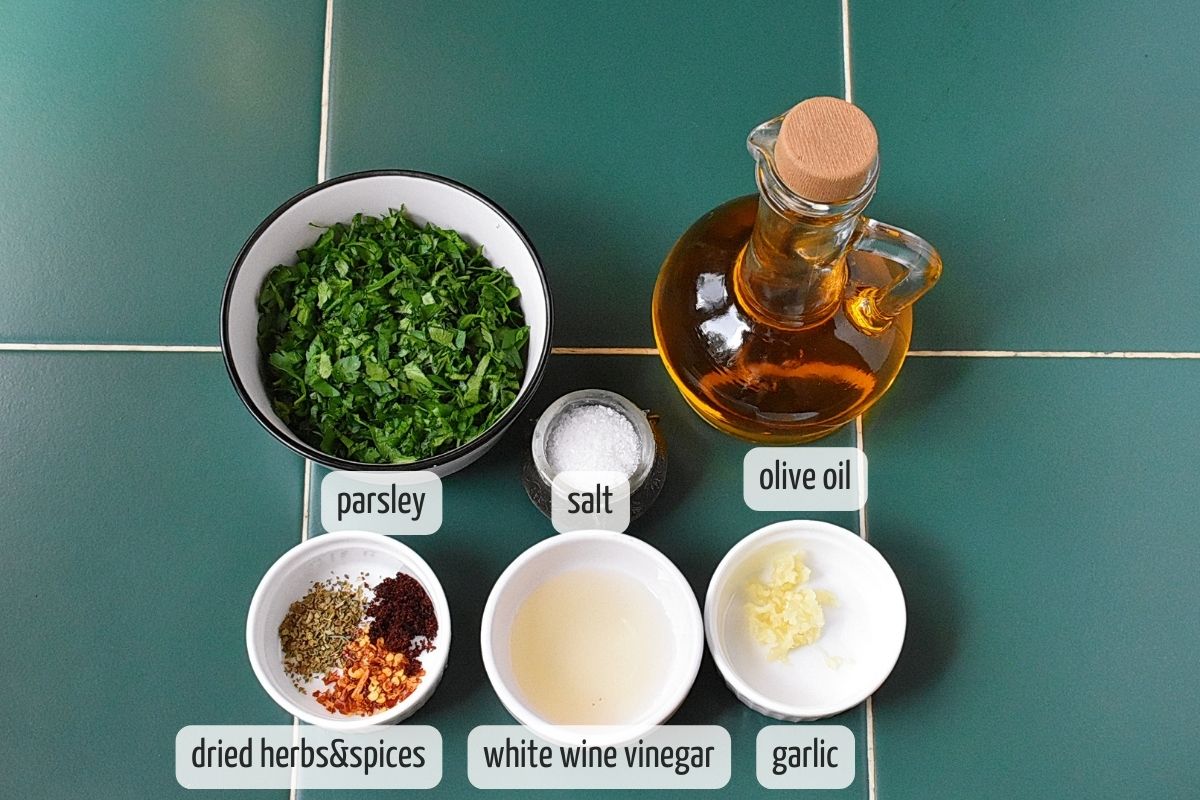
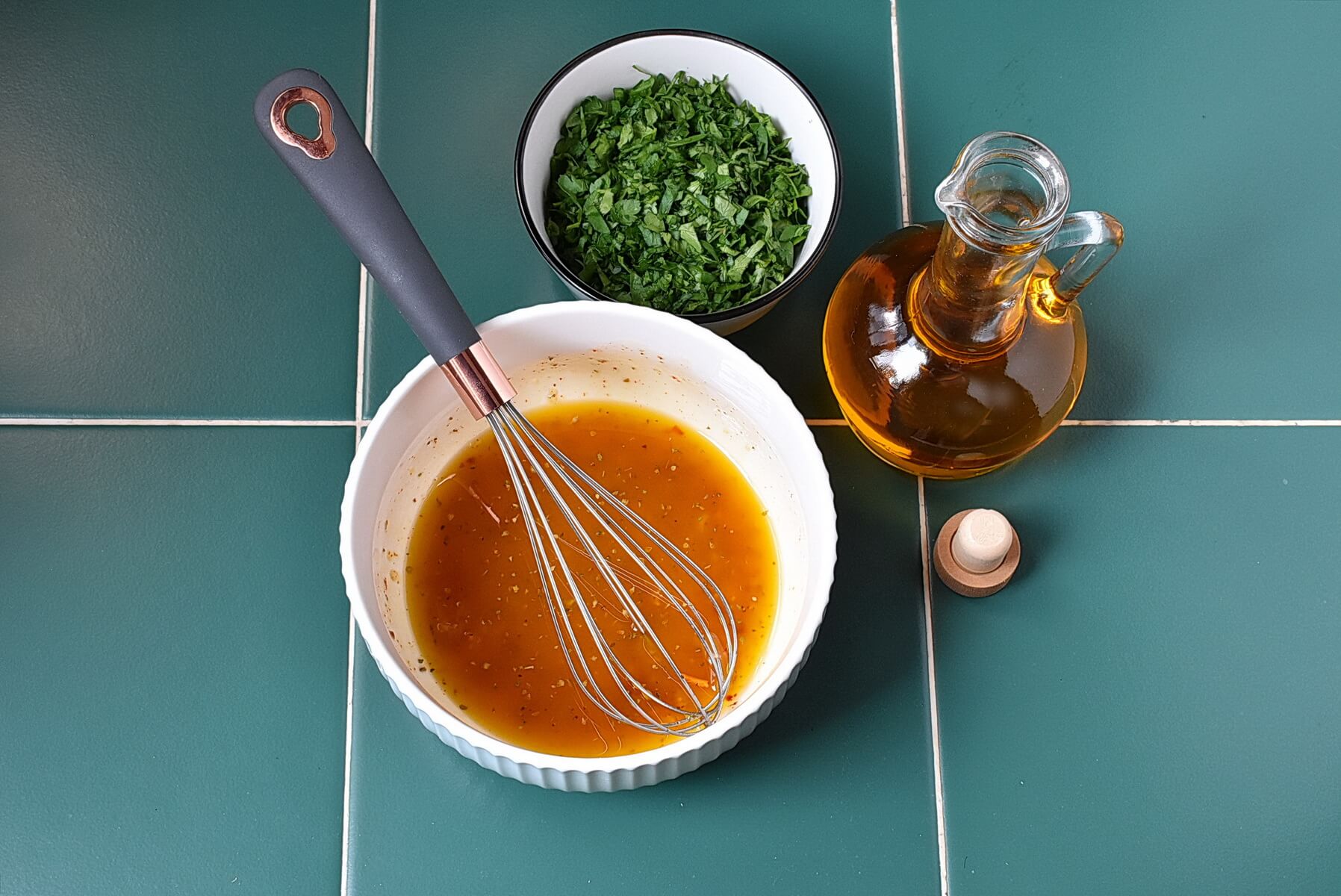
In a mixing bowl, whisk together ⅓ cup extra-virgin olive oil, 2 tablespoons white wine vinegar, 1 minced garlic clove, ½ teaspoon sea salt, ¼ teaspoon dried oregano, ¼ teaspoon red pepper flakes, and ¼ teaspoon smoked paprika.
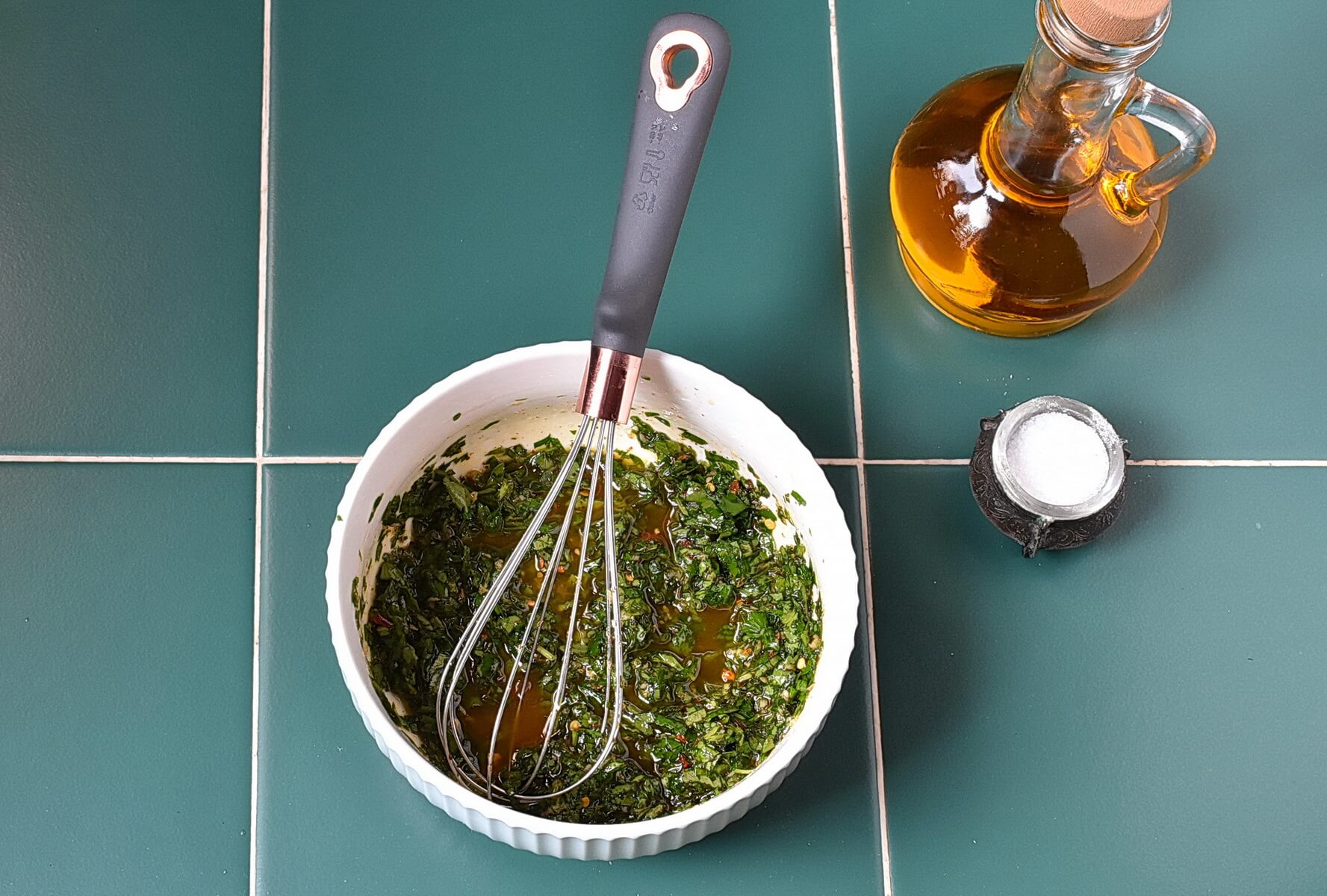
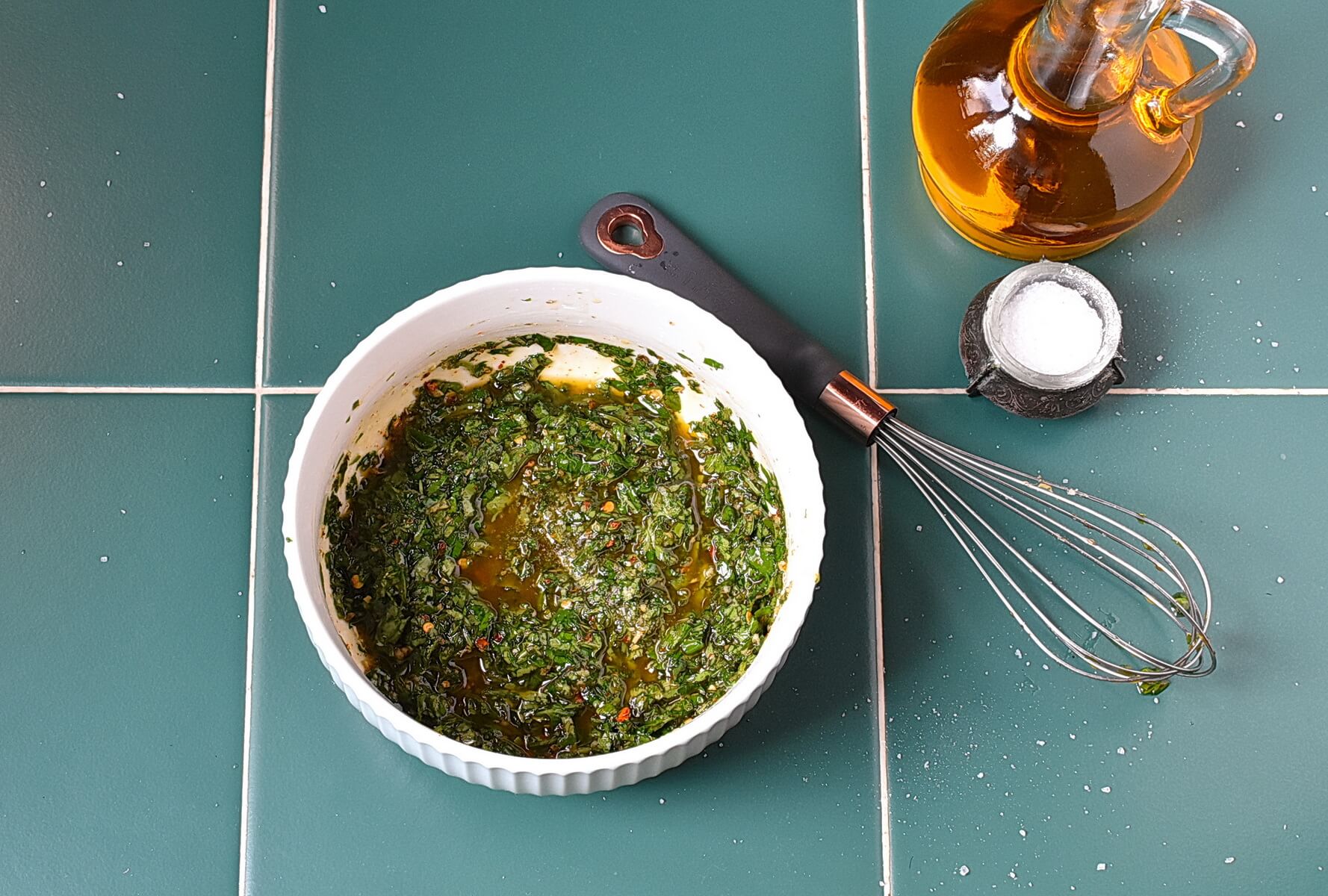
Stir in ½ cup finely chopped fresh flat-leaf parsley. Taste and adjust for seasoning if needed.
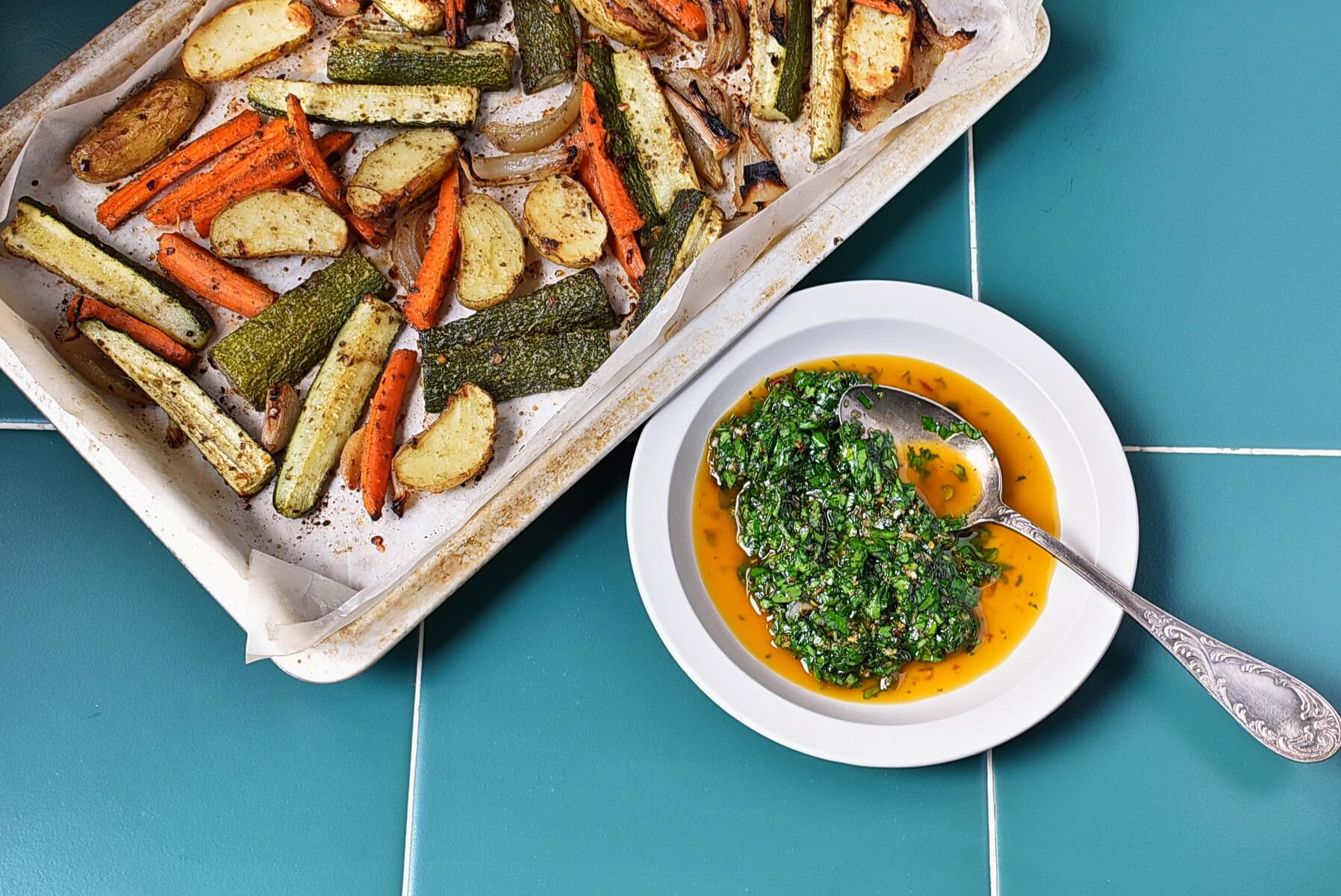
Serve as a sauce over grilled or roasted vegetables.
You do not need much. A medium mixing bowl, a whisk or a sturdy fork, and a sharp knife are the essentials. I use a battered ceramic bowl I picked up in Melbourne. It sits right in my hands when I whisk. A cutting board and a sharp chef knife make the chopping quick and keep the herbs from bruising.
For measuring, a cup for the oil and a spoon for the vinegar helps, though after a few batches you will start to trust your eye. A small spoon for tasting is underrated. If you want to store leftovers, grab a glass jar. Glass keeps flavors honest. A garlic press speeds things up, but I prefer mincing by hand to feel the texture. A timer is optional if you like to rest the sauce for five minutes so the garlic and vinegar mingle.
Smell the parsley first. This sounds silly, but it works. If the herbs are bright when you crush a leaf between your fingers, the whole sauce will sing. Chop the parsley finely right before you mix so the color stays vivid. Let the minced garlic sit in the oil and vinegar for a few minutes before adding the parsley. It wakes up the garlic and makes the kick sit more comfortably in the sauce.
Use two tablespoons of white wine vinegar. That amount balances the 1/3 cup of extra virgin olive oil so the mixture is lively but not puckering. Think of acidity as the small precise stroke that defines the shape of the whole thing. If the red pepper flakes seem sleepy, toast them for a few seconds in a dry pan to revive their heat. And do not skip the smoked paprika. A quarter teaspoon brings a faint ember note like an Austin evening without overwhelming the herbs.
This is also an easy chimichurri recipe to tweak. If you want a softer version for kids, halve the flakes and paprika and add a touch more oil. If you want it bolder, increase the flakes to taste. Versions from the store pale in comparison when you make it fresh because the herb flavor sits on top instead of getting lost in the oil.
Zesty cilantro twist: Swap half the parsley for cilantro and add a bit of lime zest. This turns the sauce into a fresh herb sauce that takes me right back to Bangkok markets. Cilantro brings a citrusy edge that is lovely with grilled fish or tofu. If you worry about cilantro tasting odd to some folks, make a small test batch first.
Smoky heat wave: For more fire, up the red pepper flakes and smoked paprika. This leans into argentinian chimichurri roots while still fitting my meatless kitchen. Add a pinch of cumin if you like extra earthiness. It clings nicely to portobello or seitan and makes simple proteins feel like a real event.
Nutty fusion: Stir in a tablespoon of toasted sesame seeds or chopped walnuts after you mix. Toasting the seeds first releases oils that add a toasty pop and some texture. I learned to love this from my mom who would put sesame oil in surprising places. It makes the sauce feel heartier for grain bowls and salads.
This sauce shines drizzled over grilled vegetables such as zucchini and eggplant. Spoon it on roasted potatoes for a quick weeknight dinner. It is also a wonderful sauce for steak or for proteins made from plants like tempeh and seitan. Try it with steamed rice or quinoa for bowls, or spread it on warm flatbread for casual dipping.
For garnishes, extra chopped parsley keeps things bright and lemon wedges add a clean squeeze that plays with the vinegar. Pairing wise, a crisp white wine such as Sauvignon Blanc complements the herbs, and jasmine green tea works well when you want something non alcoholic. In summer, use it over corn and beans; in winter, spoon it over roasted roots or a stew to lift the dish.
How do I make this if I have no special tools? You can make it with a bowl and a fork. Whisk the oil and vinegar, add minced garlic, then fold in chopped parsley. The texture will be chunky and honest. It is the classic way to make chimichurri sauce from scratch without a blender.
what is chimichurri made of At its heart, chimichurri is parsley, garlic, olive oil, vinegar, oregano, red pepper flakes, sea salt, and a touch of smoked paprika. Each ingredient plays a clear role: parsley gives green freshness, garlic adds bite, oil brings silk, and vinegar brings lift.
Can I use this as a sauce for steak? Yes. Spoon it over rested grilled steak or over plant based proteins for contrast. The acid lifts rich foods and the herbs cut through fat, making each bite feel brighter.
Is there a quick version? Yes. Chop the herbs ahead and keep them chilled. When you are ready, mix with oil and vinegar and season. That shortcut makes this an easy chimichurri recipe for busy nights.
How do I make it milder? Reduce red pepper flakes and smoked paprika by half and add a bit more oil. It becomes a gentler parsley garlic sauce that kids usually like.
Chimichurri Sauce is a vibrant and flavorful condiment that hails from South America, making it perfect for adding a fresh twist to grilled meats and vegetables. With a blend of fresh herbs, garlic, and a hint of spice, it’s incredibly versatile and easy to make at home. Whether you’re slathering it on steak or using it as a dipping sauce, this chimichurri is sure to elevate your meal. Did you make this recipe? We'd love to see! Tag us on social with @cookmerecipes and use the hashtag #cookmerecipes.

Great! It's so easy to make!