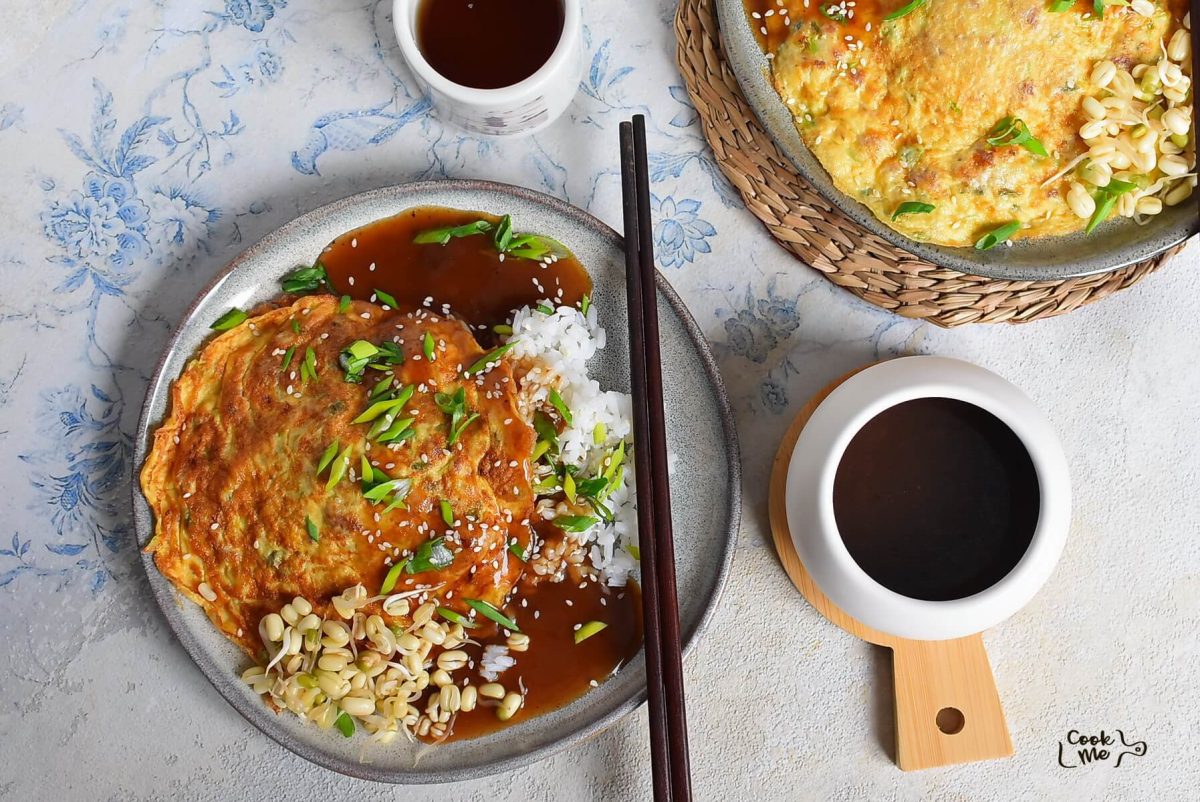
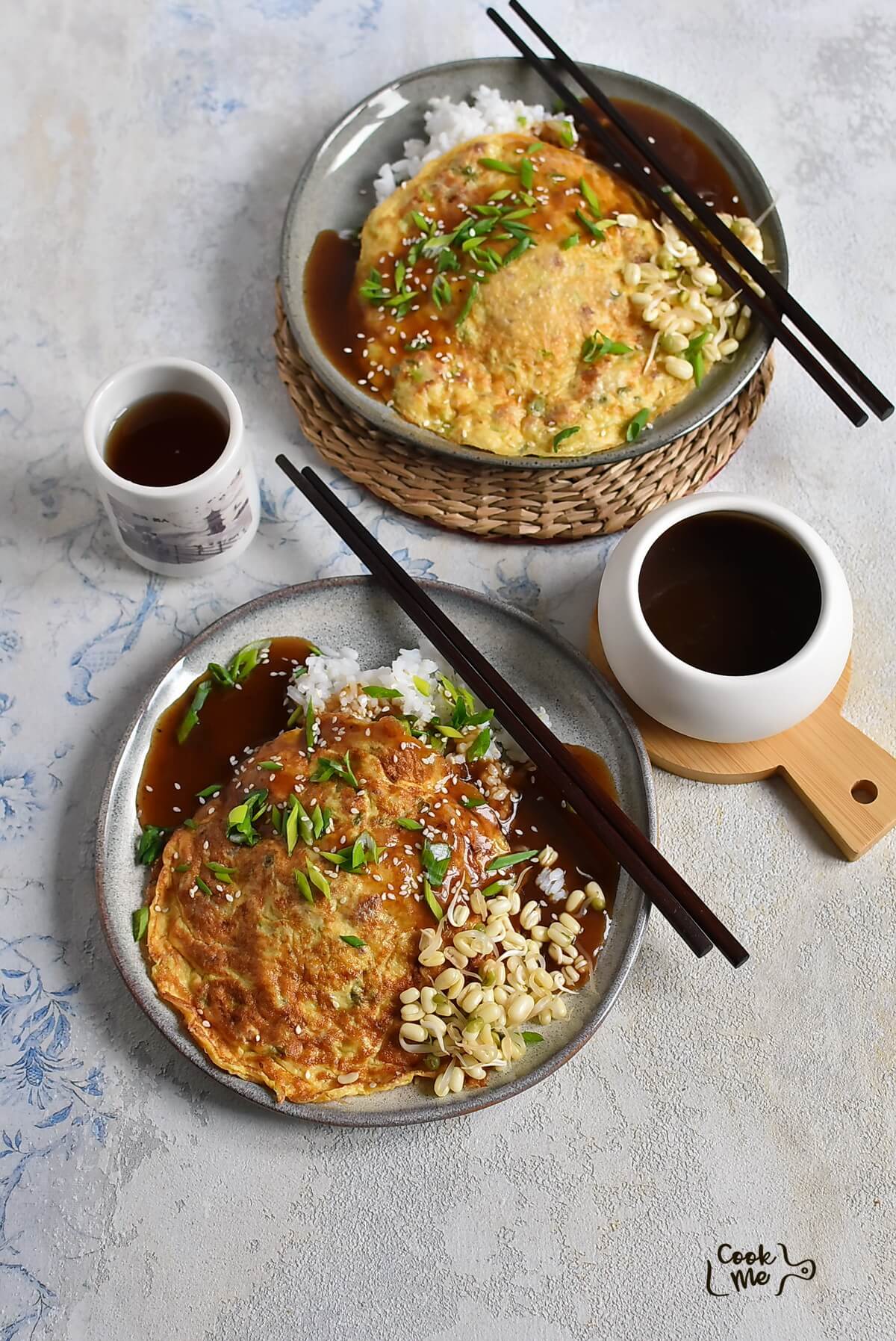
I remember the first time I had egg foo young during my college days in Seattle, in a tiny, bustling spot near Pike Place Market that smelled of rain and frying garlic. It landed on my table like a surprise painting: Golden edges crisped like old paper, the inside soft and peppered with tender vegetables and little pockets of pork. This egg foo young recipe kept pulling me back because it hits a rare balance of textures and memory. It is comforting and light at the same time, like a cozy blanket on a foggy Port Townsend morning.
My mom, Meilin, ran the kitchen like a quiet commander, and her sayings stick with me. She used to tell me, “First you smell, then you slice.” I still inhale before I chop ginger. That small ritual changes the way food arrives on the tongue. The sauce here is a watercolor of flavor with soy and oyster notes that settle into the egg without taking over. I blend my mom’s Taiwanese command of bold seasoning with lessons from Tokyo on restraint and Bangkok on heat and speed. The result feels familiar and a bit adventurous, which is exactly what I want on a busy weeknight.
I like how forgiving egg foo young is. You can make it on a whim with what you have in the fridge and still come away with something nourishing. It works when you want meat, and it works when you do not. Once you make it a few times, you will start to improvise. I do. I call it kitchen practice, and sometimes I sketch while I wait for the omelets to set. Small joys.
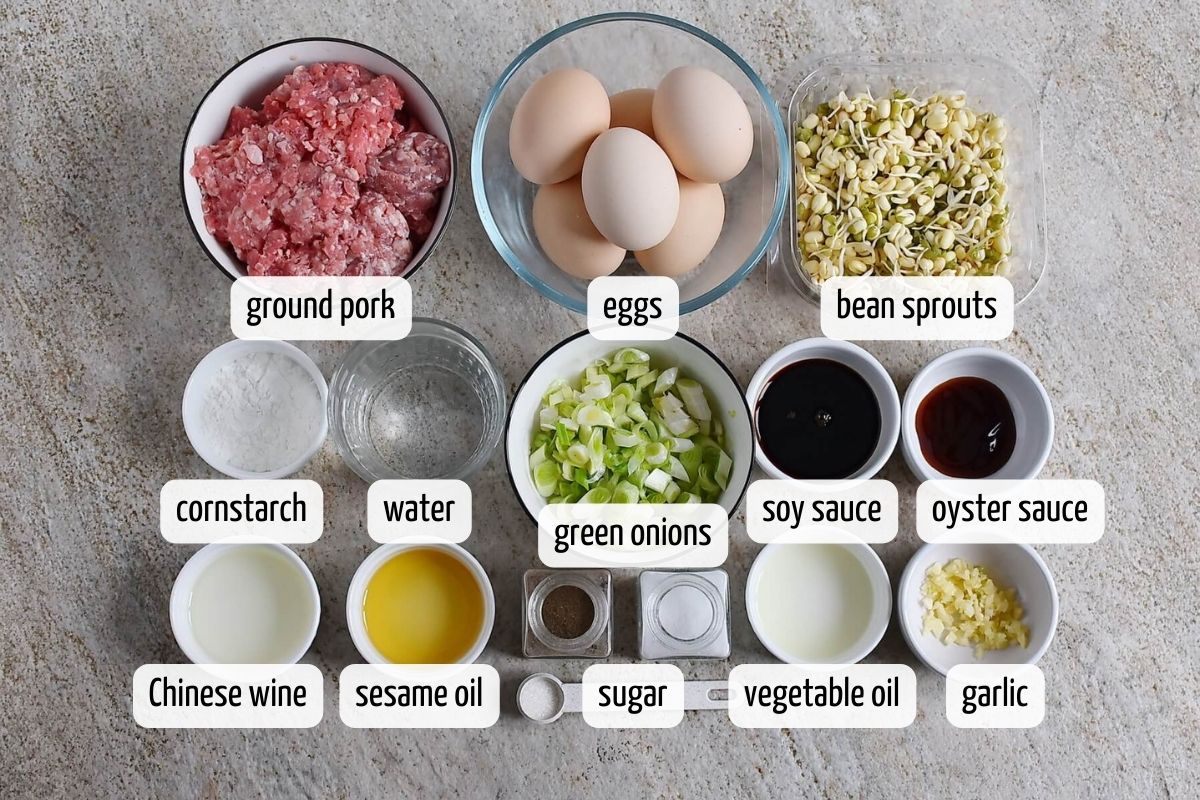
To make the Egg Foo Young, you will need the following ingredients:
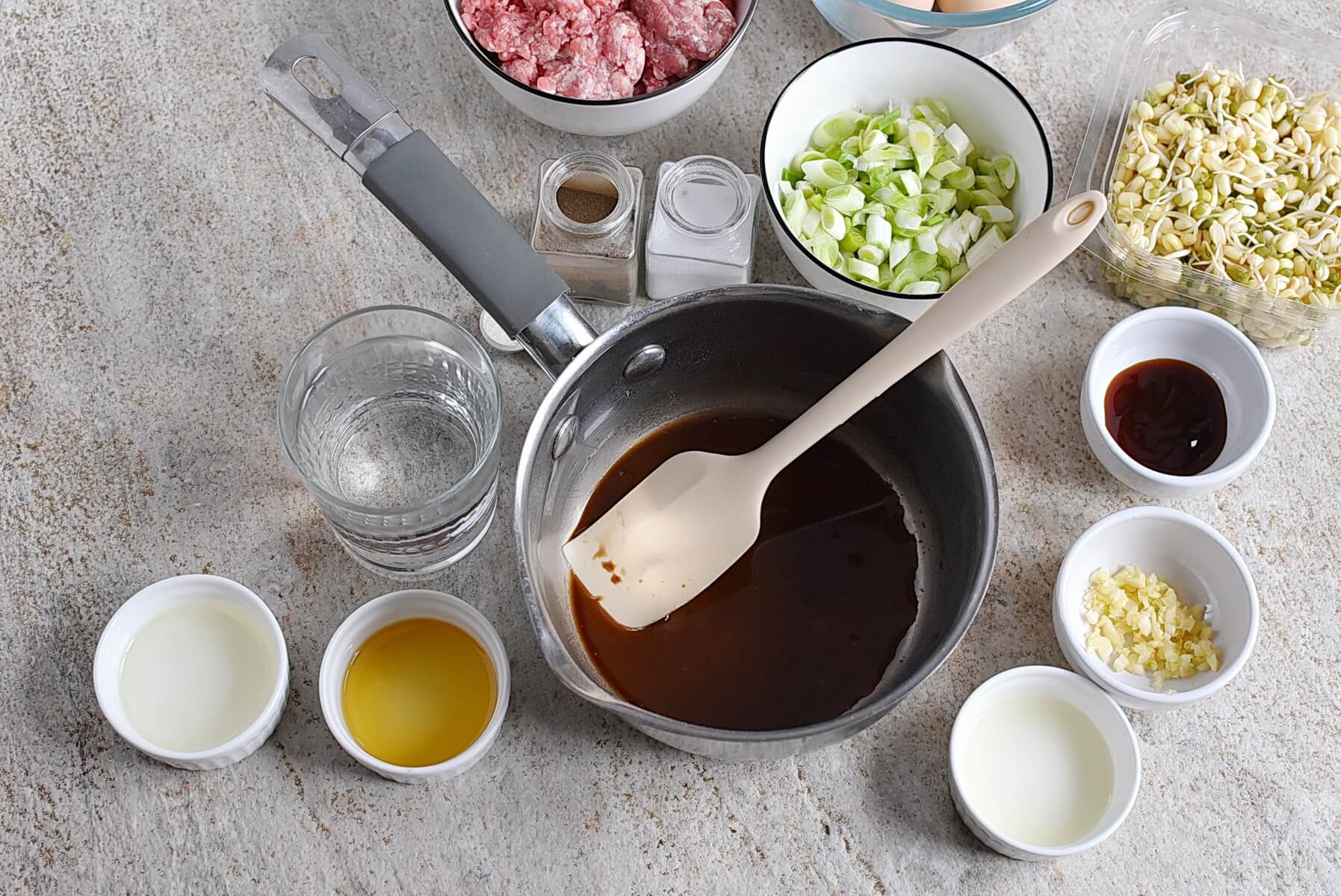
In a bowl, combine 4 teaspoons cornstarch and 1 ½ tablespoons light soy sauce. Mix until smooth.
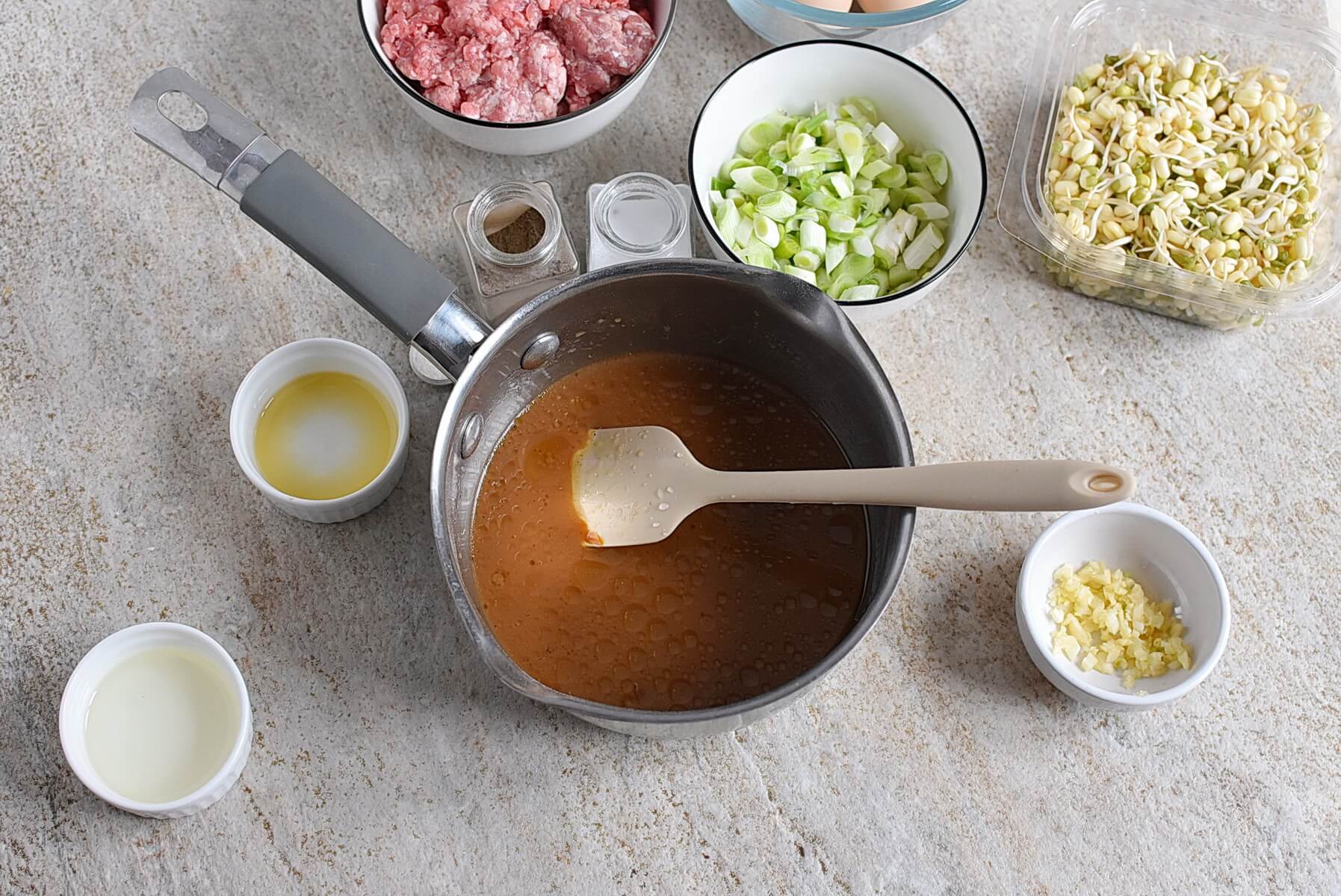
Add 2 teaspoons oyster sauce, 1 tablespoon Chinese cooking wine, ½ teaspoon sesame oil, 1 cup water, and ⅛ teaspoon white pepper. Stir well until combined.
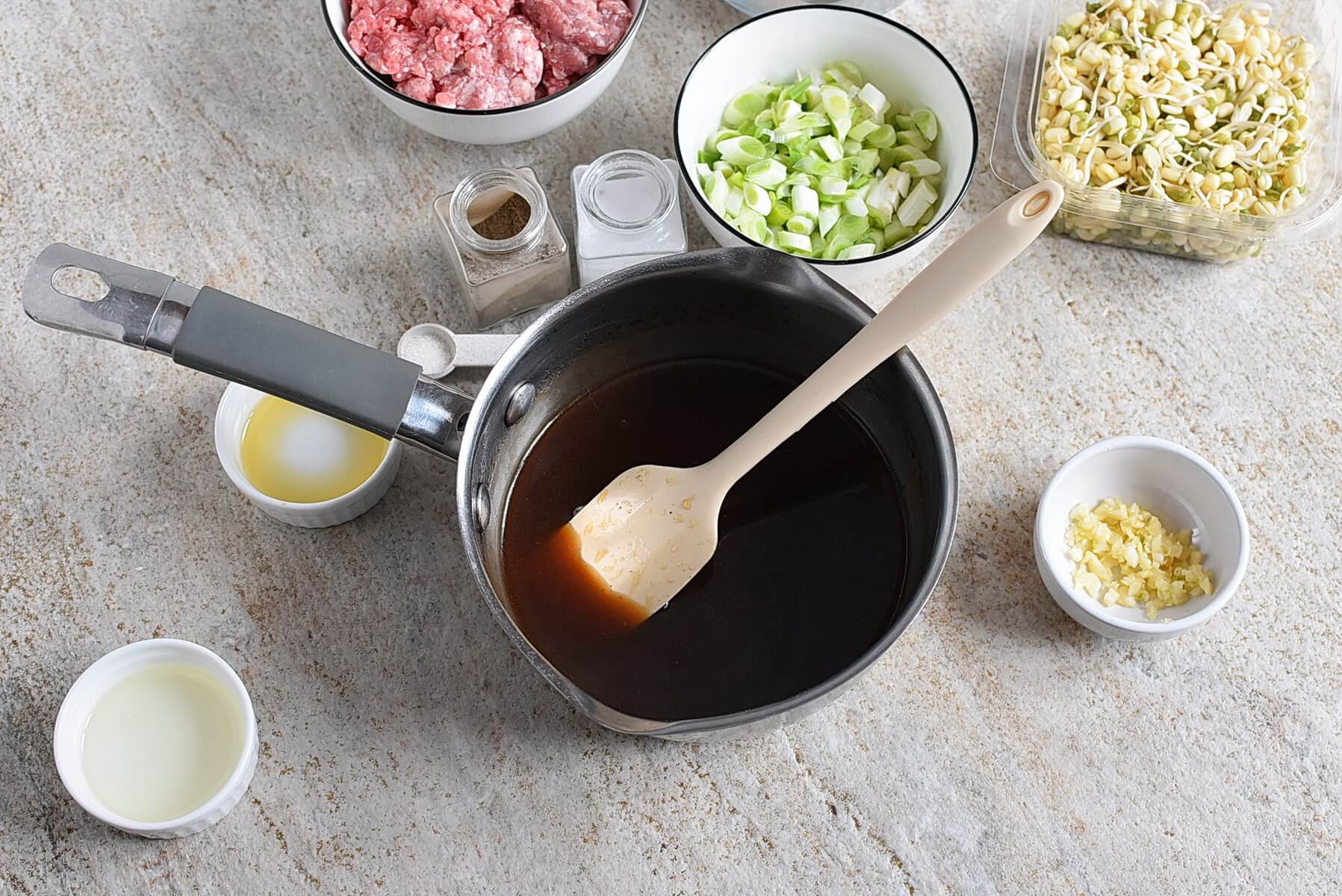
Pour the mixture into a saucepan and bring to a simmer over medium heat. Stir constantly. Cook for about 1 minute, or until the sauce thickens to a thin syrup consistency. Set aside.
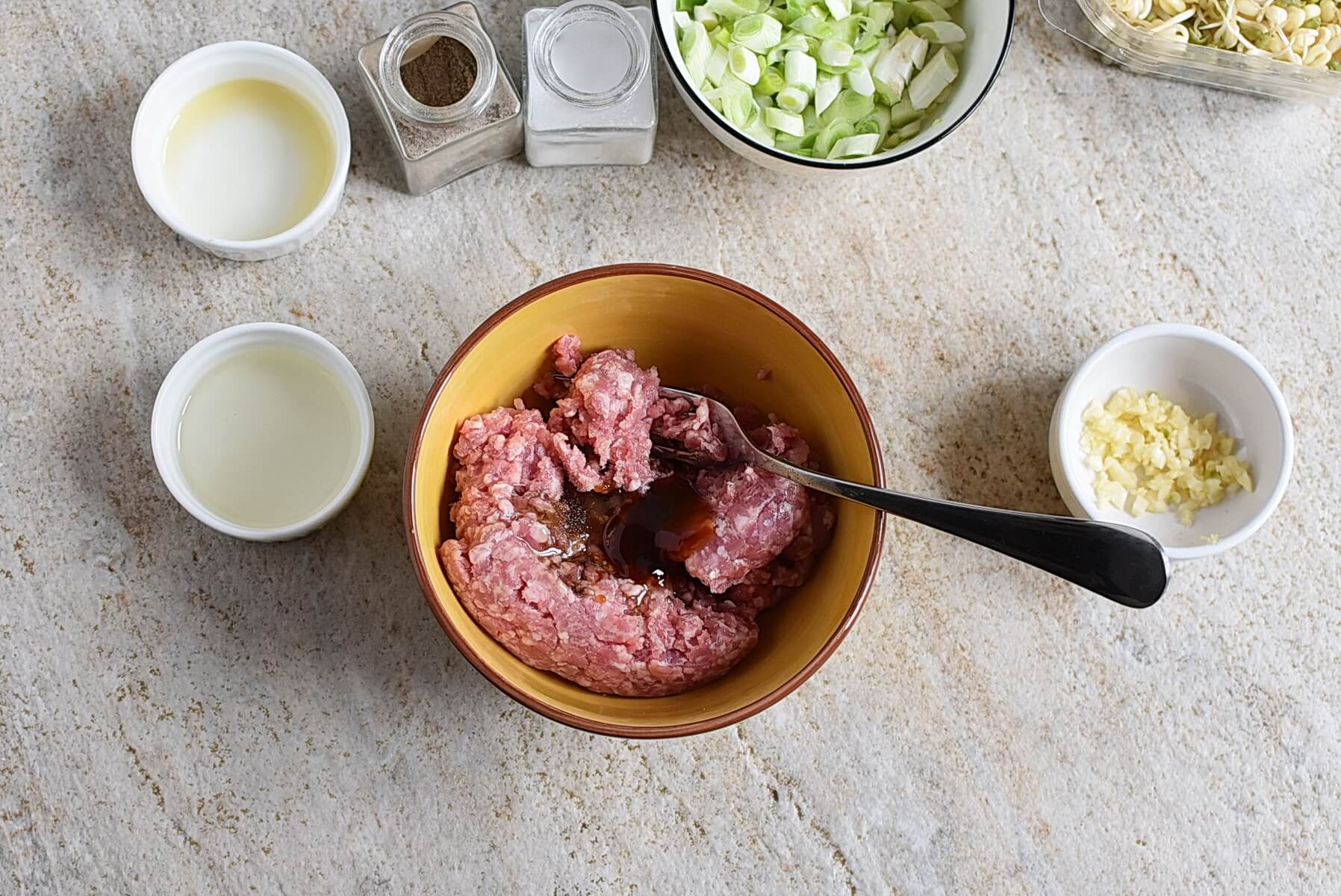
In a medium bowl, add 3.5-4 ounces ground pork, ½ teaspoon soy sauce, ½ teaspoon oyster sauce, ¼ teaspoon sugar, and ⅛ teaspoon sesame oil and mix thoroughly with a fork. Set aside.
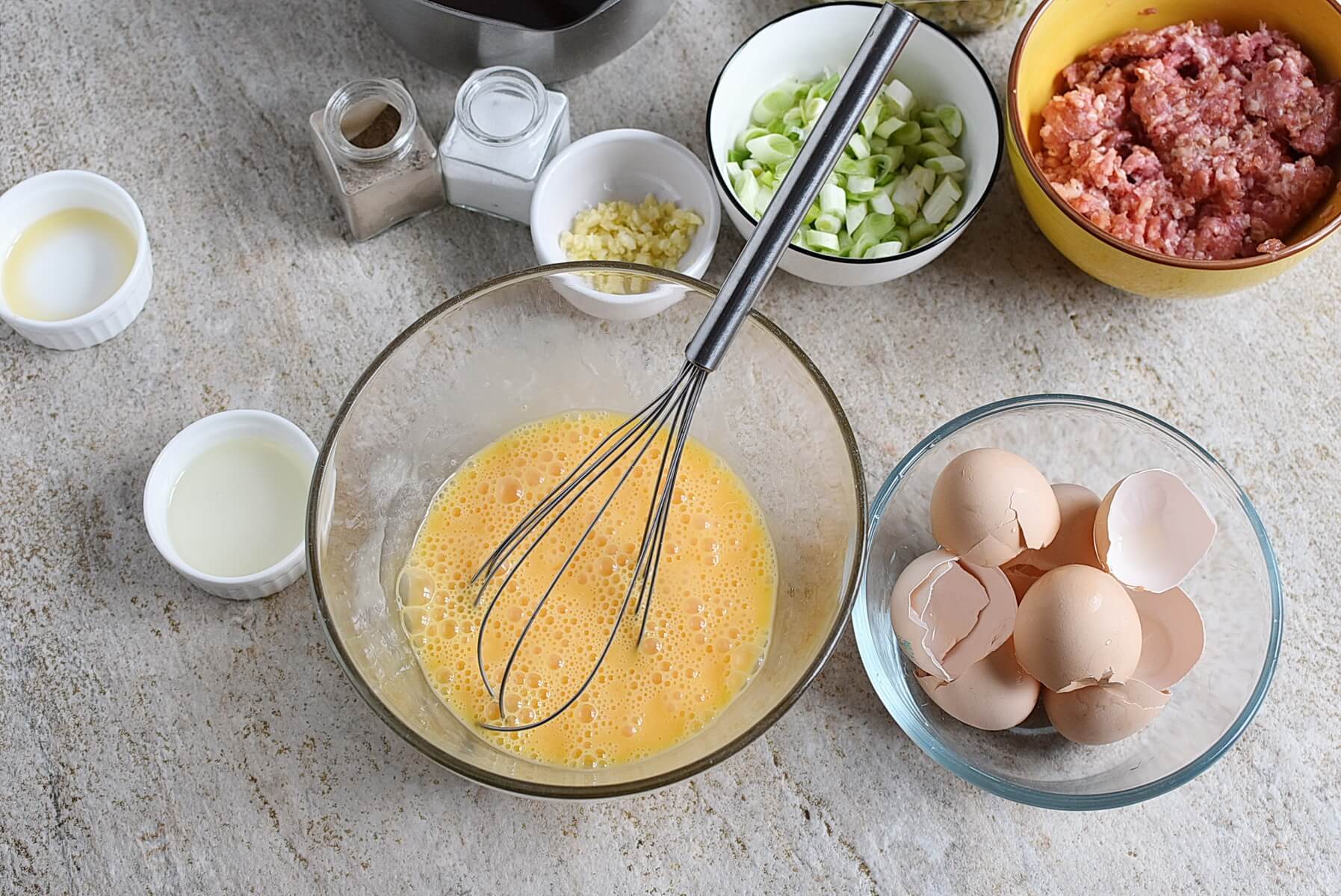
In a large bowl, whisk together 6 large eggs until well beaten.
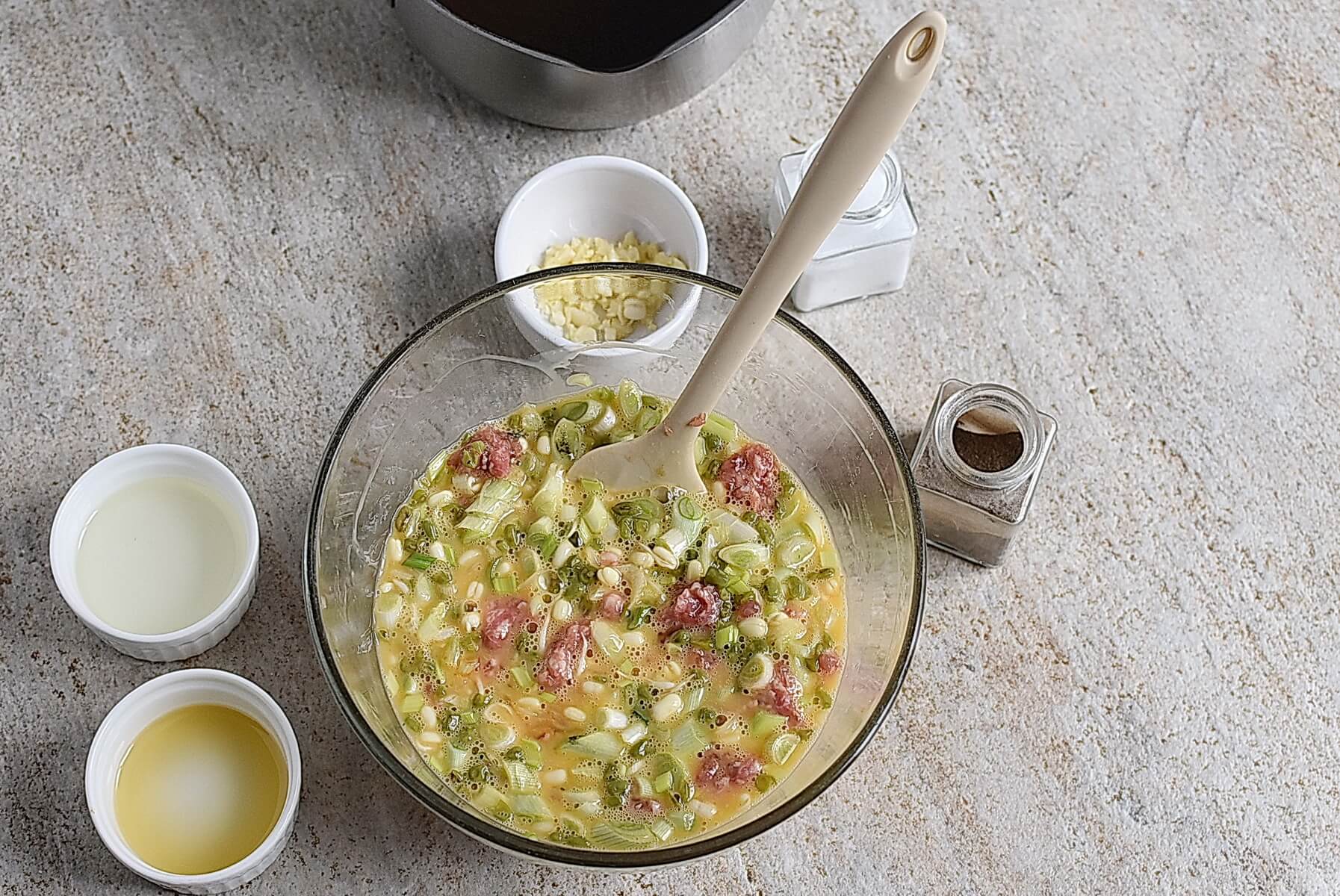
Add in 2 cups bean sprouts, sliced shallots or green onions, and season with salt and white pepper to taste. Using your fingers, crumble in the prepared pork filling. Mix everything together until combined.
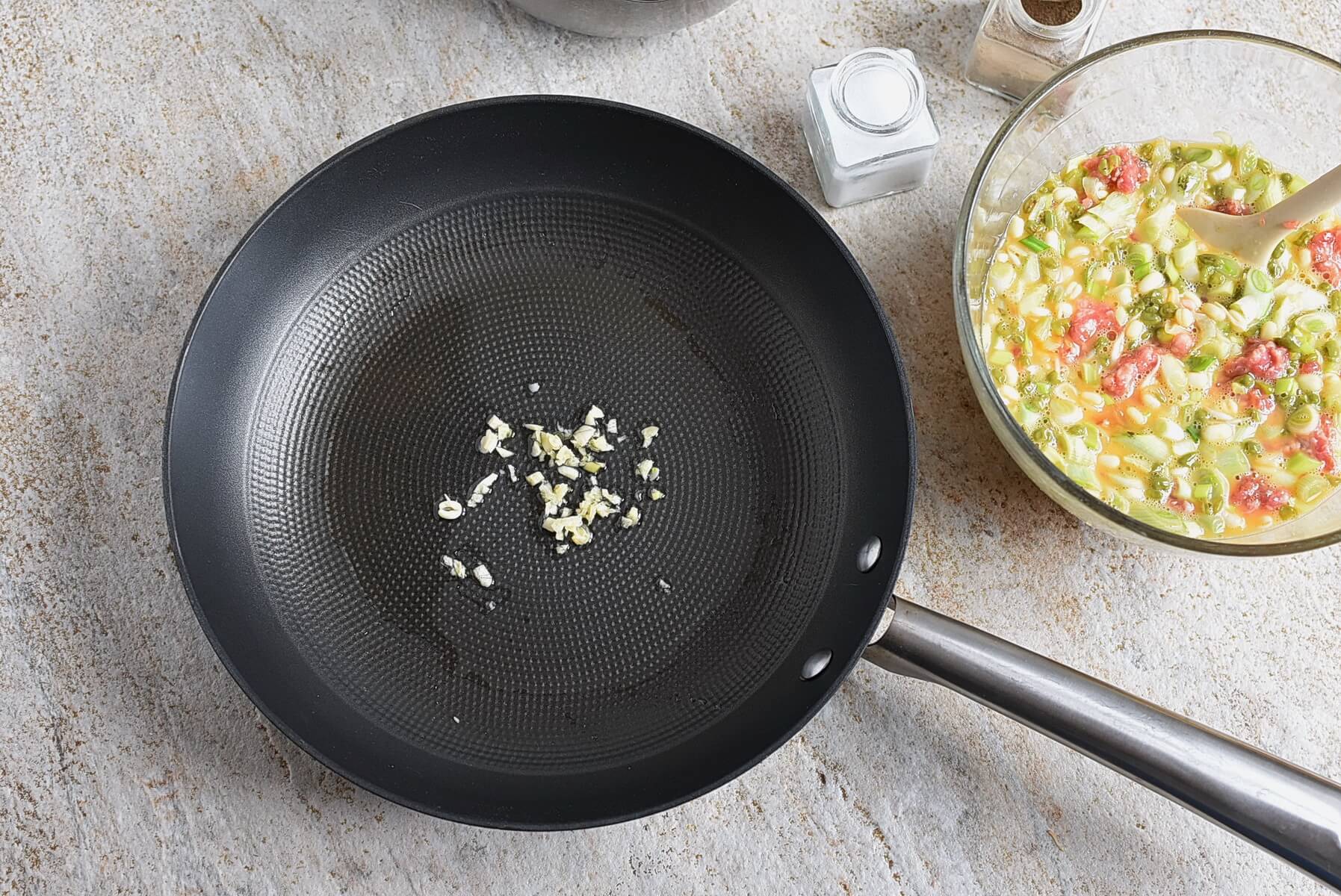
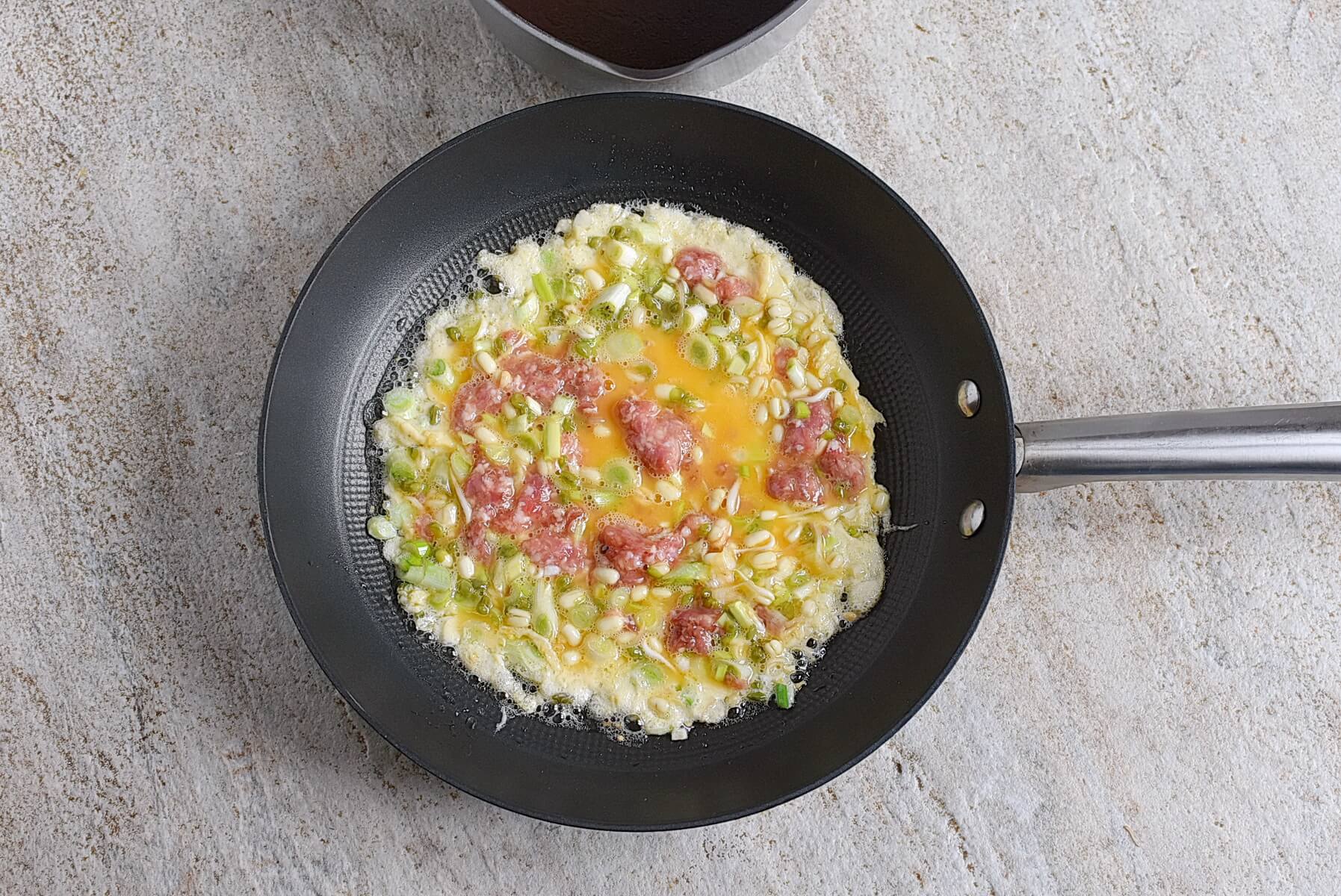
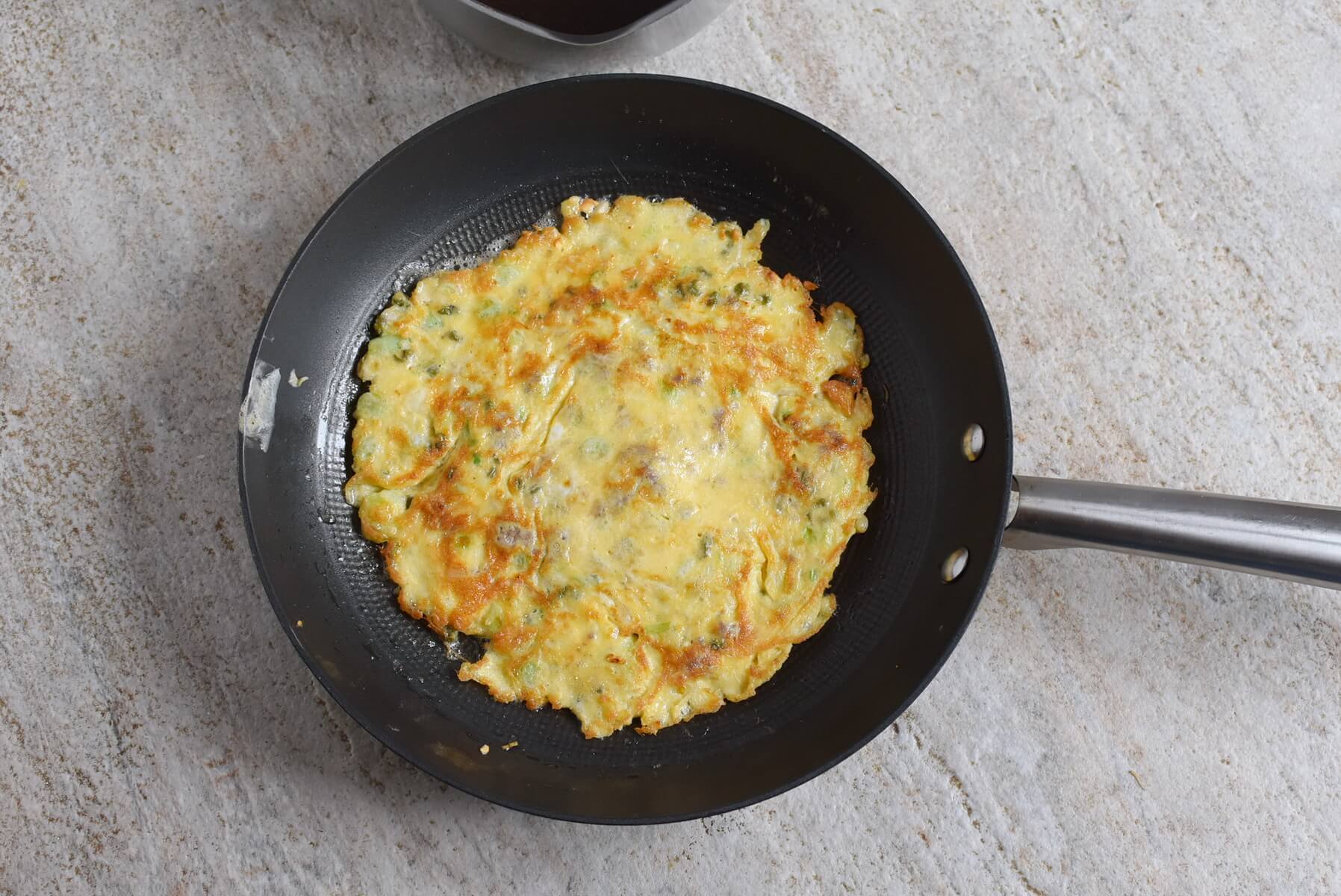
In a nonstick skillet over medium heat, heat ½ tablespoon vegetable oil and 1 teaspoon sesame oil. Add 1 finely chopped garlic clove and sauté for about 10 seconds, then push it into the center of the skillet. Ladle in ¼ of the egg mixture. Use a spatula to gently push the edges in and form a round shape. Cook until the underside is light golden, about 1 ½ minutes, then flip and cook the other side for another minute until the pork is cooked through. Repeat with the remaining mixture to make 4 omelets, adding more oil as needed.
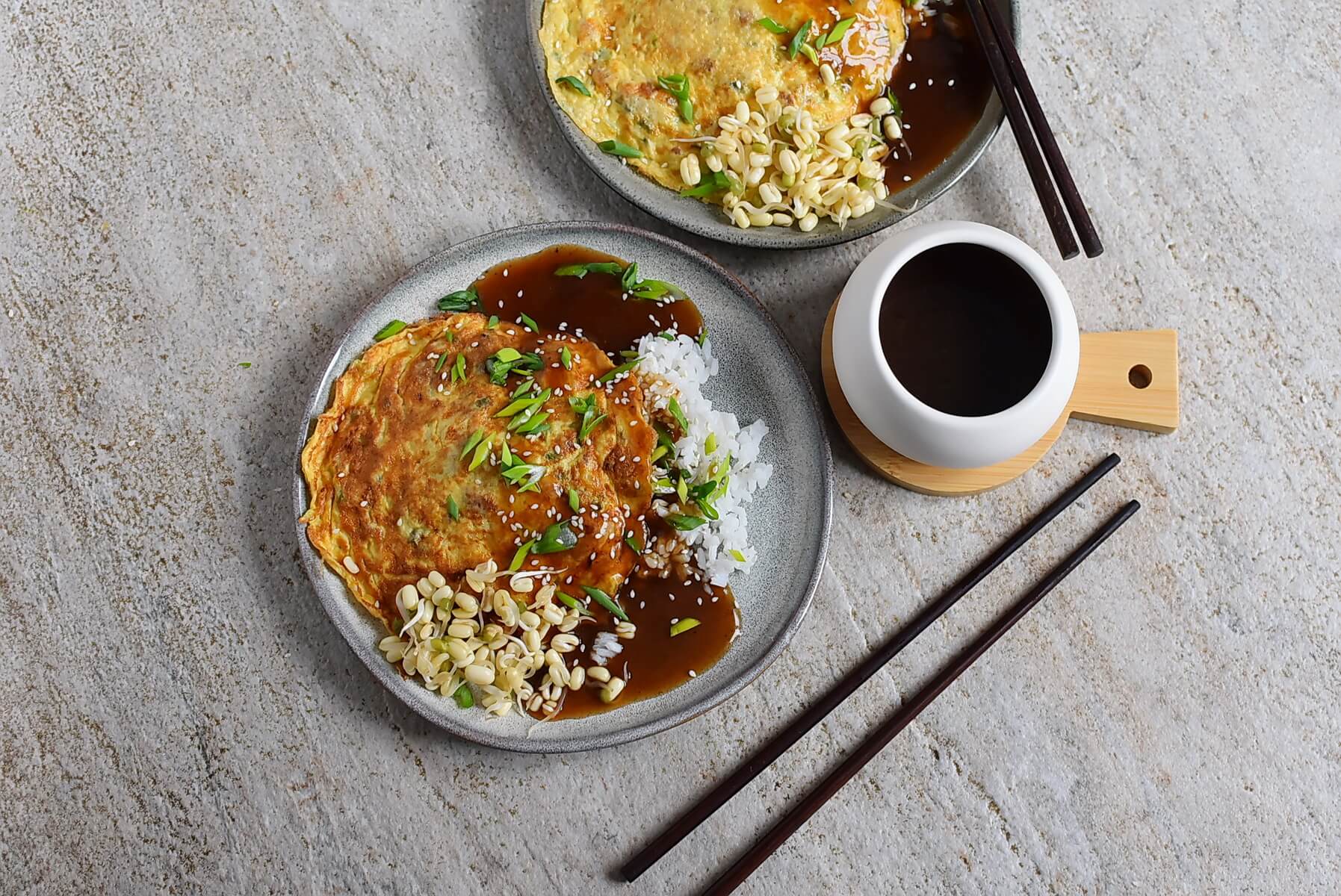
Slide each omelet onto a plate and drizzle the prepared sauce over the top. Garnish with sesame seeds and sliced green onions, if desired.
Start with a medium bowl for the sauce so you can whisk the cornstarch and soy without lumps. A heavy-bottomed saucepan helps the mixture simmer to a thin syrup without scorching. For the filling, a medium bowl and a fork make the pork come together evenly. A large bowl is great for whisking the eggs into a frothy batter. Cook the omelets in a nonstick skillet or a well-seasoned cast-iron pan of at least 10 inches across so the rounds have space. Use a flexible spatula to shape the edges and a sharp knife and wooden cutting board for the prep. I keep a small dish ready for sesame seeds and sliced green onions for garnish. A timer on your phone keeps those quick simmers honest. Having tools within reach makes the whole process feel gentle and focused, the way my mom taught me to move in the kitchen.
Mix the cornstarch with the soy first. This slurry prevents clumps and ensures the sauce thickens evenly into a glossy, coatable finish. If you are wondering how to make egg foo young with gravy, the trick is a slurry plus constant stirring as it comes to a simmer. It takes two minutes of attention, and the payoff is huge: A sauce that drapes, not glues.
For the pork, crumble it small with your fingers before folding it into the eggs so the fat distributes and little savory beads appear throughout the omelet. Add the listed pinch of sugar to the pork mix. It does something subtle: It caramelizes in the pan and tames the salt, like my grandma, who would add sesame oil to her tomato soup and wink, saying it wakes the soul up.
Sauté the garlic just about ten seconds in the oil to bloom the aroma, but avoid browning. Medium heat is your friend when cooking the omelets. Too hot, and the texture goes from tender to rubbery. Gently push the edges in as the egg sets, so you end up with a round that flips cleanly. Rinse bean sprouts under cold water to refresh their crunch and to get rid of any grit. Taste as you go and nudge the white pepper for a soft heat. These small choices translate into a dish that feels intentional rather than hurried.
Swap the pork for more vegetables and double the bean sprouts for brightness. Add sliced mushrooms, carrots, and bell pepper, and you get an omelet that reads like a farmers’ market plate. I always think of pulling a warm radish from the school garden when I make this version. It is lighter and colorful, and the vegetables release juices that keep the eggs moist. Serve with the same gravy for continuity.
For a keto-friendly gravy, replace cornstarch with a small pinch of xanthan gum whisked into the sauce liquid. It thickens without the carbs and keeps the glossy mouthfeel. Keep the pork, skip any sugar, and add an extra egg if you want more body. It becomes richer and denser, so pair it with greens to balance the plate.
Fold chopped shrimp into the egg mix for a briny pop that lightens the dish. Shrimp cook quickly, so keep them small and handle the omelet gently when flipping. It is a coastal riff that always makes guests smile.
Serve the omelets over steamed rice so the gravy soaks in; It makes each forkful a small, complete mouthful. For a lighter plate, try it over quinoa or cauliflower rice. Sprinkle sesame seeds and sliced green onions for contrast. A side of stir-fried greens, like garlic bok choy, brings a fresh, crisp note. I sometimes add a cold cucumber salad dressed in rice vinegar to cut the richness. It is simple but thoughtful.
Start by making a smooth slurry of cornstarch and soy before adding the rest of the liquids. Bring the sauce to a simmer over medium heat and stir constantly until it thickens to a pourable syrup. If it becomes too thick, add a splash of water. If it is thin, whisk in a little more slurry. Taste and adjust the soy and oyster sauce balance so the sauce supports the omelet without shouting over it.
Yes. Omit the pork and increase the vegetables and sprouts. Add mushrooms for an umami boost and a little extra sesame oil to make up for the meat’s depth. It keeps the dish light and bright while staying satisfying.
Use xanthan gum sparingly to thicken the sauce without carbs, and keep the sesame oil for depth. Stir it in slowly to avoid lumps and adjust seasoning to taste. It will not be identical to cornstarch-thickened gravy, but it is very close and quite satisfying.
I would say yes, with a few small tweaks. Use minimal oil, double the sprouts and vegetables, and watch the sauce’s sodium by diluting slightly with water if needed. The eggs provide protein, and the vegetables bring fiber. It can be a healthy weekday meal that still feels indulgent.
Keep the heat at medium, do not overload the pan, and use enough oil so the eggs slide. Press the edges inward as the eggs set, and flip only when the underside is set. If they still break apart, make slightly smaller rounds next time so they hold together better. It happens to me sometimes. I fix it by turning the pieces into a composed plate, and no one complains.
Actually, scratch that. Cooking is messy and generous, and the dish forgives you more than you think.
Tonight's dish is Egg Foo Young, a beloved Chinese-American omelet developed by Cantonese immigrants in the early 1900s. These fluffy, fried omelets are packed with pork and vegetables, all topped off with a rich, savory gravy. While traditional recipes often call for a wok, you can easily achieve great results at home using a cast-iron skillet, which helps create those crispy edges and light texture. Pair it with a side of cooked rice and some steamed vegetables for a complete meal.

Have you made this recipe? Share your opinion. Your review will help others learn about the quality of this recipe!