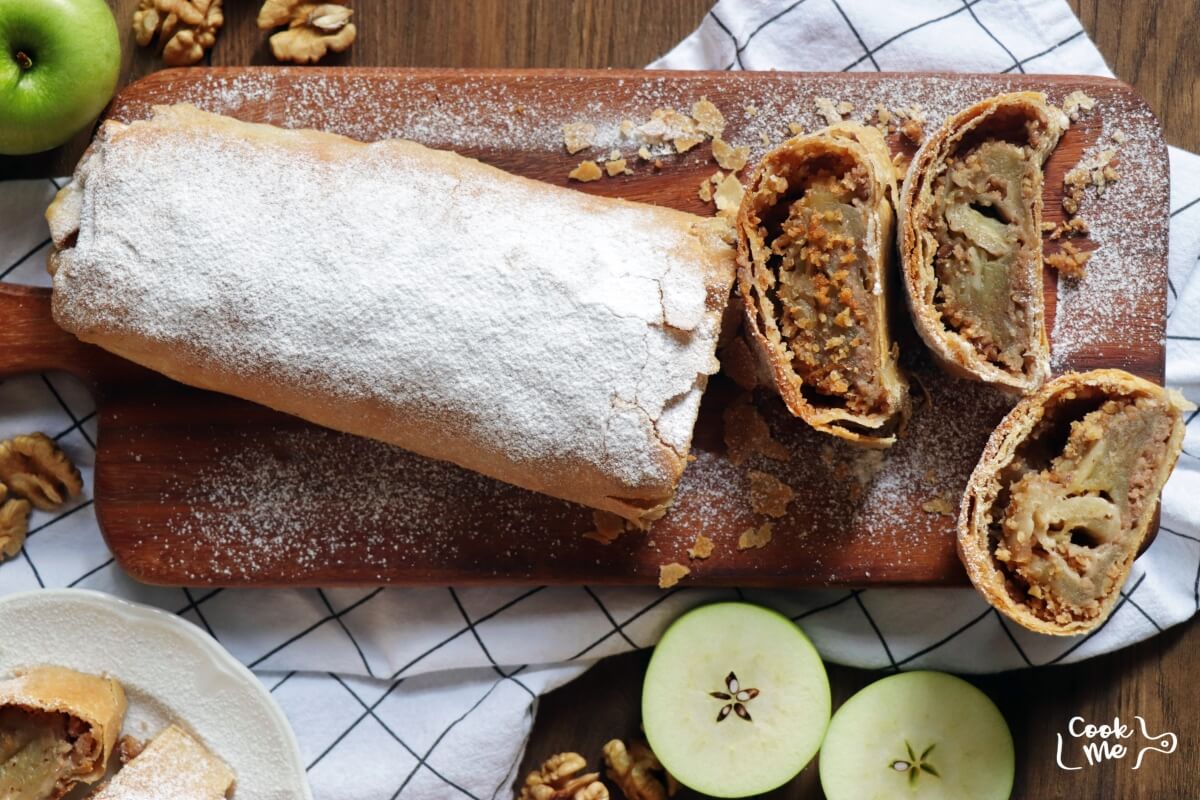
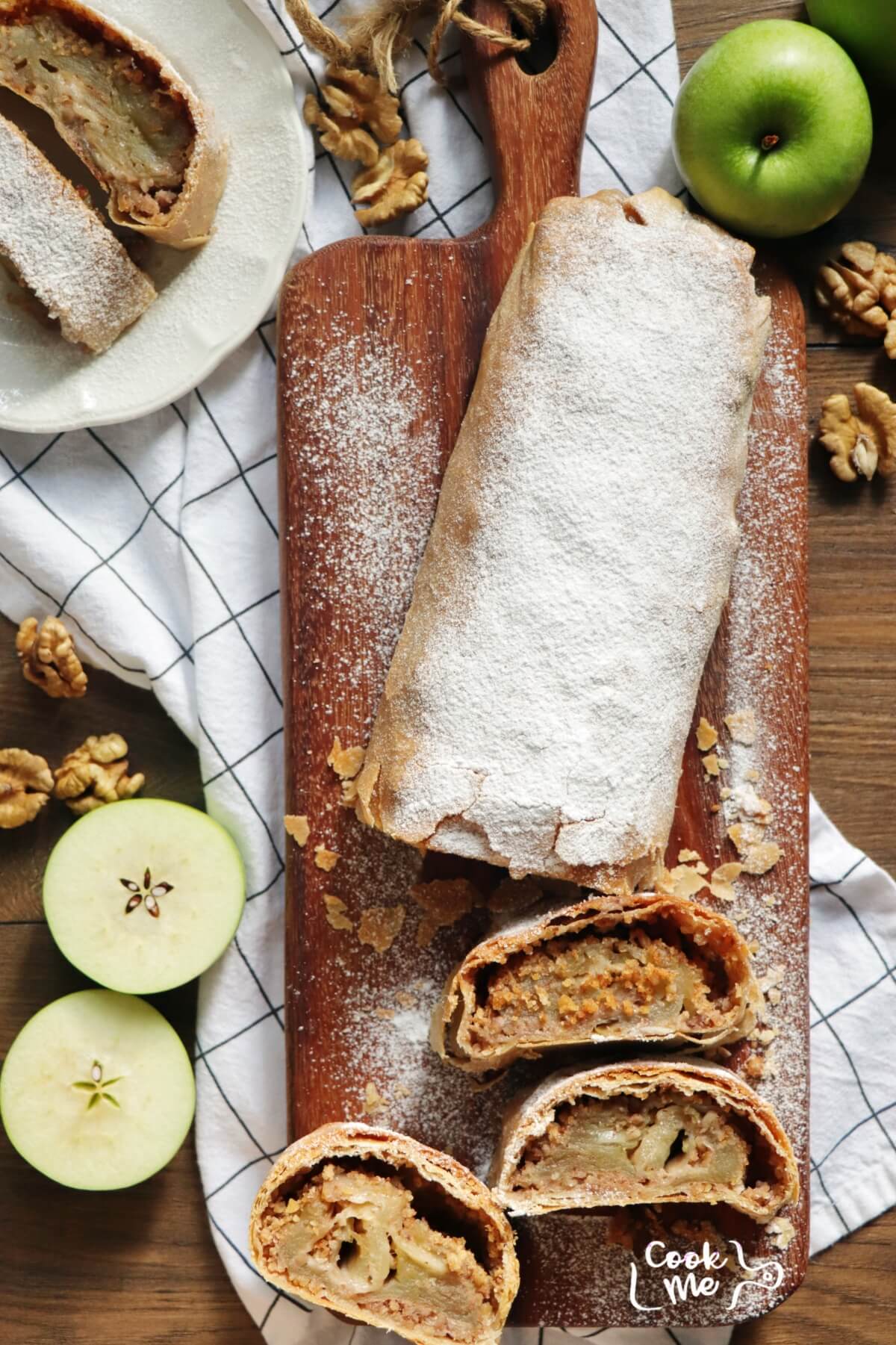
I remember the first time I made apple strudel from scratch in my tiny kitchen in Vilnius. It was a rainy afternoon and I wanted something warm to chase the chill. What makes this apfelstrudel recipe from scratch so special is how it captures authentic Viennese charm without fancy tools or too much fuss. The dough stretches thin and tender, wrapping bright, tart apples that are flavored with cinnamon and a touch of rum.
As someone who designs interiors, I think of the strudel as a small room of flavor. Simple things like fresh breadcrumbs toasted in butter and chopped walnuts add texture and balance, turning ordinary apples into something quietly memorable. It is forgiving too. If your dough tears a bit, no one will mind once it is golden and fragrant.
I often make this for family, usually when Mila is already in her pajamas and the house feels small and safe. Actually, scratch that last bit about impressing. It is more about the quiet satisfaction of pulling off something traditional yet personal.
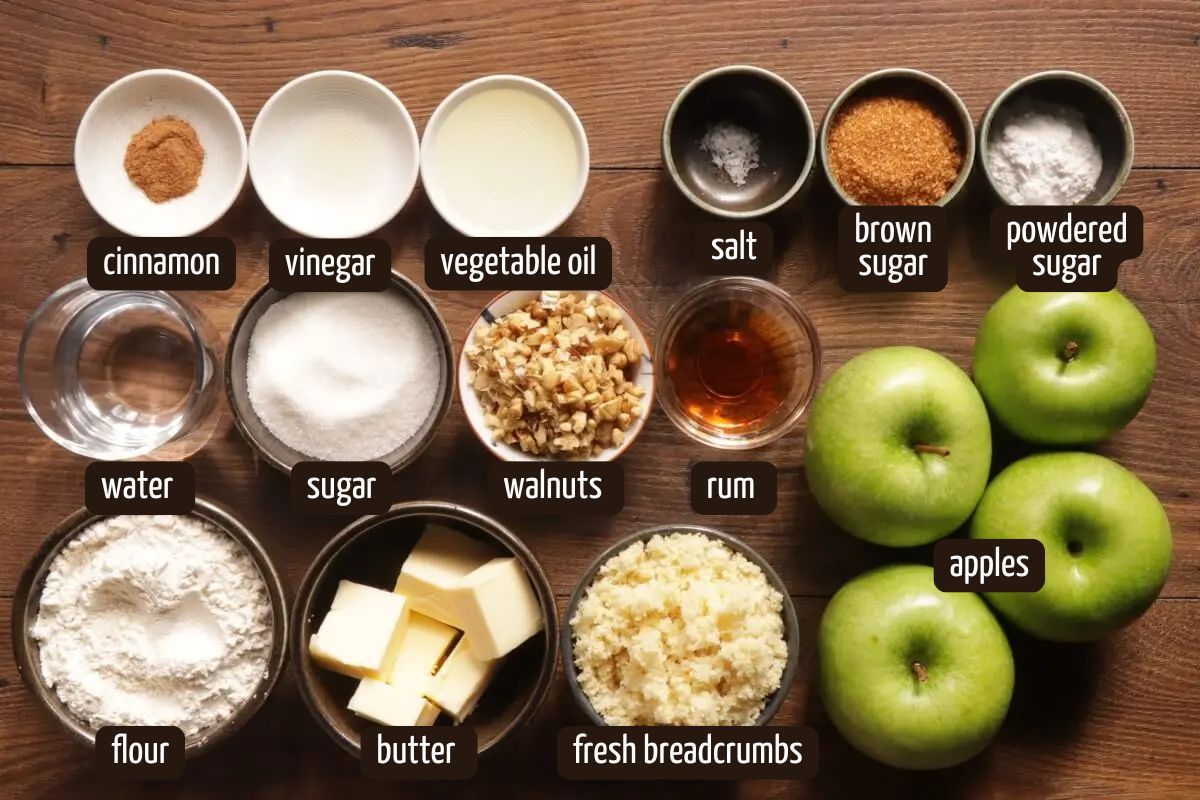

In the bowl of a stand mixer fitted with the paddle attachment, add 1 ⅓ cups all-purpose flour and 1 pinch kosher salt and mix to combine.


Add most of the water, 2 tablespoons vegetable oil and ½ teaspoon apple cider vinegar, mixing at medium speed. Add more water, 1 tablespoon at a time, if needed, to form a smooth and pliable dough. Shape the dough into a ball.

Brush a bowl with a teaspoon of oil. Place the dough ball in the bowl. Brush the dough with oil too. Cover the bowl with plastic wrap and leave to rest at room temperature for about an hour.

In a medium saucepan, melt 5 tablespoons butter over medium heat and add 1 ½ cups fresh breadcrumbs. Toast the breadcrumbs, stirring constantly, until lightly golden, about 5 minutes. Remove from the heat and set aside to cool completely

In a small bowl, mix together ⅓ cup white sugar, ¼ cup brown sugar, and ½ teaspoon cinnamon and set aside.

Peel, core and slice the apples into wedges as thinly as you can.

In a large bowl, gently toss the prepared apples with the cinnamon sugar and 2 tablespoons rum until well coated. Set aside.
Preheat the oven to 375 ℉.


Roll out the dough on a work surface into a rectangle shape. Then, transfer the dough to a clean, lightly floured kitchen towel and stretch out the dough until see-through thin. Gently stretch each side with closed fists. Place your hands under the dough at one corner and carefully work your fists outward toward the edge of the dough. Once the dough is very thin, gently run your fingers along the edges and pull to ensure they're thin enough too.

Melt the remaining 3 tablespoons butter. Using a pastry brush or your fingers, brush the dough with the melted butter.


Sprinkle one half of the dough with toasted breadcrumbs, leaving a 2-inch border around the edges. Top with the chopped walnuts.

Use a slotted spoon to spoon the apples over the top, leaving the juices at the bottom of the bowl. Brush the exposed borders with melted butter.

Fold the border over the apple filling on both sides.

Grasp the kitchen towel right by the short edge of the dough on the filled side and using the towel, roll up the dough tightly over the filling.

Gently transfer the strudel to a parchment paper-lined baking sheet and brush the top with melted butter.

Bake for 35-40 minutes or until golden brown.

Remove the strudel from the oven and immediately brush it with melted butter and dust with powdered sugar. Allow to cool slightly.

Using a serrated bread knife, slice the strudel into slices and serve warm.
Before I start I gather the tools the way I choose fabrics for a room. A stand mixer with a paddle attachment helps combine the dough quickly, though a bowl and wooden spoon work fine if you prefer to mix by hand. A clean, lightly floured kitchen towel is essential for stretching the dough without sticking. You will also want a medium saucepan for toasting breadcrumbs in butter, a sharp knife for peeling and slicing the apples, a cutting board, a pastry brush or just your fingers for buttering, and a rolling pin to begin the shaping.
Have a large bowl for tossing the apples, and a slotted spoon to lift them without the extra juice. Line a baking sheet with parchment paper for baking and use a serrated knife to slice the finished strudel. Nothing extravagant here, just everyday items that make the process smoother.
Start with the dough. When you mix flour, salt, water, oil and a splash of vinegar, aim for a smooth, pliable ball but do not overwork it. If you knead too long it gets tough instead of flaky. Let the dough rest, covered, for about an hour in an oiled bowl. This relaxes the gluten and makes stretching easier. Think of it as giving the dough a little pause so it can do its thing.
Peel and slice the apples thin so they cook evenly. I toss them with sugar, a pinch of cinnamon and a splash of rum because I like the warmth it gives. You could skip the rum if you prefer. Toasting the breadcrumbs in butter until golden is my mother Irina’s tip and it really matters. The crumbs soak up excess juice and keep the bottom from becoming soggy, helping the strudel hold together with a crisp base.
If the dough resists when you stretch it, let it rest a few minutes and try again. Use closed fists under the dough and pull gently from the center out until it is very thin and almost translucent. Brush immediately with melted butter to keep it pliable. Chop the toasted walnuts after toasting so their flavor is fresher and the pieces do not poke through the dough. Bake until evenly browned and brush with more butter after it comes out of the oven, then dust with powdered sugar while warm.
Practice helps. Mine was rough the first few times, and one batch in Dublin was stubbornly chewy. But each time you make it you learn a small thing that makes the next version better.
For nut allergies, swap the walnuts for toasted sunflower or pumpkin seeds. Toast them in a dry pan until fragrant, chop a bit and scatter them over the toasted breadcrumbs. The seeds give a lighter kind of crispness, making the strudel feel a little less indulgent but no less soulful. I tried this during a holiday baking session and it was a hit with the kids.
Oh, and berries. Toss in about a cup of blueberries or raspberries with the apples and sugar. The berries soften and burst, staining the dough from the inside out with jewel tones of purple and red. Watch the baking time though, berries release more juice and the strudel may need an extra five minutes to get crisp.
If you want something richer, fold about half a cup of ricotta into the apple mix or spread it over the breadcrumbs before adding the fruit. It makes the filling creamier and more indulgent. I served this at a dinner party once and people were surprised in a good way, though it does shift the profile away from classic.
Serve the strudel warm. Slice with a serrated knife and plate simply, with a scoop of vanilla ice cream or a dollop of softly whipped cream. A dusting of powdered sugar is lovely, or try Greek yogurt with a drizzle of honey for a tangy contrast. Leftovers reheat well in a warm oven to restore the crispness.
Pair it with a strong cup of black tea or a glass of mulled wine when you are feeling festive. For brunch, serve it alongside scrambled eggs and fresh bread. If you want extra crunch, scatter toasted walnuts on top after baking. For kids, a little caramel drizzle can make it irresistible, though I keep portions small.
One small experiment: I once served slices with thin cheese on the side, a nod to Baltic habits, and it surprised everyone by working quite nicely.
Start by mixing flour and salt, then add the water, oil and vinegar a bit at a time until the dough comes together. Knead just until smooth, form into a ball, brush with a little oil and cover to rest for an hour. When you stretch it, work on a floured towel and pull gently with your fists. If it tears, pinch a patch of dough over the tear and carry on. Mine looked like a map the first few times and it still tasted good. Breathe. Seriously.
Phyllo dough are the thin pre made sheets used in many pastries. For this traditional german dessert you can substitute phyllo if you are short on time. Brush each sheet with melted butter and layer several sheets before adding the filling. It will be crisp and delicious but different from the homemade dough experience.
Yes. Assemble the strudel up to the rolling step, then wrap it tightly and refrigerate for a day or freeze the unbaked roll for up to a month. Thaw overnight in the fridge before baking. I do this every December to save time and the result is reliably good. Avoid freezing a baked strudel if you want to keep the crispness.
Choose firm apples like Granny Smith and slice them thin. Toss with the sugar to draw out some juice, then lift the apples with a slotted spoon so you leave excess liquid behind. Toasted breadcrumbs are the best trick to absorb what remains, keeping the filling tender but not wet. If your oven is uneven, tent the strudel with foil toward the end so the top does not brown too quickly.
No mixer required. Make a well in the flour, mix in the liquids with a fork until the dough comes together, then knead briefly on a floured surface until smooth. It is more work but the result is just as good and somehow more personal.
Make your own strudel from scratch with this Austrian Apple Strudel Original Recipe! Made with simple ingredients, it’s utterly delicious and makes your home smell amazing. If you loved this recipe, leave us a comment below. We love hearing from you!

I’ve struggled with strudel dough for so long—it was always either too sticky or not elastic enough, and it discouraged me from baking. But today I tried your dough, and I’m thrilled! It turned out perfect, tasted amazing, and my husband loved it. Now I actually enjoy making strudel dough again. Thanks for sharing the recipe!
 Vegetarian Recipes