You know, some salads feel like coming home. This one does for me. It started as a quick fix in Vilnius when Mila was small and the kitchen needed to be honest and fast, and over time it became a staple.
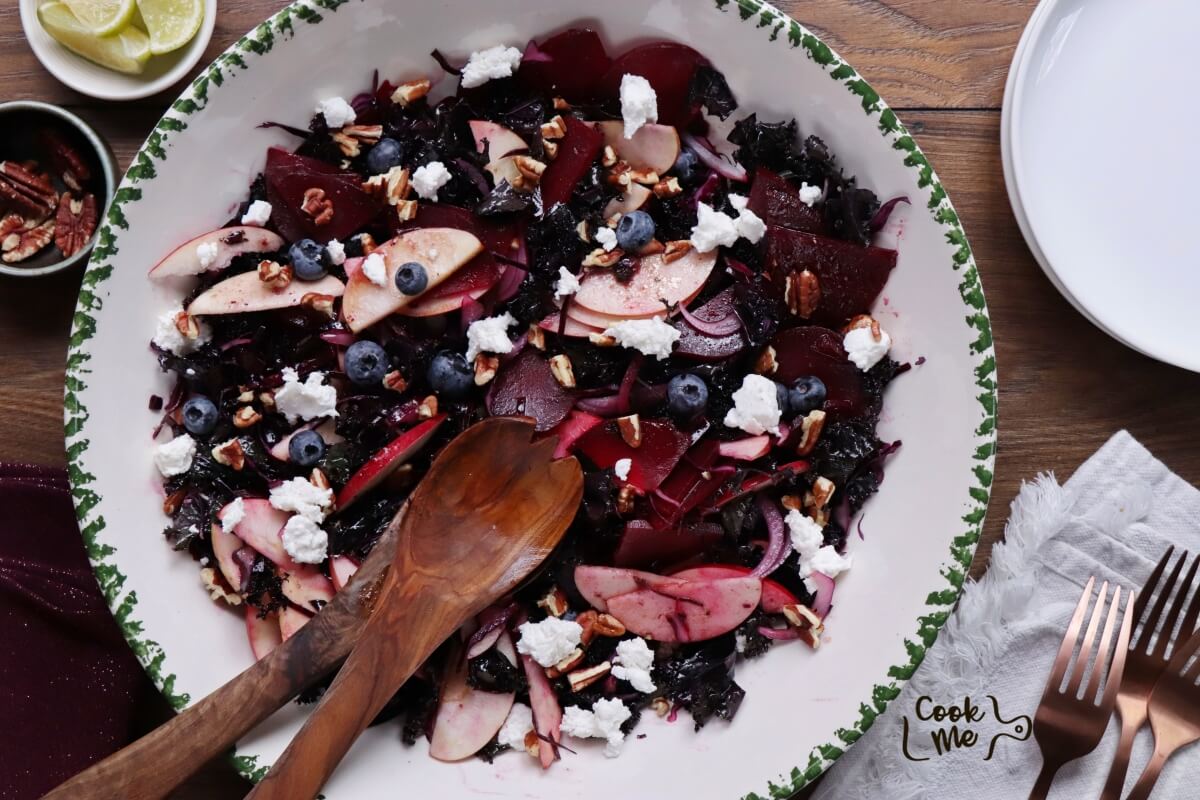
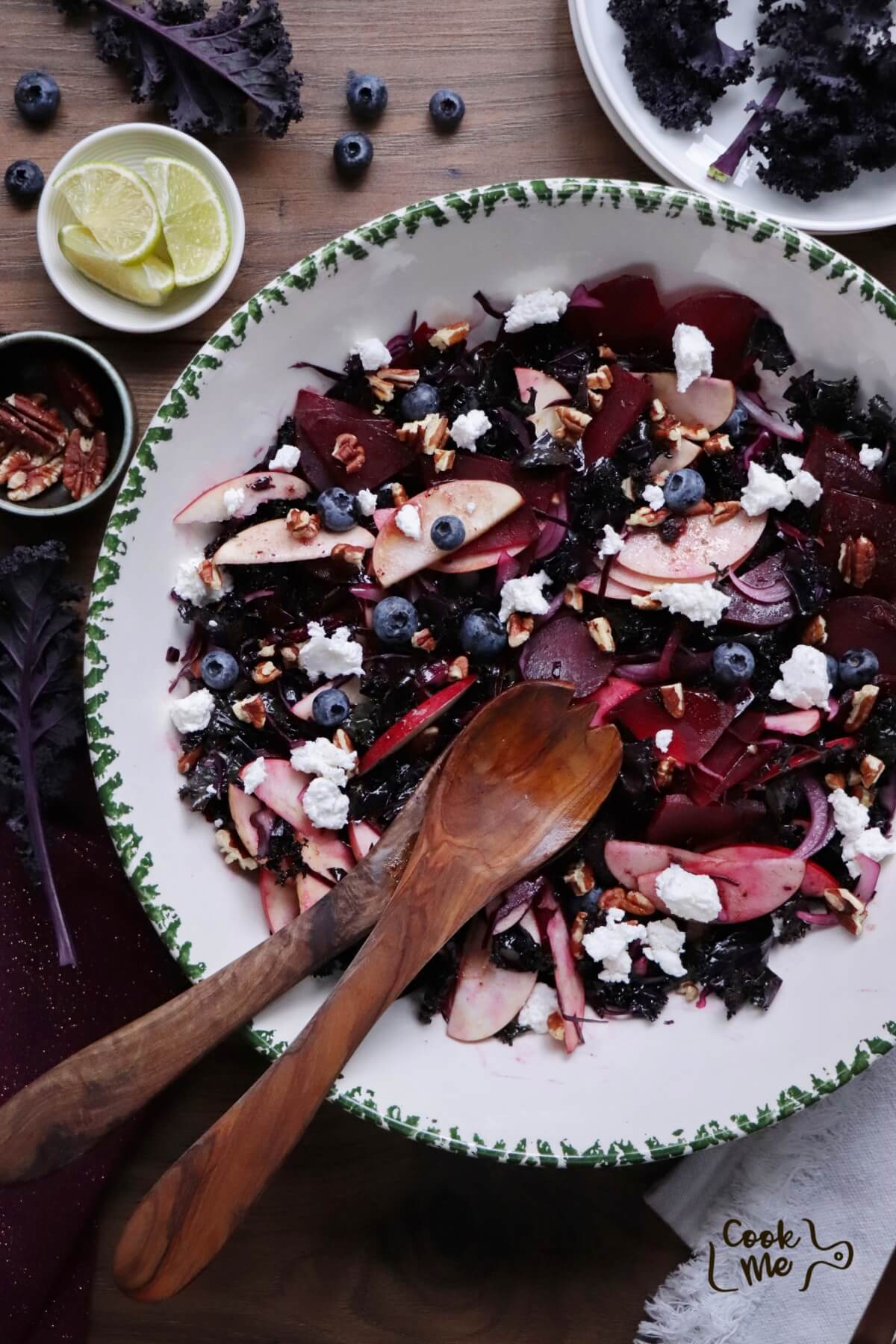
This is, at heart, a massaged kale salad recipe I keep returning to because it softens the sturdy purple kale into something gentle, and the roasted beets bring an earthy sweetness that grounds the bowl. Blueberries add bright pops, and goat cheese gives creamy tang so the flavors land softly instead of clashing.
It is forgiving too. Swap berries, buy pre roasted beets, or use whatever nuts you like. That ease is why I reach for it on tired weeknights, or when friends drop by unexpectedly. It is simple food that still feels considered. Small confession. I once brought it to a potluck in Riga and people asked for the recipe until the dish was gone.
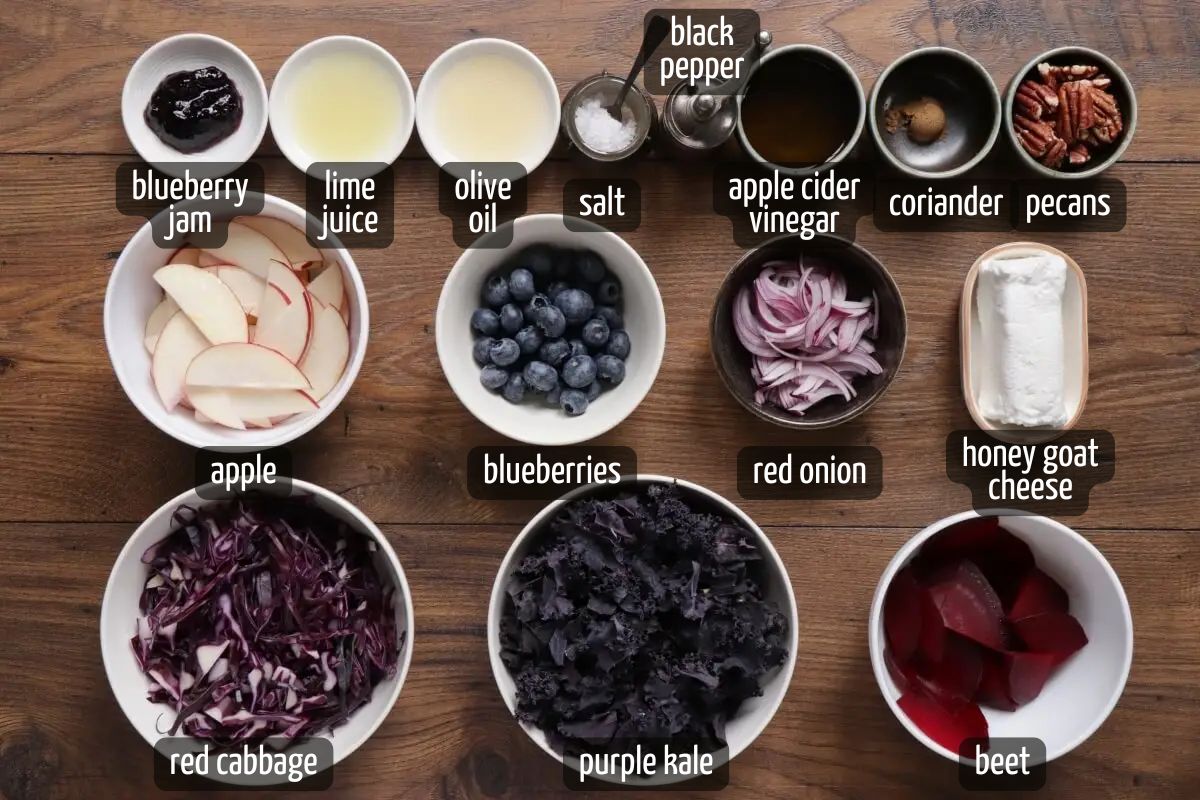

To a large bowl, add 3 cups chopped purple kale and 1 cup shredded red cabbage. Pour 1 teaspoon olive oil over the kale and cabbage. Add a small pinch of salt. Use clean hands to massage the oil into the kale and cabbage to soften them a bit.
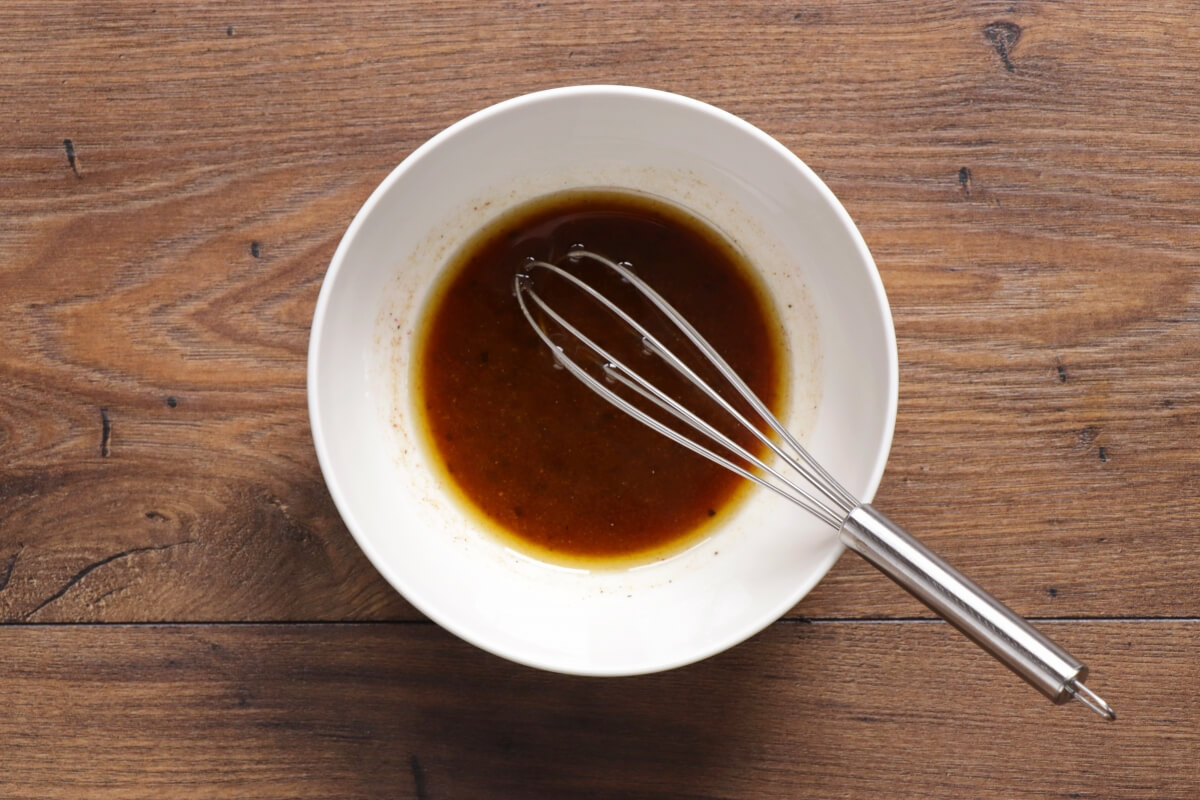
In a small bowl, whisk together 1 tablespoon blueberry jam, 1 tablespoon freshly squeezed lime juice, 1 tablespoon apple cider vinegar, 3 tablespoons olive oil, ½ teaspoon ground coriander, and salt and freshly ground black pepper to taste.
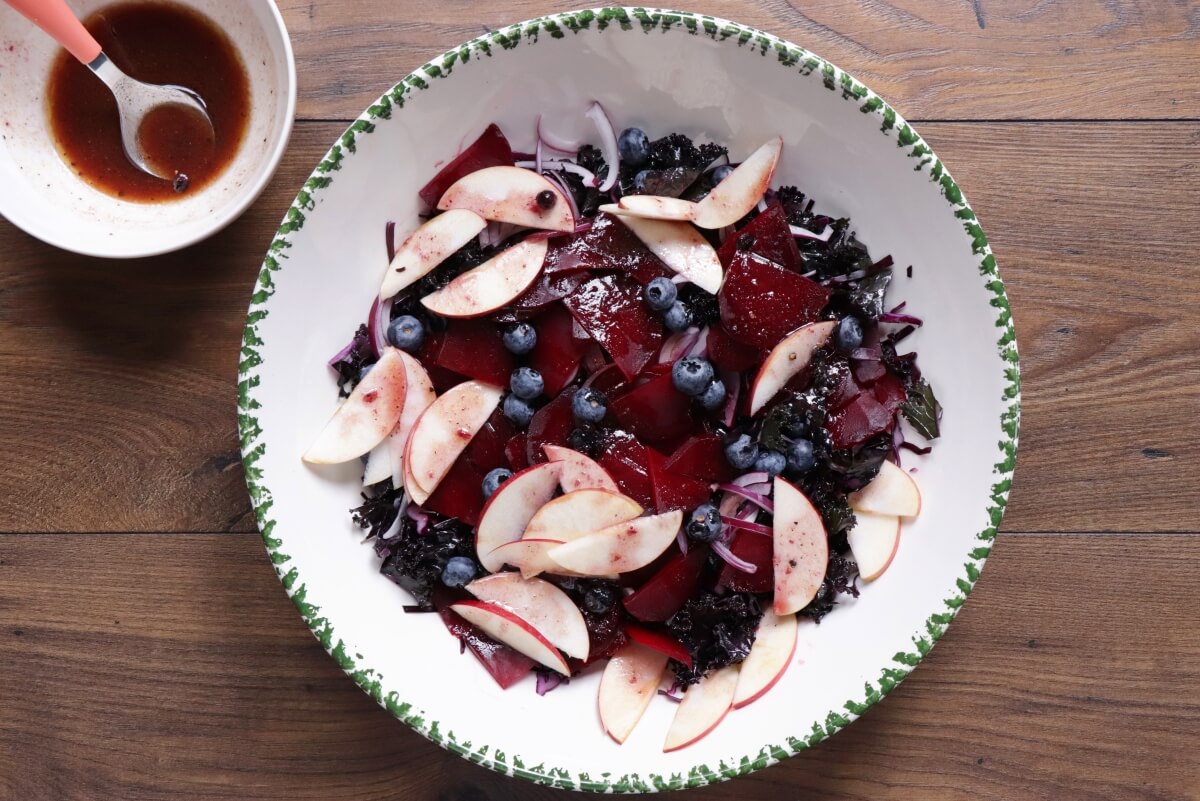
To the kale and cabbage, add ¼ cup thinly sliced red onion, ⅓ to ½ cup fresh blueberries, 1 thinly sliced roasted beet, and ½ a thinly sliced apple. Pour the blueberry lime vinaigrette over and gently toss to coat.
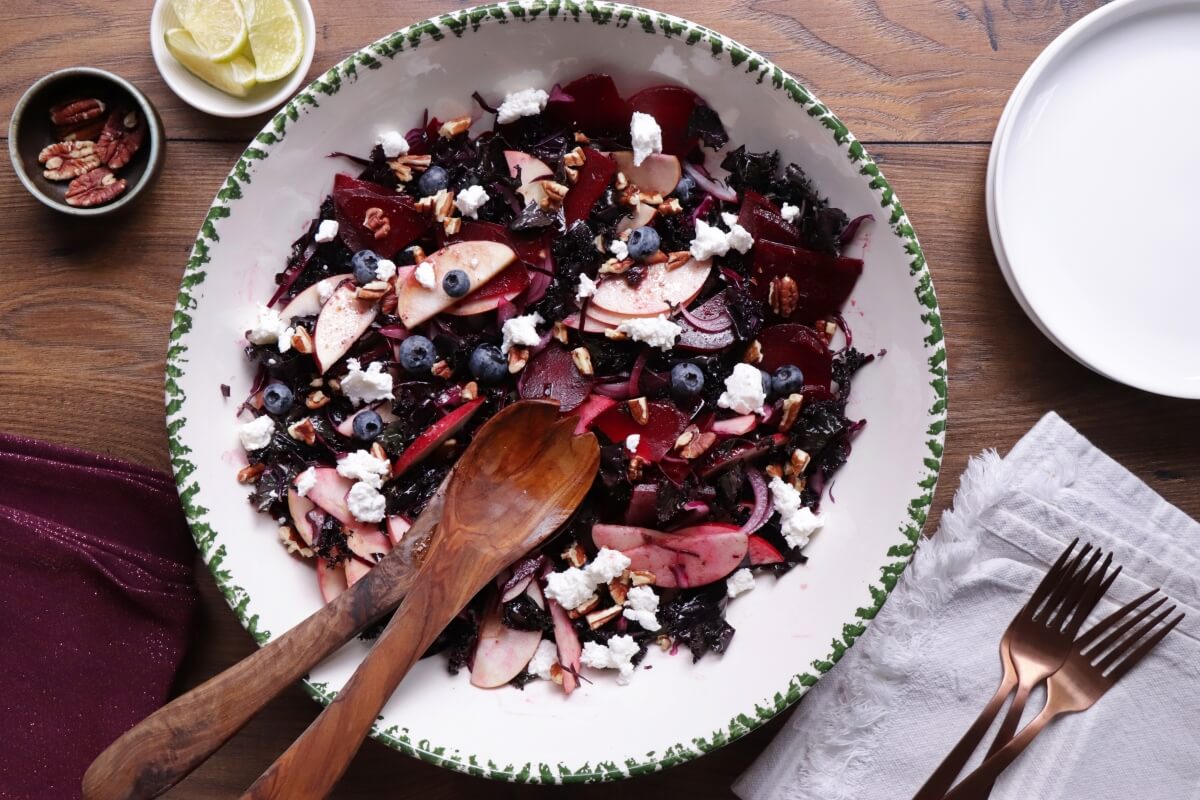
Just before serving, sprinkle the salad with toasted pecans and scatter with goat cheese. Enjoy!
You do not need anything complicated here. A big bowl for massaging the greens, a small bowl for the dressing, a whisk or fork, a sharp knife and a cutting board. I use a wooden board because it has a warm weight that makes prepping feel calmer.
If you want thin beet and apple slices, a mandoline helps but a steady hand and a sharp knife work fine. Toast the pecans in a small skillet over medium heat and stir with a wooden spoon to avoid burning. Clean hands are your best tool for massaging the kale and cabbage, unless you hate beet stains, in which case wear gloves. A serving platter or individual bowls and tongs finish the set up.
Massage the kale and cabbage for about three minutes with olive oil and a pinch of salt. It sounds fussier than it is. The process softens the leaves so they stop resisting your fork and instead invite you to keep eating. I skip it once in a while and regret it.
Roast the beets ahead if you can. Roasting concentrates their sweetness and gives you tender slices that contrast nicely with crisp apple. I roast wrapped in foil at four hundred degrees for about forty five minutes until the skin slips off. If you have leftover roasted beets, this salad is a lovely way to use them.
Whisk the blueberry lime vinaigrette until smooth. The tablespoon of jam helps the oil and acid come together so the dressing clings to the leaves. I add a touch of ground coriander for a gentle citrus warmth that echoes the lime without taking over.
Toast the pecans briefly to wake their oils, then chop them roughly so the bites are uneven and interesting. Crumble the goat cheese on last so it keeps its crumbly texture and creates creamy pockets among the greens. Taste and season in stages rather than salting everything at once.
Berry volume variation: Turn the volume up on the fruit by adding raspberries or blackberries and a handful of pomegranate seeds. It is like a variation on a theme where the berries sing louder. Keep the dressing mostly the same but reduce the jam slightly if the berries are very sweet. Here you can lean into a superfood salad feeling if that appeals.
Hearty winter version: Make it a healthy winter salad by swapping goat cheese for feta or grilled halloumi and tossing in roasted chickpeas for protein. This turns the salad into a main that will keep you going through a long afternoon of work or errands. Add extra toasted nuts if you want more crunch.
Root focused option: If you prefer a raw beet and kale salad vibe, grate raw beets thinly and add shredded carrots or radishes. Massage longer to soften, and boost the dressing acidity to cut any bitterness. It is bright, crisp and very different from the roasted version, but equally lovely.
I serve this in a wide wooden bowl so the colors can breathe. It pairs well with simply grilled fish or chicken, or alongside rye bread that soaks up the vinaigrette. At home we sometimes add roasted potatoes to make the meal more grounding for cold evenings.
For drinks, a chilled white with citrus notes mirrors the lime in the dressing, or a mild herbal tea if you prefer nonalcoholic pairing. Scatter extra blueberries on top for visual pop and, if you like, a drizzle of balsamic reduction for extra depth.
What to do with purple kale if I have extra? Extra purple kale is a small gift. Use it in smoothies with banana and yogurt, blend it into pesto instead of basil, or sauté it quickly with garlic as a simple side. I also freeze portions for soups when it starts to wilt. These small fixes keep you from wasting anything and they save time later.
Can I make this without fresh blueberries? Yes. Dried cranberries or pomegranate arils work well in winter and give that tart sweet note. They change the texture a bit but keep the spirit of the salad. I have also used applesauce in the dressing when fruit was scarce, which softened the acidity nicely.
How do I fix a too tart dressing? If the blueberry lime vinaigrette is too sharp, whisk in a touch more jam or a little honey until it mellows. Taste as you go so you do not over sweeten. For a creamier rescue, stir in a spoonful of yogurt to calm the acids.
Is this a detox salad for beginners? It can be framed that way because it is nutrient dense and filling without feeling heavy. Start with smaller portions if you are new to greens and hydrate well. If strong flavors bother you, reduce the onion or cheese until you learn what you enjoy.
One last thing. Cook simply, and make it yours. My kitchen is never perfect, and that is part of the point.
This vibrant Purple Kale Salad features purple kale, red cabbage, roasted beets, red onions, fresh blueberries, crisp apples, toasted pecans, and creamy goat cheese, all beautifully drizzled with a zingy blueberry lime vinaigrette! If you give this recipe a try, remember to tag us @cookmerecipes on Instagram – we love seeing your creations!

 Gluten Free Recipes
 Vegetarian Recipes