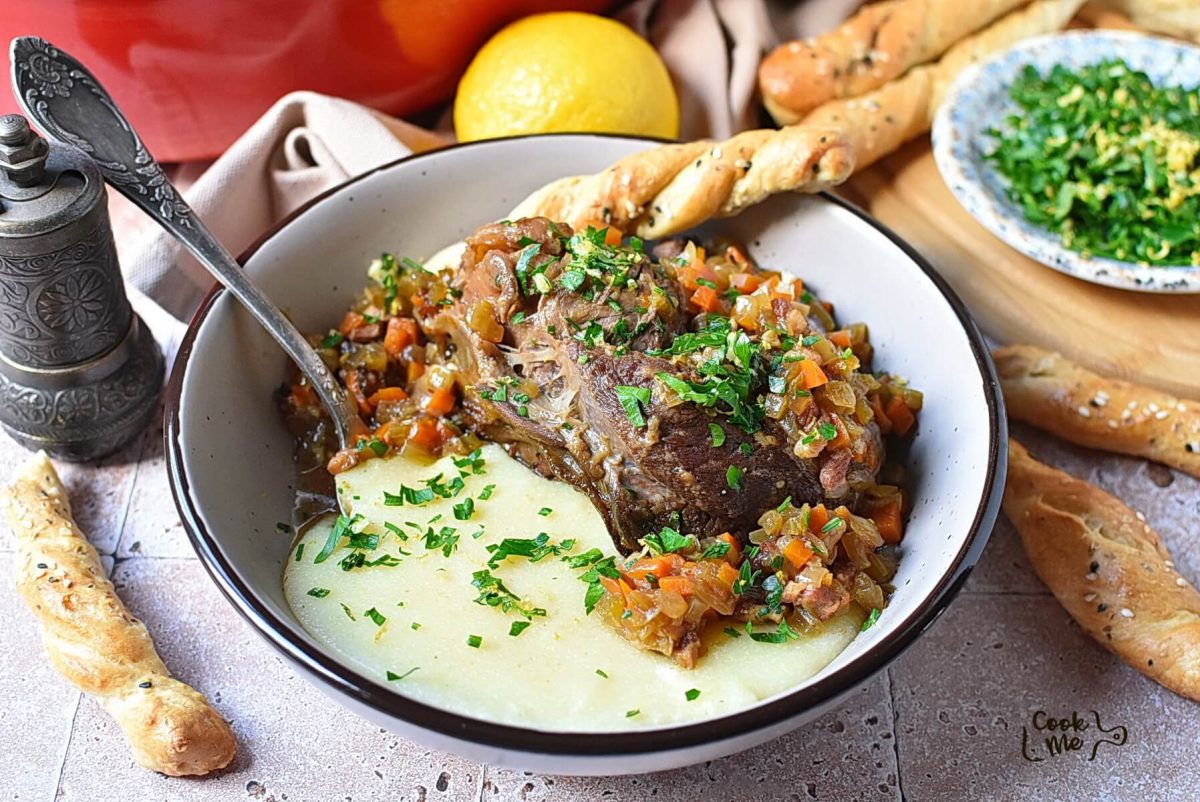
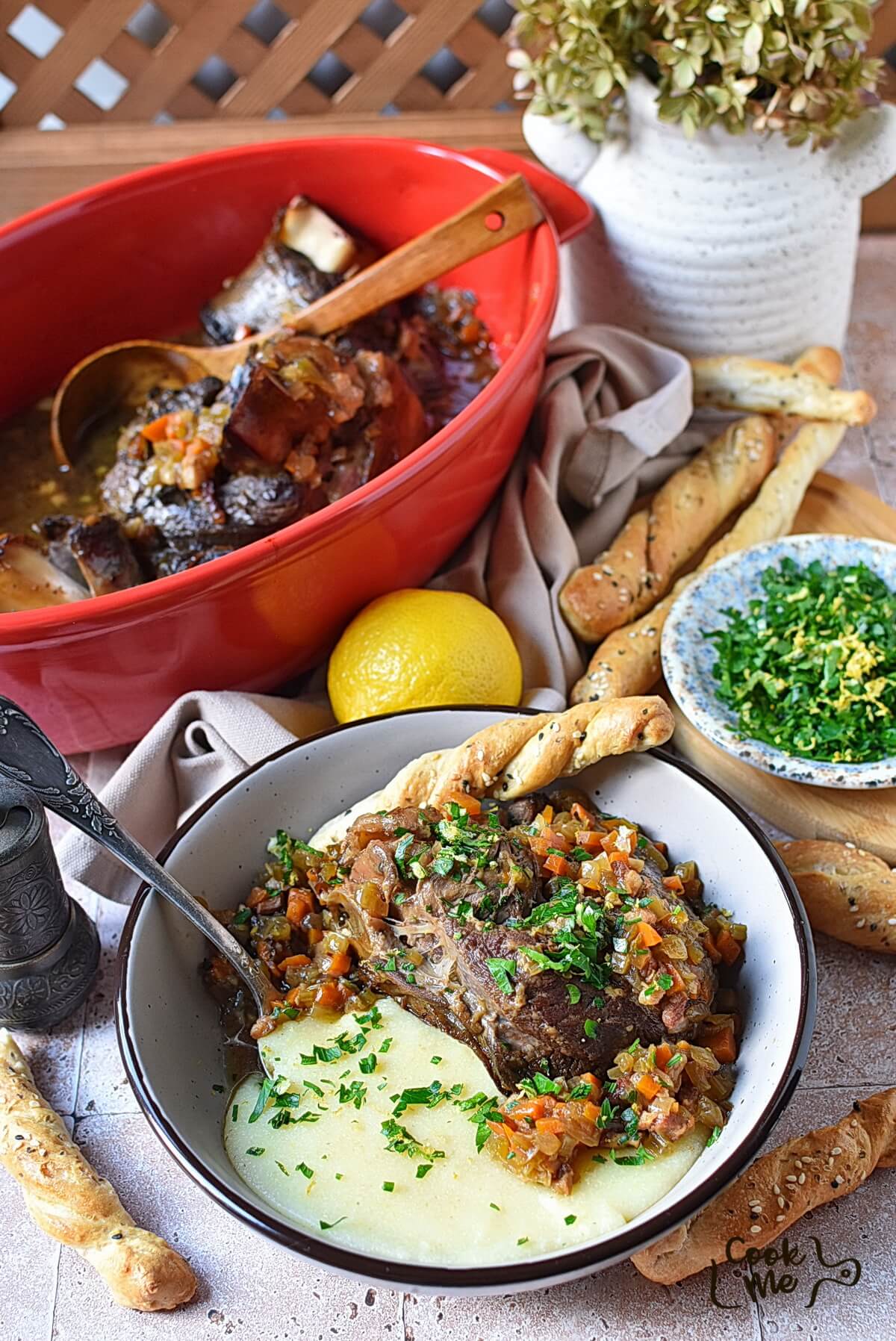
Alright, listen up. This is not a gimmick. I make braised veal shanks the way I learned in noisy kitchens and cold garages: with patience, heat, and respect for what you have. The result is rich, honest food that holds up to company and feeds a crew without fuss.
Sarge used to holler at me in Chicago about patience. He said let it do its work and do not poke at it. He was right. Heat is the boss. Treat it like a tool and you get rewards.
I like to keep things simple and useful. The shanks get a light flour coat, a good sear, then slow braise with pancetta, vegetables, white wine and stock until the meat pulls clean from the bone. The marrow melts into the sauce and that is the payoff: deep, meaty richness that makes bread necessary. It is classic italian osso buco with gremolata at heart, but I do not wrap it in airs. This is milanese comfort food you can make on a weeknight if you plan ahead.
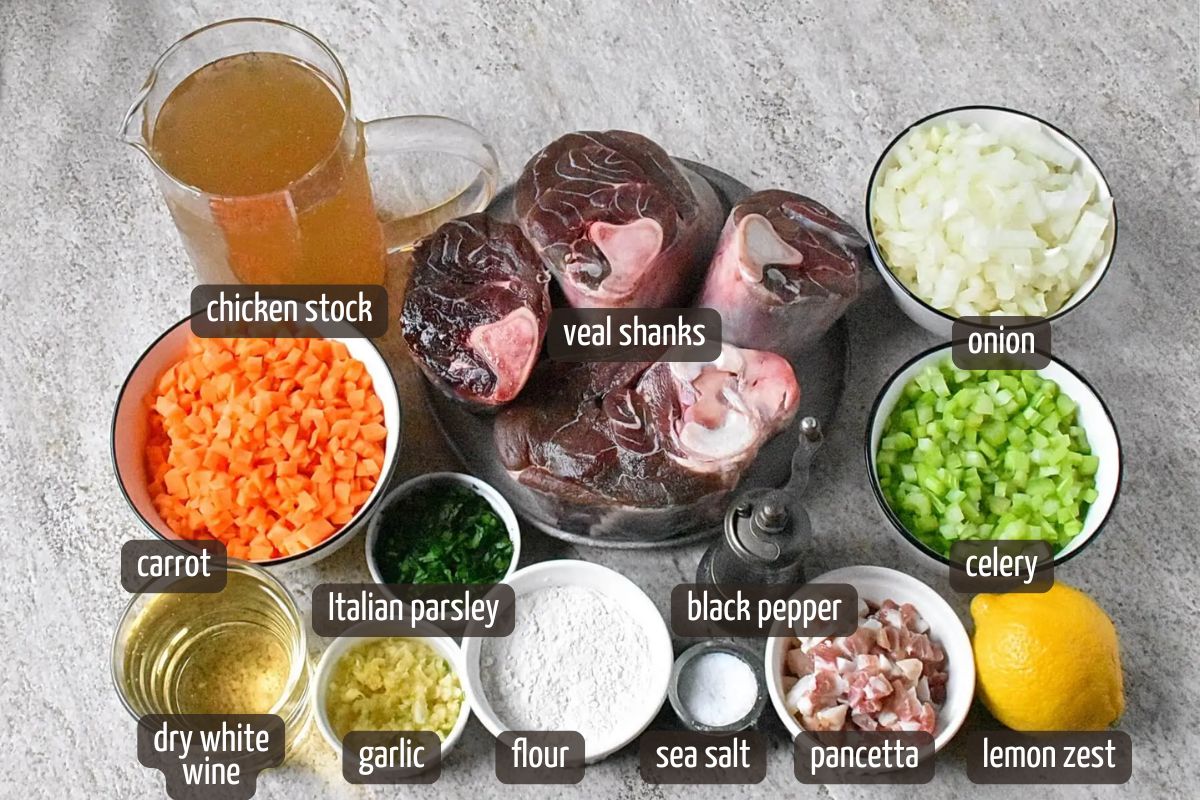
Preheat your oven to 325 °F.
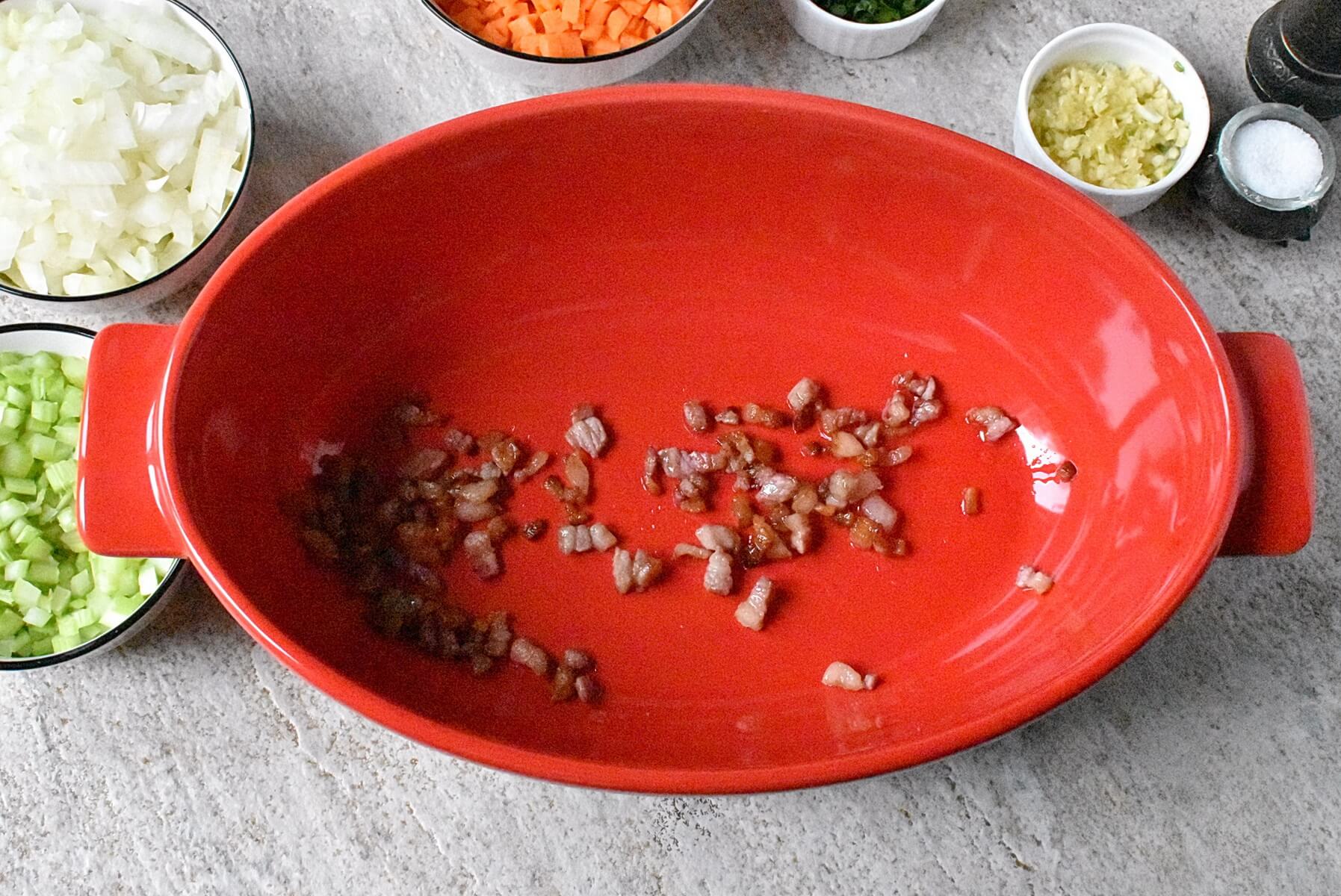
Heat a Dutch oven over medium heat for about 5 minutes. Add 4 ounces diced pancetta and cook, stirring occasionally, about 5 minutes. Once the pancetta is crispy and most of the fat has rendered, remove the pancetta and transfer it to a plate covered with paper towels. Set aside. If needed, drain off all but two tablespoons of the fat from the pan.
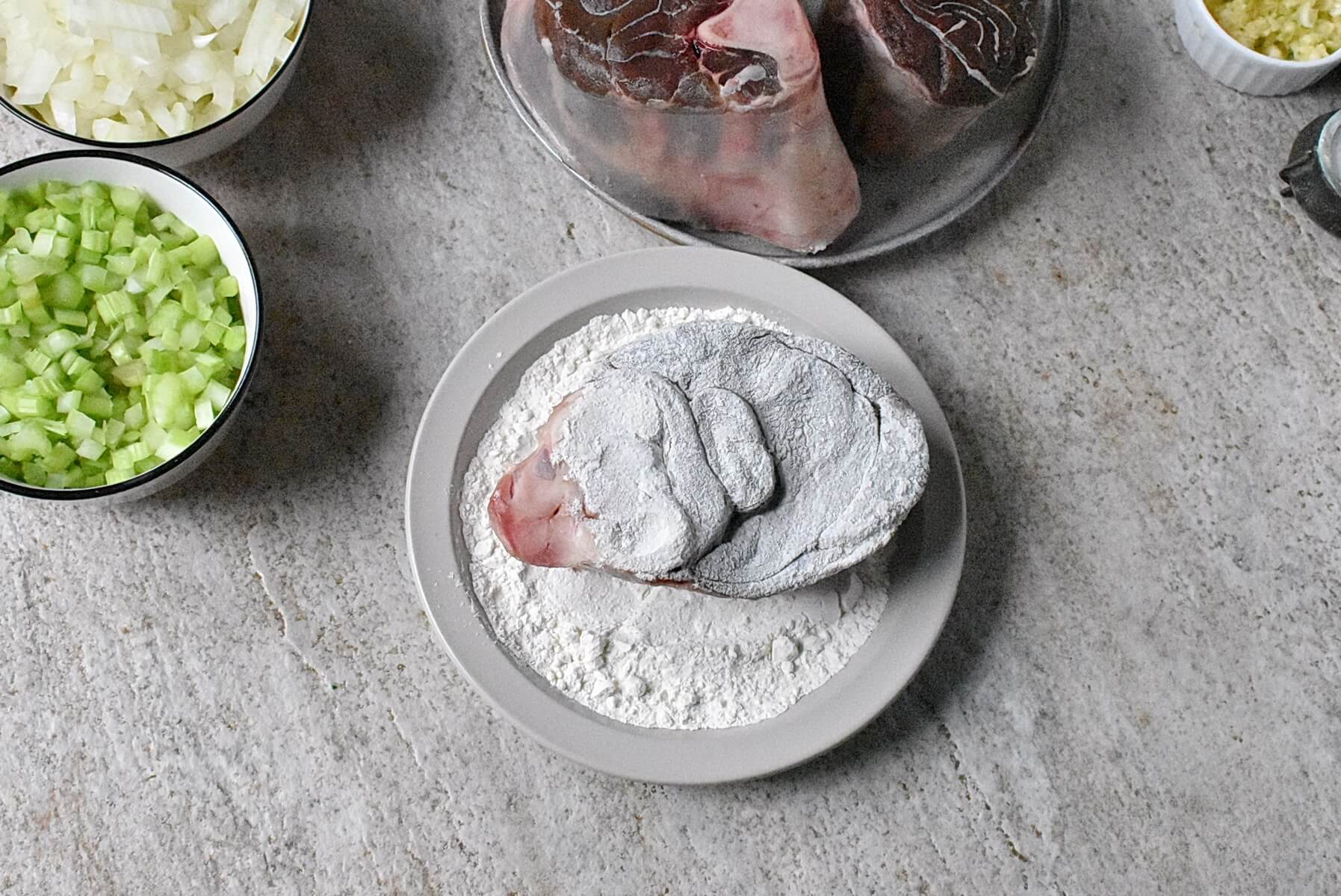
Place flour on a large, shallow plate. Season the veal shanks well with salt and black pepper and lightly dredge in flour. Shake off any excess flour.
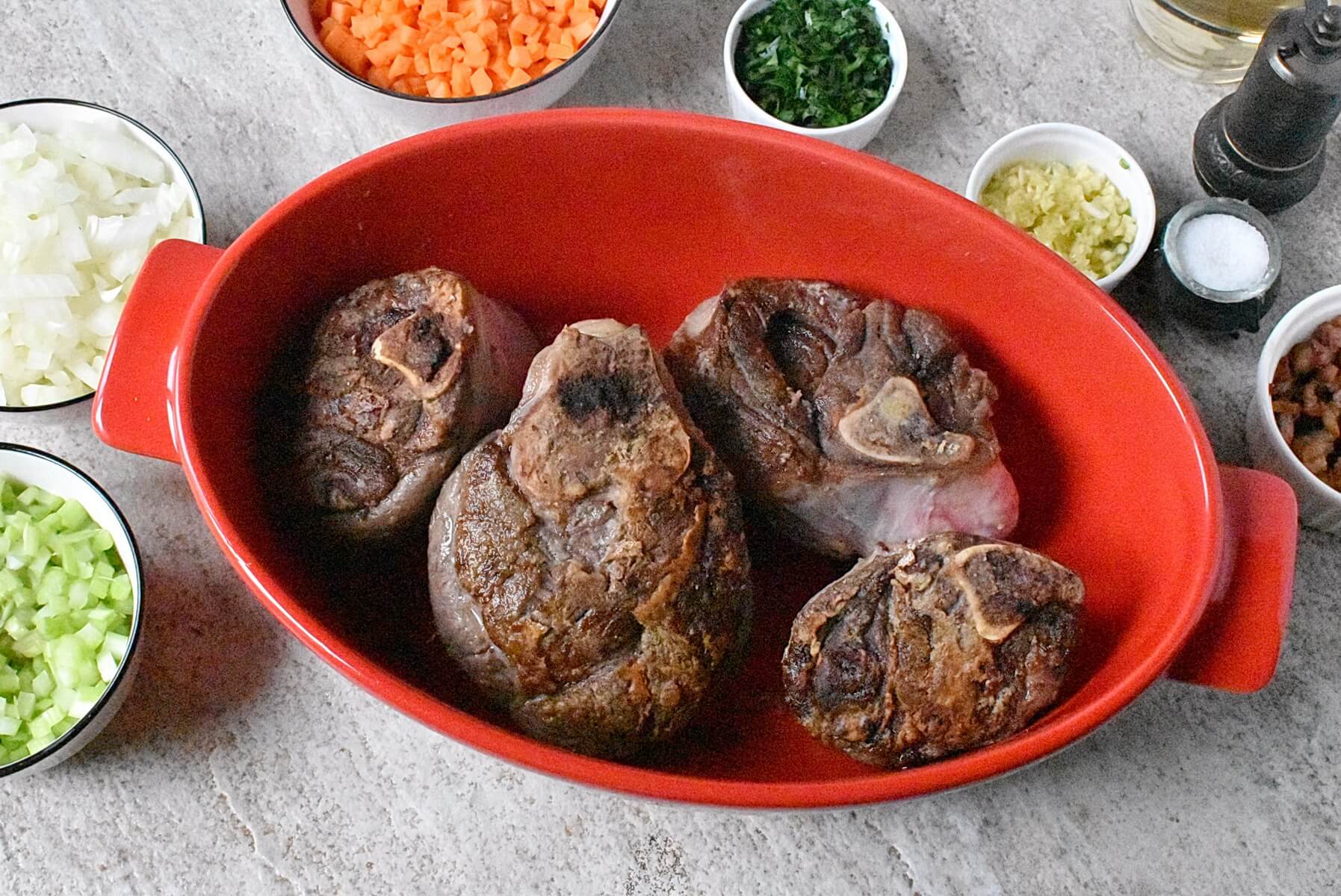
Place the meat in the hot pan with hot fat. Increase the heat to medium-high and cook the shanks until well browned, about 5 minutes per side.
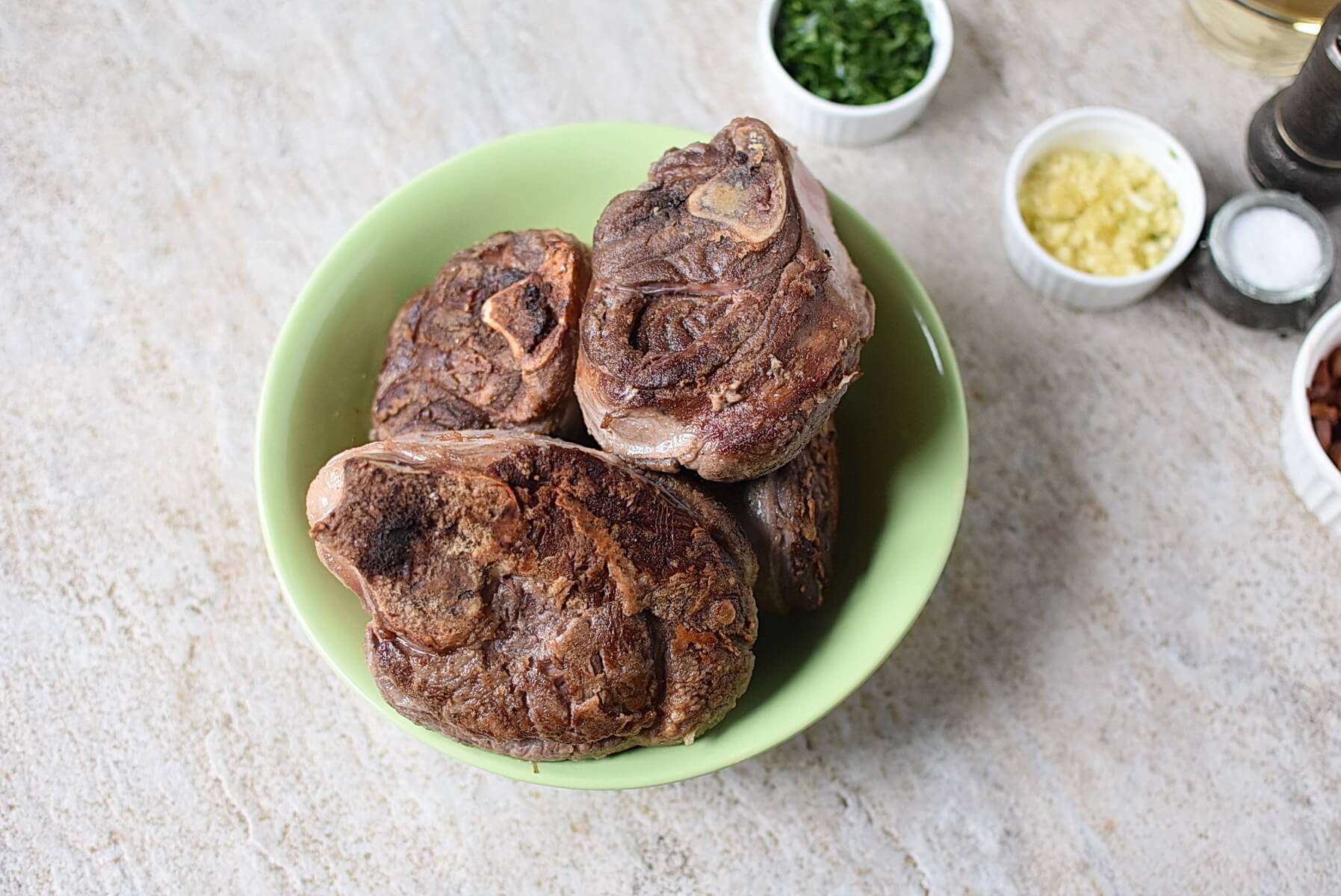
Remove the shanks to a plate. Set aside.
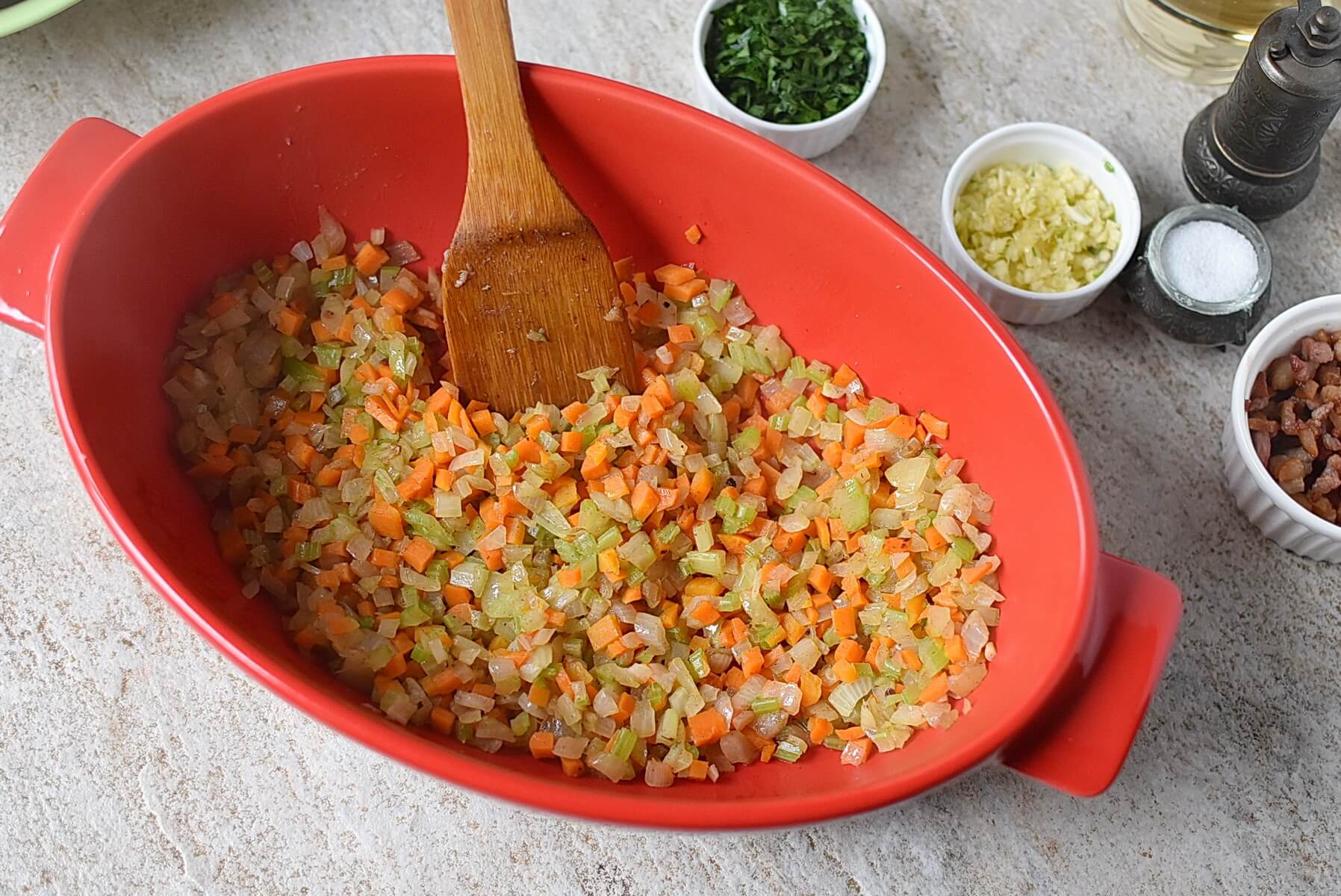
Add 1 diced onion, ½ cup diced carrots, and ½ cup diced celery to the Dutch oven. Cook, stirring frequently, until the onions are translucent, about 5 minutes.
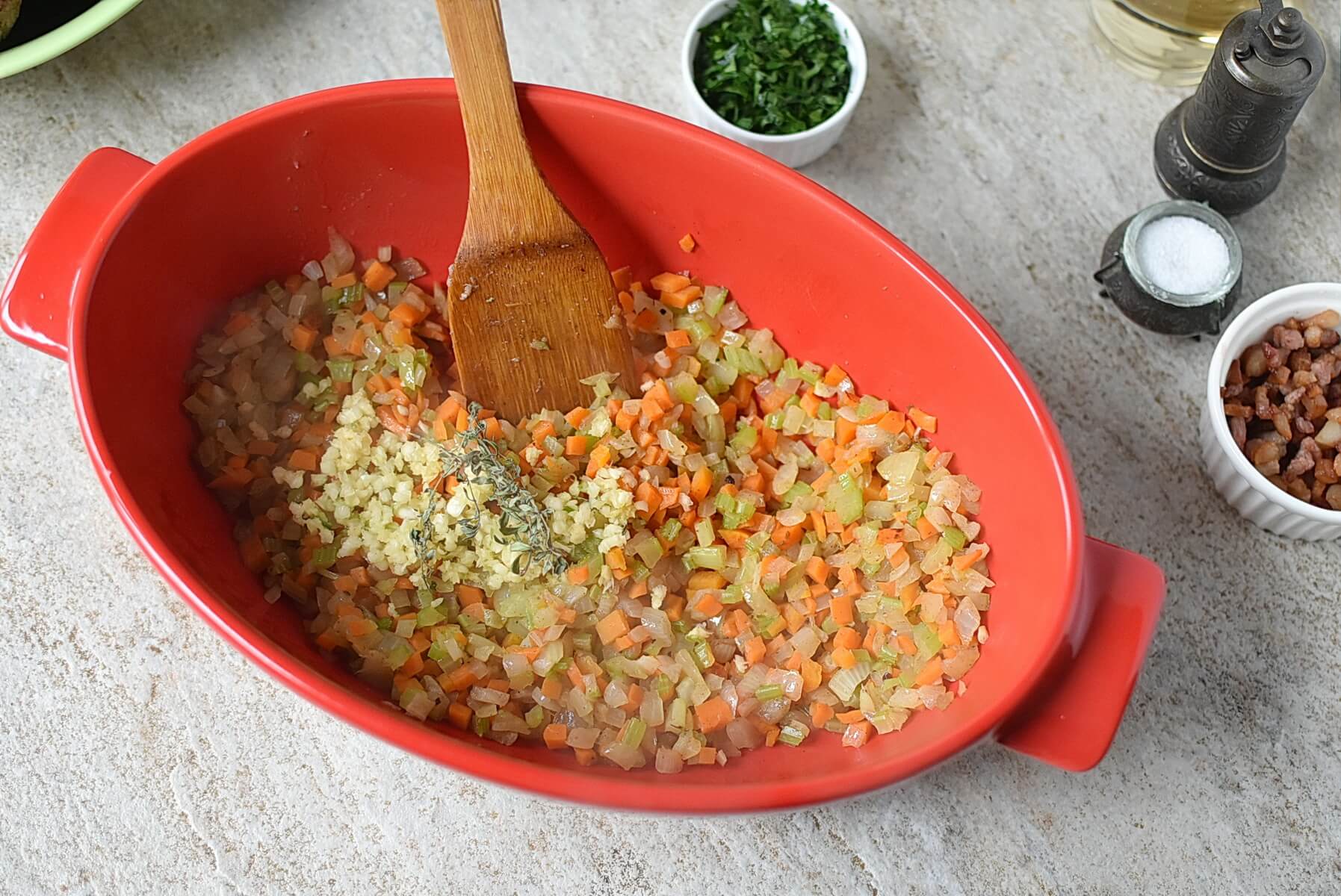
Stir in 2 tablespoons chopped garlic and the minced fresh thyme leaves (or 1 teaspoon dried thyme). Cook, stirring frequently, until the vegetables just start to brown, about 10 minutes.
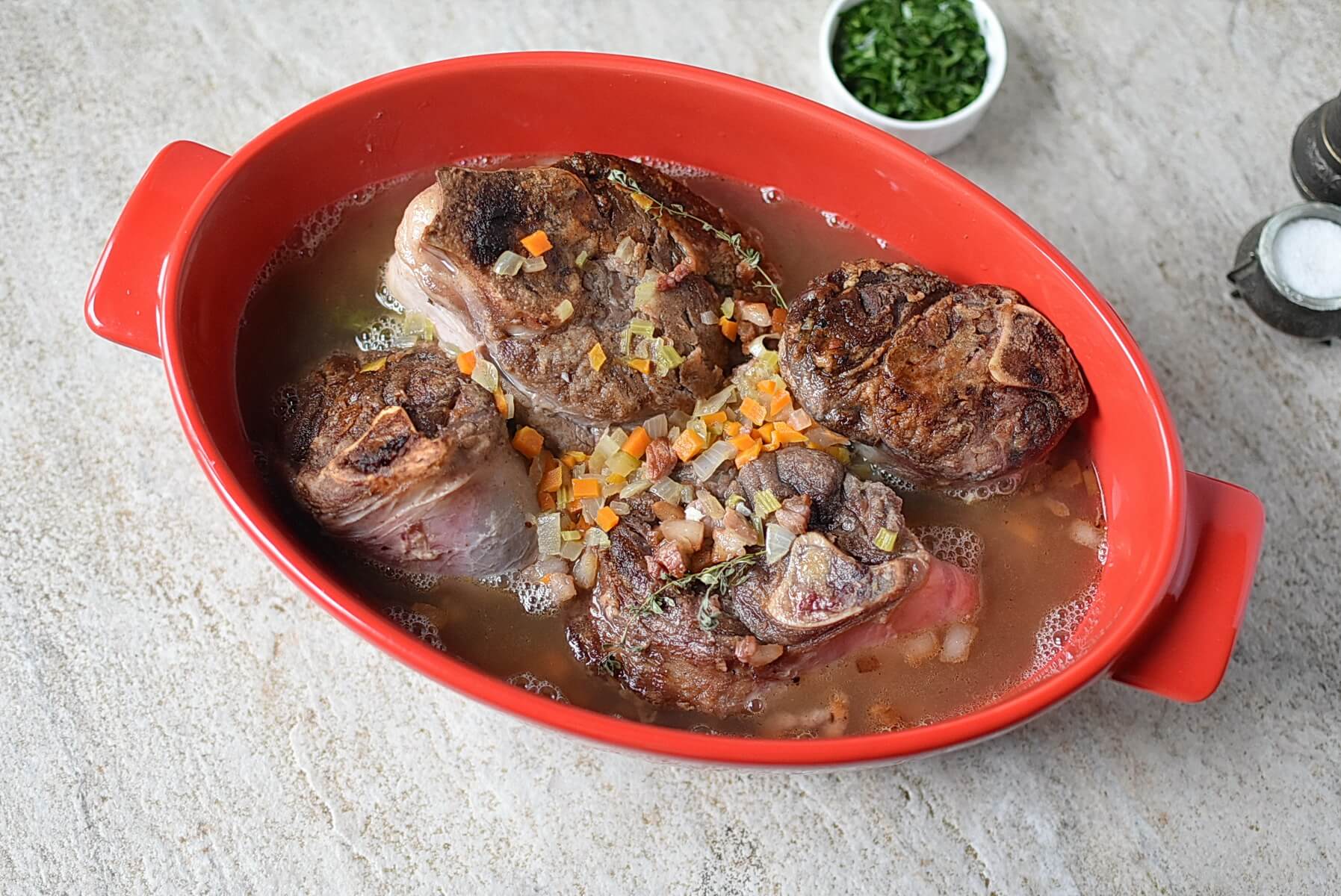
Return the shanks and pancetta to the pan. Add in 1 cup dry white wine. Pour in enough stock to come a little more than halfway up the sides of the shanks, 1 to 2 cups. Bring to a simmer.
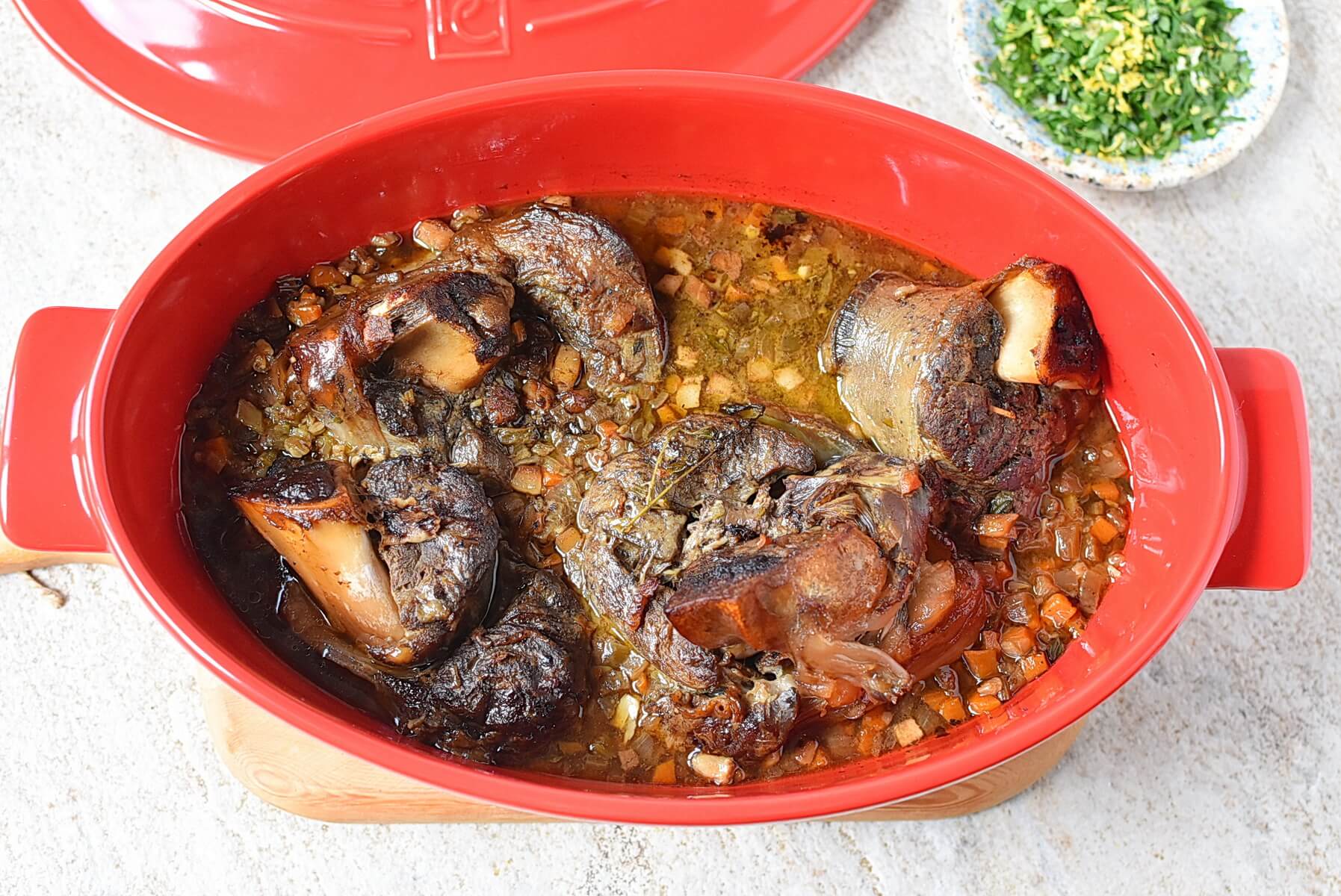
Cover the pan with a lid and transfer it to the oven. Cook until the meat is tender, 1 to 1 ½ hours.
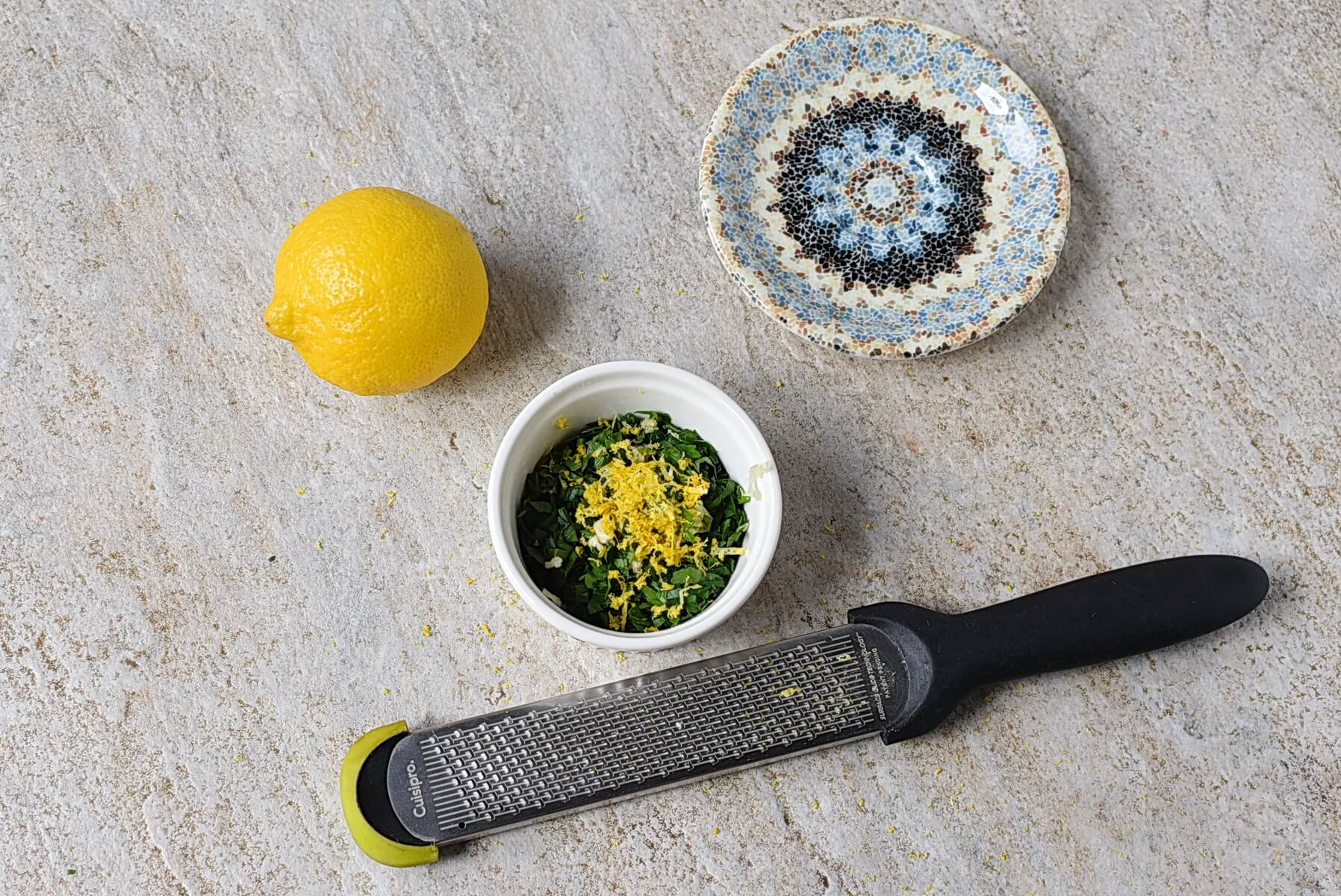
In a small bowl, combine 2 tablespoons chopped Italian parsley, 1 tablespoon finely grated lemon zest and 2 minced garlic cloves. Transfer the gremolata to a separate small serving dish.
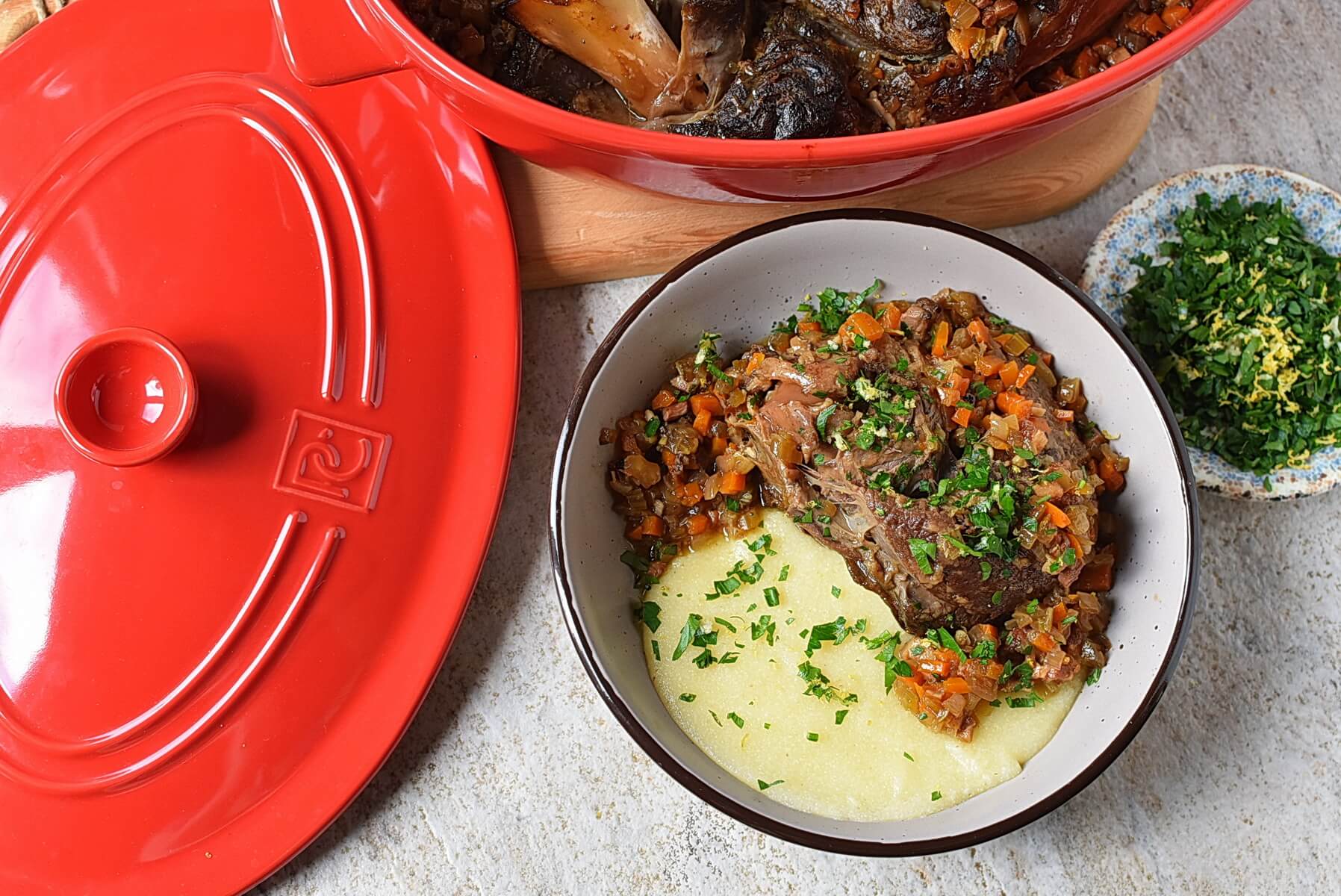
Serve the osso buco on top of risotto or polenta, sprinkled with gremolata.
Get a solid six quart Dutch oven or a heavy pot with a tight lid. No thin pans. This dutch oven veal recipe wants even, steady heat. I use cast iron handed down from my dad. It feels like an extension of my hands.
Other tools: a large shallow plate for flour, a sharp knife, a sturdy cutting board, tongs, a wooden spoon, a small bowl for gremolata and a liquid measuring cup if you are not comfortable eyeballing wine and stock. A timer helps. Position your oven rack in the middle for even heat.
Pick pieces about two to three inches thick. Thinner ones go tough. Thick shanks turn that connective tissue into pure gelatin that coats your tongue. Sounds gross? It is delicious.
Render the pancetta until it is crisp and let the fat stay in the pan for browning. That fat is the flavor engine. Brown the meat until it builds a deep mahogany crust. Salt and pepper the meat first, flour it lightly, shake off excess and get a real sear. Do not pierce the meat with a fork while browning or you will lose juices.
Sauté the mirepoix until it starts to color and the garlic perfumes the pan. Deglaze with dry white wine and simmer a moment before adding stock. Bring the liquid to a simmer on the stove, cover and move to the oven to braise low and slow. If you want to know how to make osso buco well, remember this: heat and time do the heavy lifting. Check once midway and add a splash of stock if needed. Let it rest briefly before serving. Actually, scratch that. Rest it a little longer if you have the patience.
Swap meats if veal is not available. Pork or beef shanks work. I once added smoked paprika to the flour and got a smoky character I learned to love in Austin. Try lamb with rosemary for a bolder version. Add mushrooms or bell peppers to the mirepoix to bulk up the veg and make the dish feel lighter without losing soul. These are just ideas. Keep the method the same and you will be fine.
Serve over creamy polenta or saffron risotto. Mashed potatoes work too. A simple bitter salad cuts the richness cleanly. Crusty bread is non negotiable for sopping up sauce.
Wine wise, pick a sturdy red with good acidity like Chianti. If you prefer non alcoholic options, sparkling water with lemon keeps the palate fresh.
It is literally bone with a hole, cross cut veal shank with marrow in the center. The magic is turning an inexpensive, working cut into something rich and generous through braising. The marrow is what makes it special.
Yes. Use a heavy bottomed pot with a tight fitting lid or cover a deep skillet with foil for the oven. The goal is to trap steam and keep the heat even. I have done it in a cast iron skillet with good results.
Short on time? Not really possible to rush. But you can start it on the stove and finish in a low oven the next day. Reheat gently with a splash of stock and it comes back alive.
Yes. Beef shanks are tougher so extend the braise for more time until tender. You get a heavier flavor and a darker sauce, but it holds up well.
Polenta, risotto, mashed potatoes or orzo all work. Keep a bright vegetable on the plate to cut the sauce, like roasted carrots or steamed asparagus.
Cool quickly and refrigerate in an airtight container for up to three days. Reheat slowly on the stove with a splash of stock to keep the meat moist. I freeze portions too. No microwave unless you do not care about texture.
I hate waste. Use the bones to make stock. Render fat for cooking. Respect the animal. Do the work and this osso buco will repay you with a bowlful of comfort that keeps people talking long after the plates are cleared. One more thing. If you skip the gremolata we are not friends.
Get ready to delight your taste buds with The Best Osso Buco recipe! Tender veal shanks braised in a rich, flavorful broth with dry white wine make for an unforgettable meal. Try out this recipe and share your feedback in the comments!