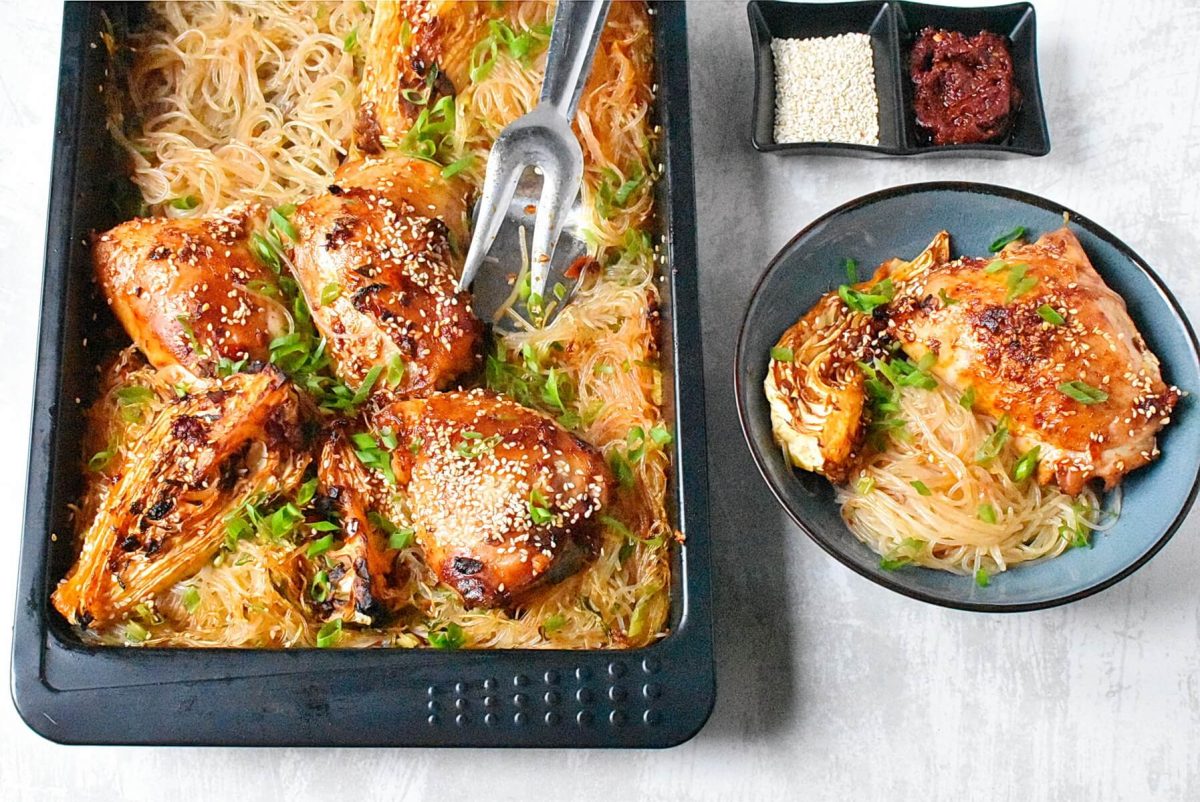
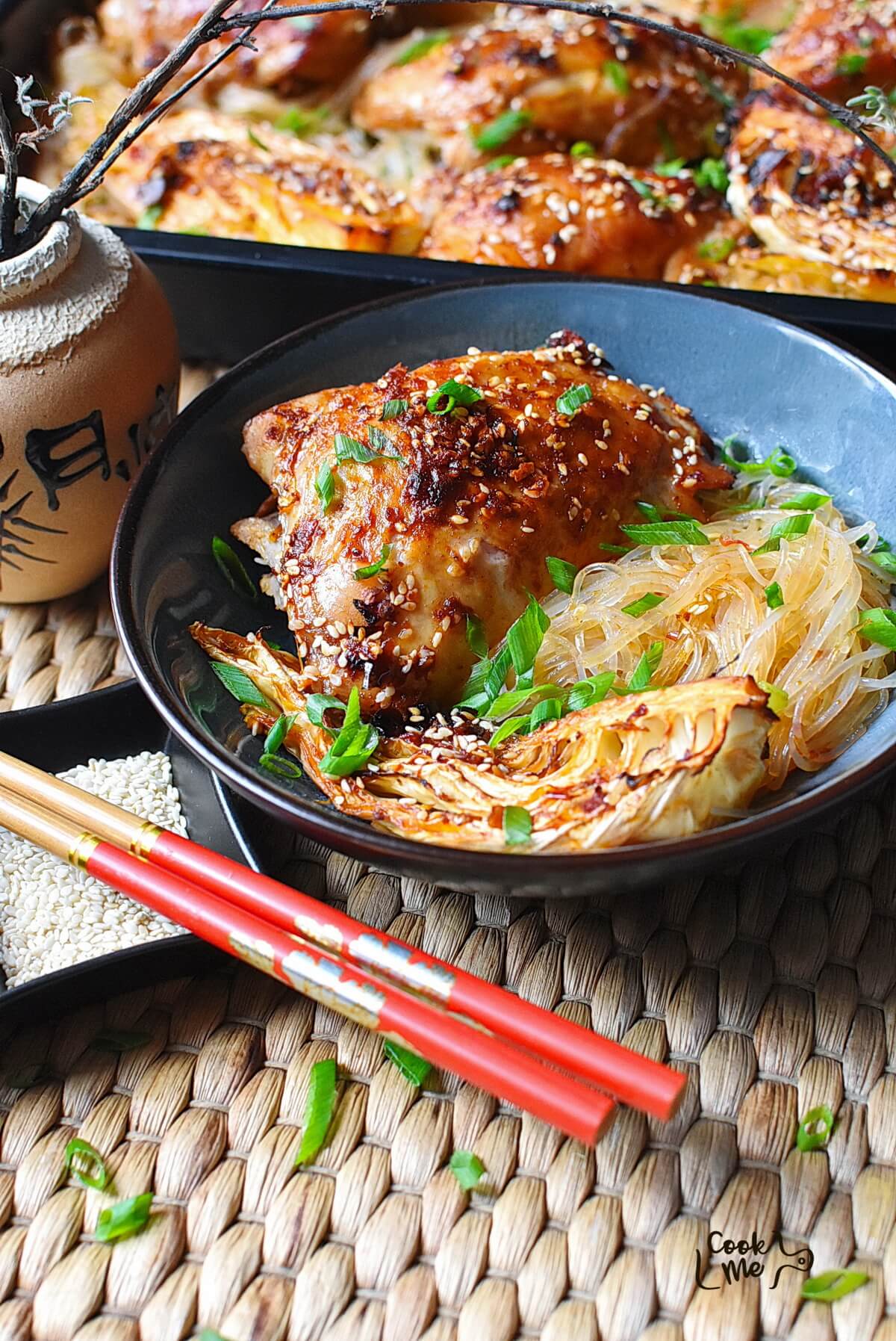
I keep coming back to this one because it turns a few honest things into a full on meal that feels comforting and clean at the same time. It is an easy korean chicken recipe, perfect for when you want flavor without much fuss. Tender thighs, cabbage that crisps at the edges, and rice noodles that soak up the juices all bake together, and somehow it tastes like more than the sum of its parts.
I first started riffing on this idea in a tiny Vancouver kitchen that had one burned pot and a crooked spice rack. I remember juggling two pans and a cat named Kimchi who insisted on supervising the counter. That mess taught me to do as much as possible in one pan, to trust the oven, and to make cleanup a mercy. No pretend glamour here, just good food that shows up when you need it.
What I love is how simple choices add up. A smear of gochujang, a splash of vinegar, and a minute of soaking for the noodles and you get deep fermented heat, a little tang, and glossy sauce hiding in every bite. No wait, it is better than perfect. Trust me.
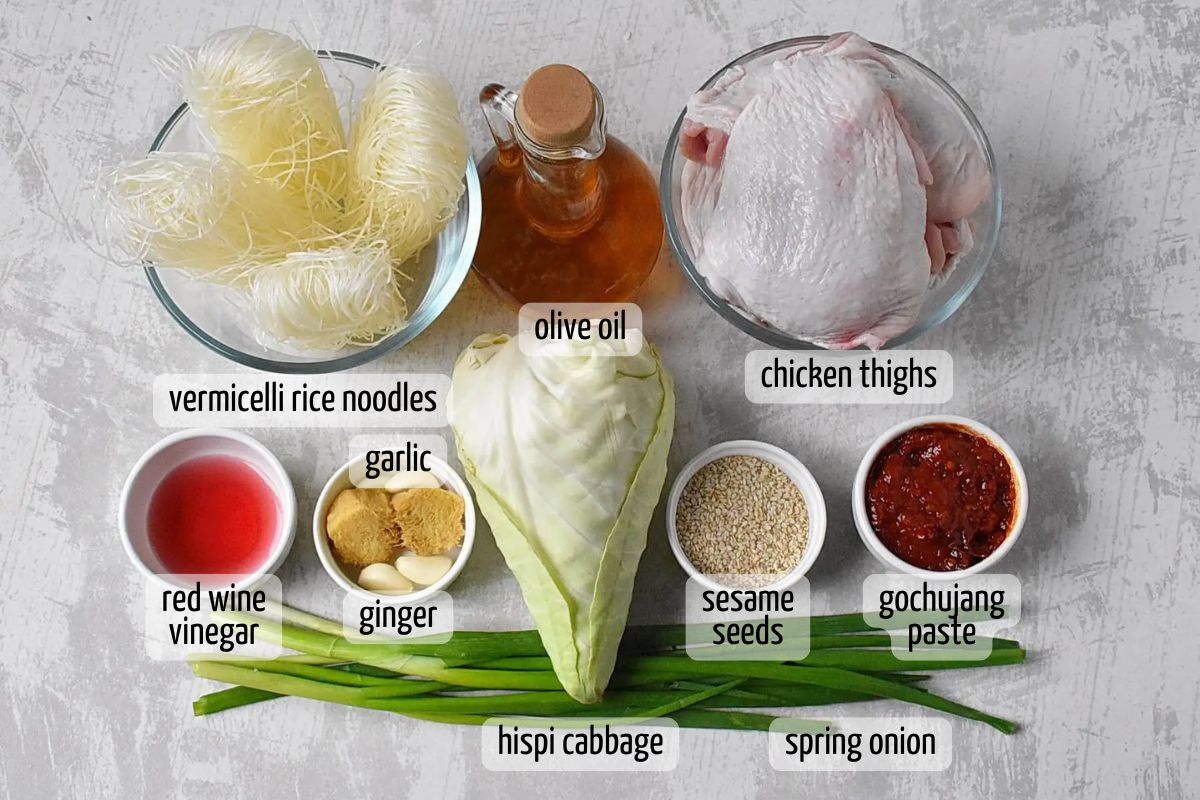
Preheat your oven to 400 °F (200 °C).
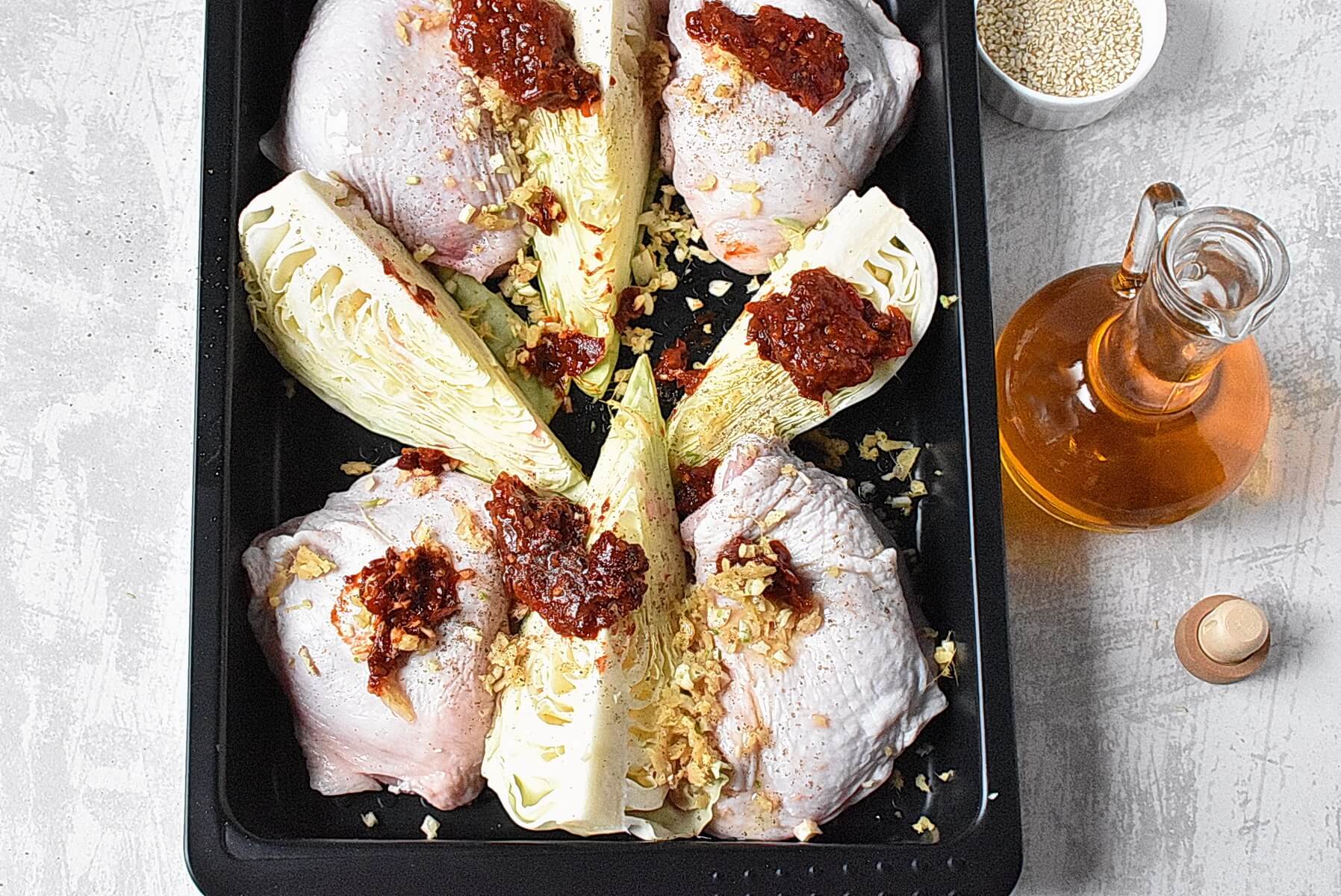
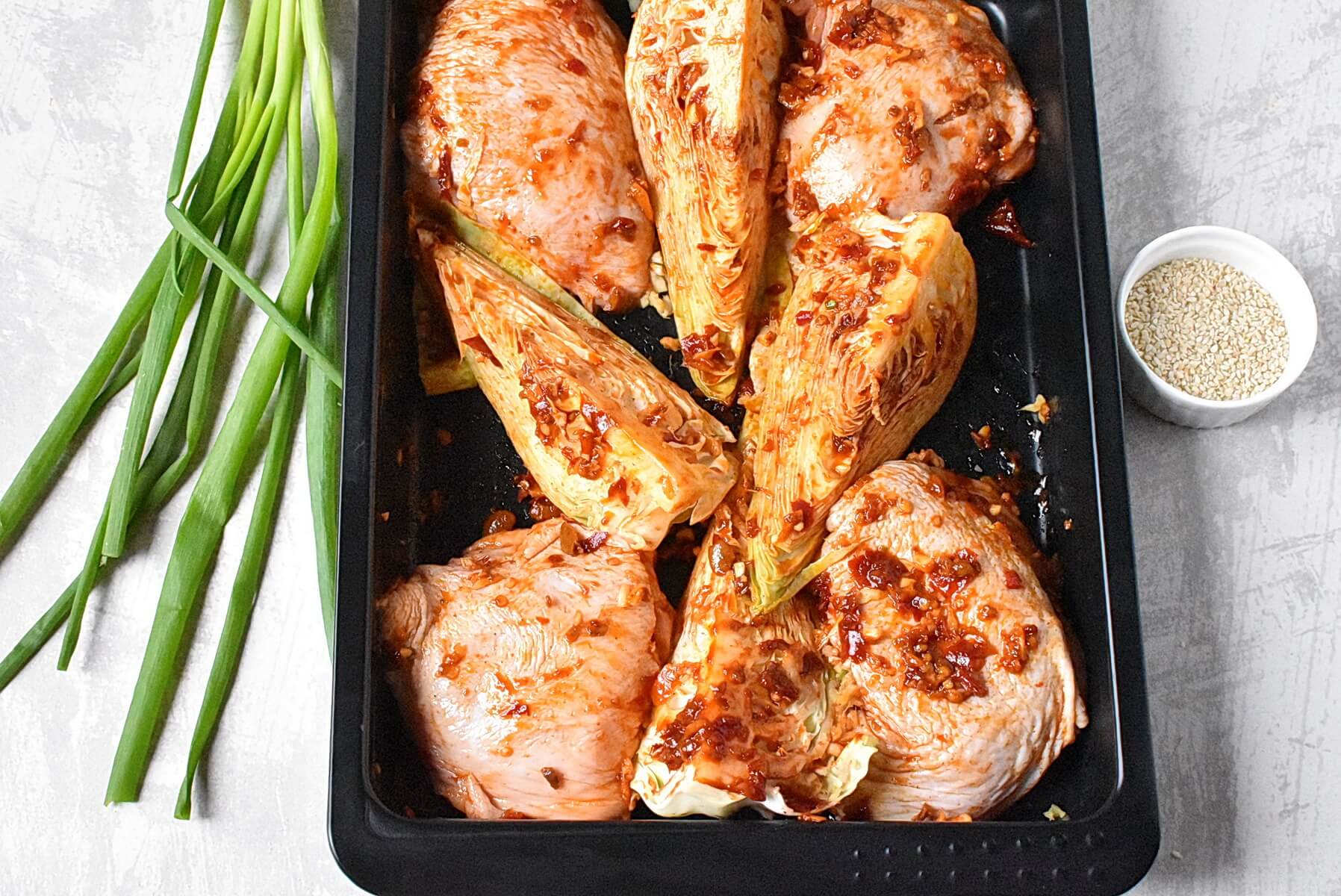
To a 10 x 12-inch baking pan, add the thinly sliced ginger, thinly sliced garlic, cabbage wedges, 4 chicken thighs, and 2 heaped tablespoons gochujang paste. Drizzle over 1 tablespoon olive oil and 2 tablespoons red wine vinegar. Sprinkle with a pinch of black pepper, then mix well, massaging that flavor in. Arrange the chicken skin-side up.
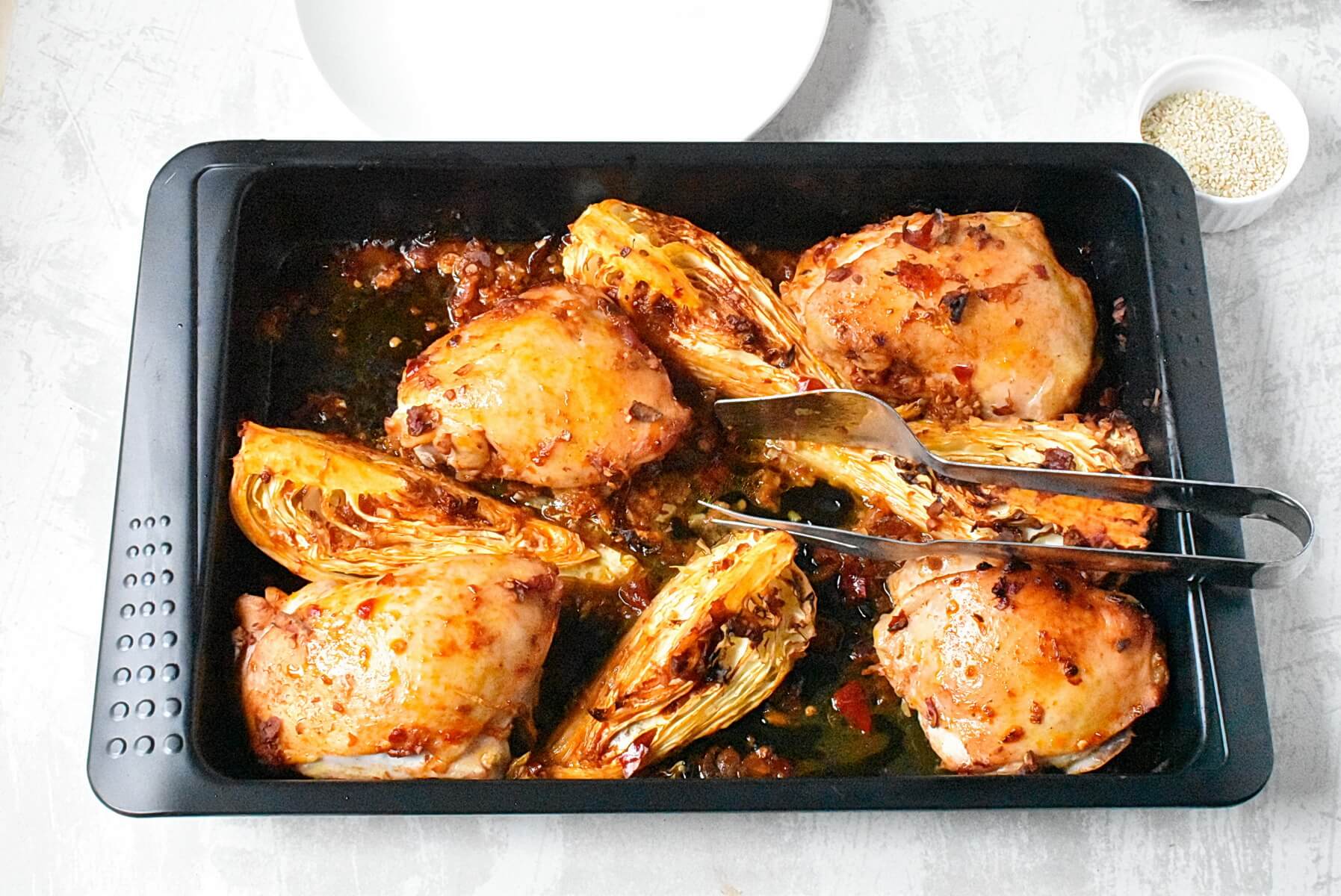
Bake for 30 minutes.
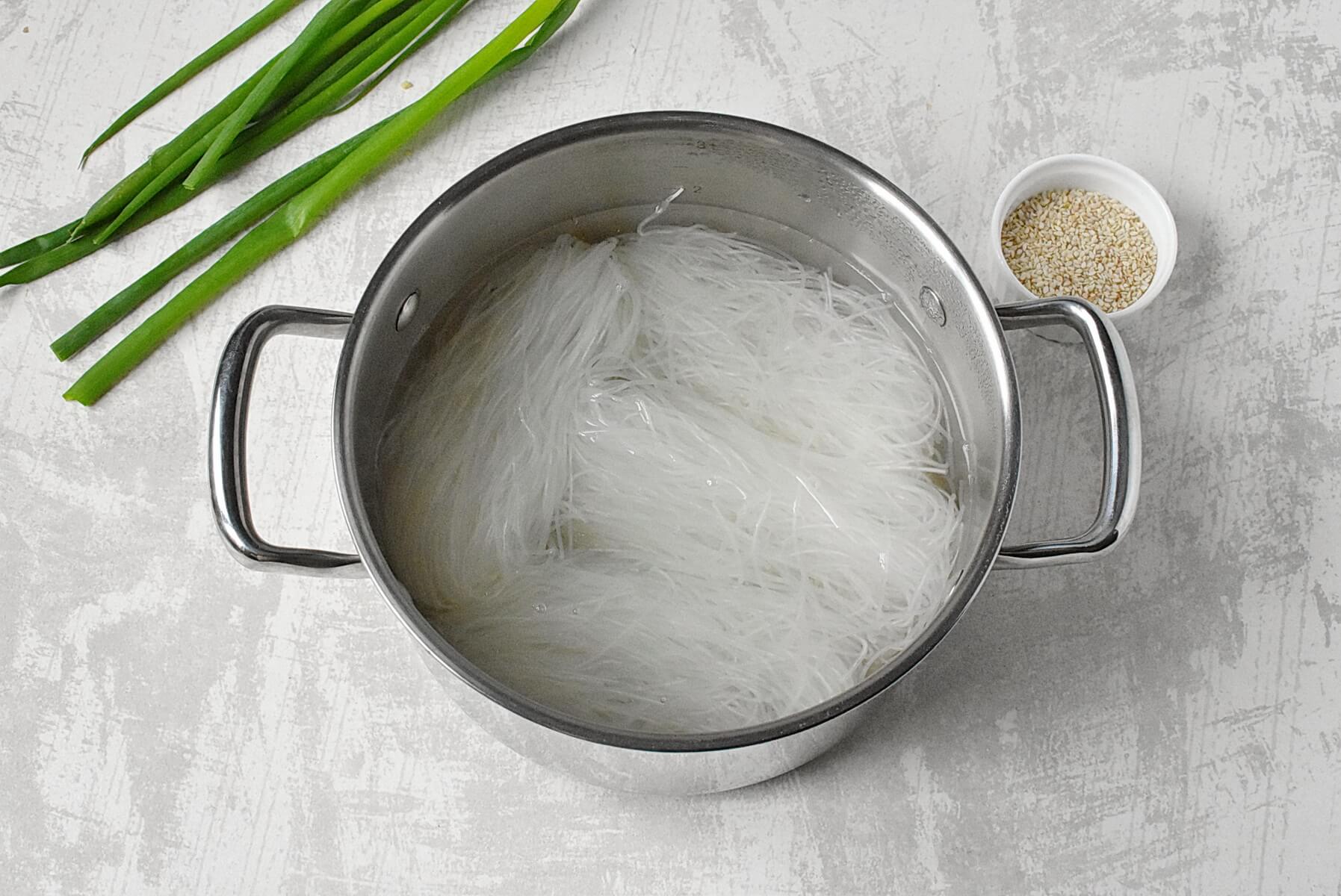
When 30 minutes are almost up, place the noodles in a bowl of boiling water and let them soak for 1 minute.
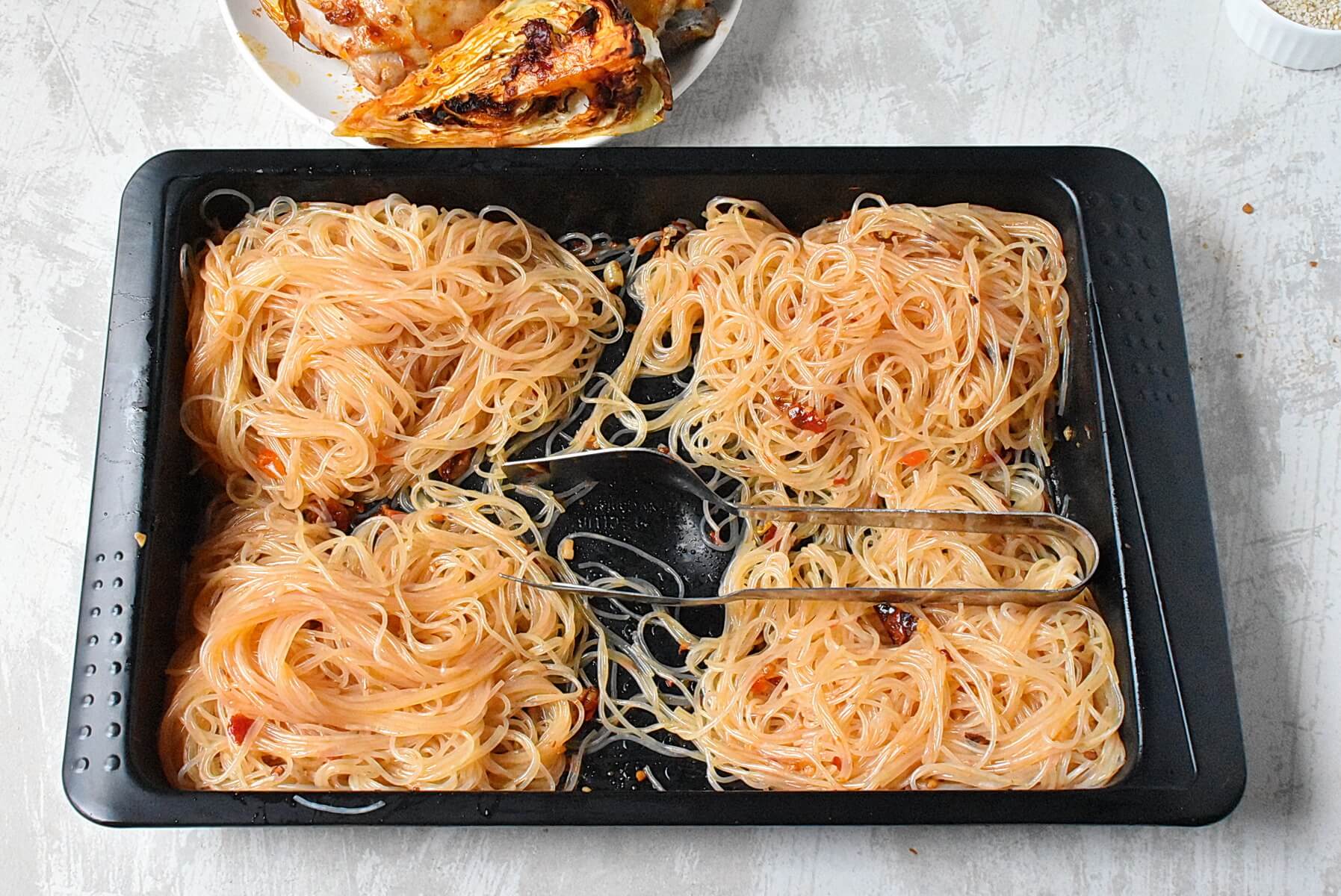
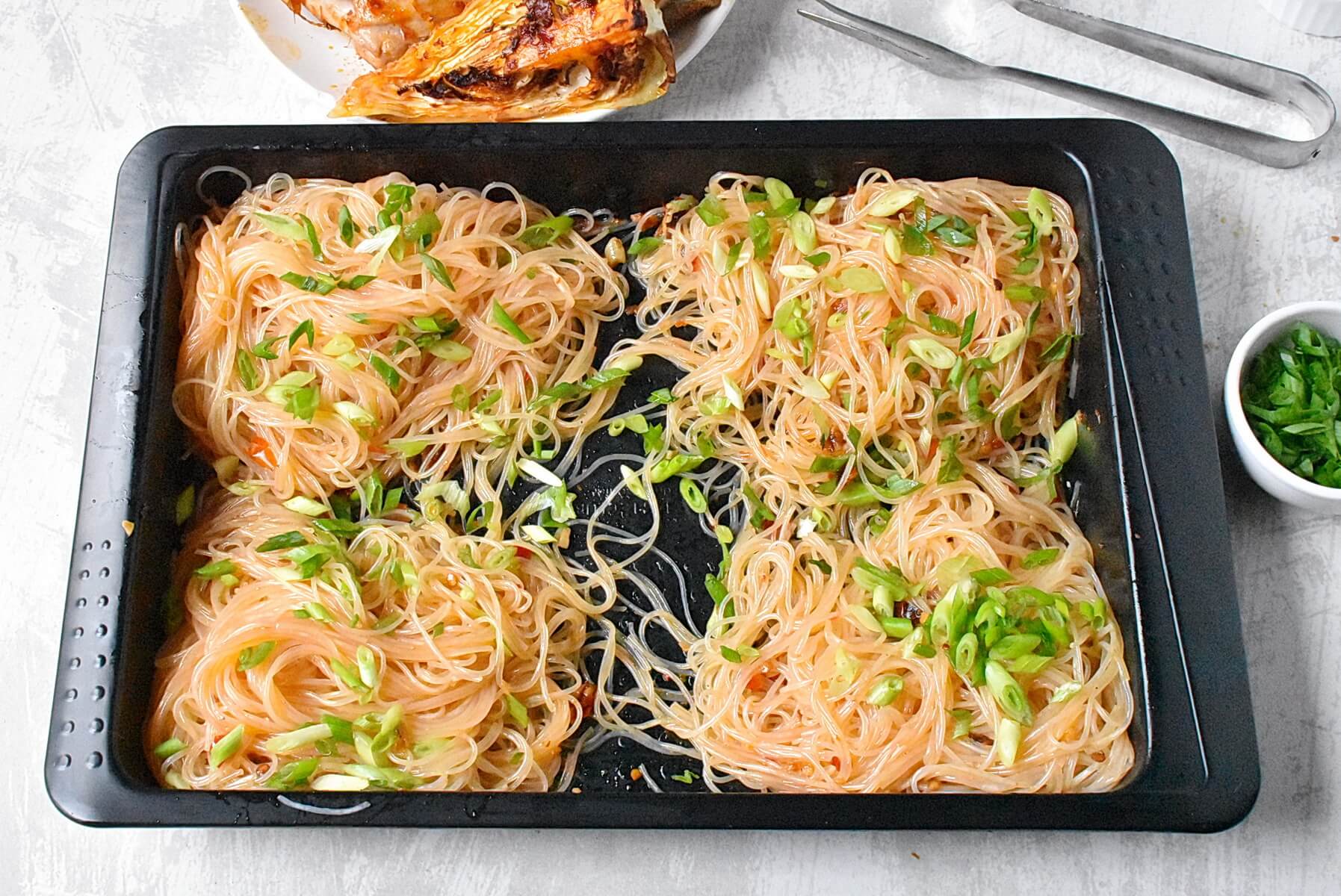
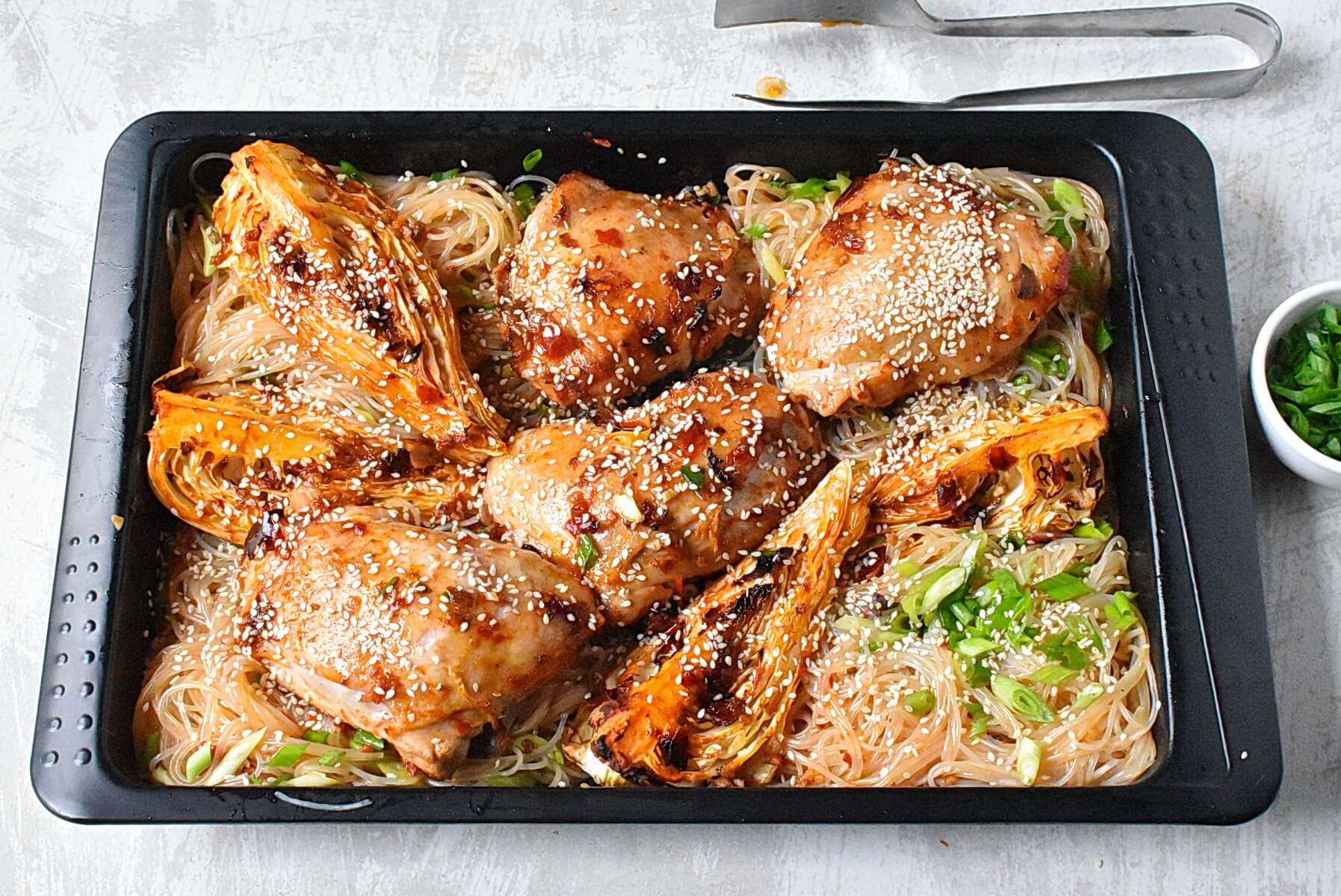
Remove the sheet pan from the oven. Carefully transfer the chicken and cabbage to a large plate, then use tongs to drag the noodles into the pan, dressing them in the pan juices. Nestling the noodles in the corners of the pan. Finely slice the green tops of spring onions and reserve them for garnish, then add the white parts to the pan. Return the cabbage back to the pan. Arrange the chicken thighs on top skin-side up. Pour 200 milliliters of cold water into the pan. Sprinkle over 2 tablespoons sesame seeds.
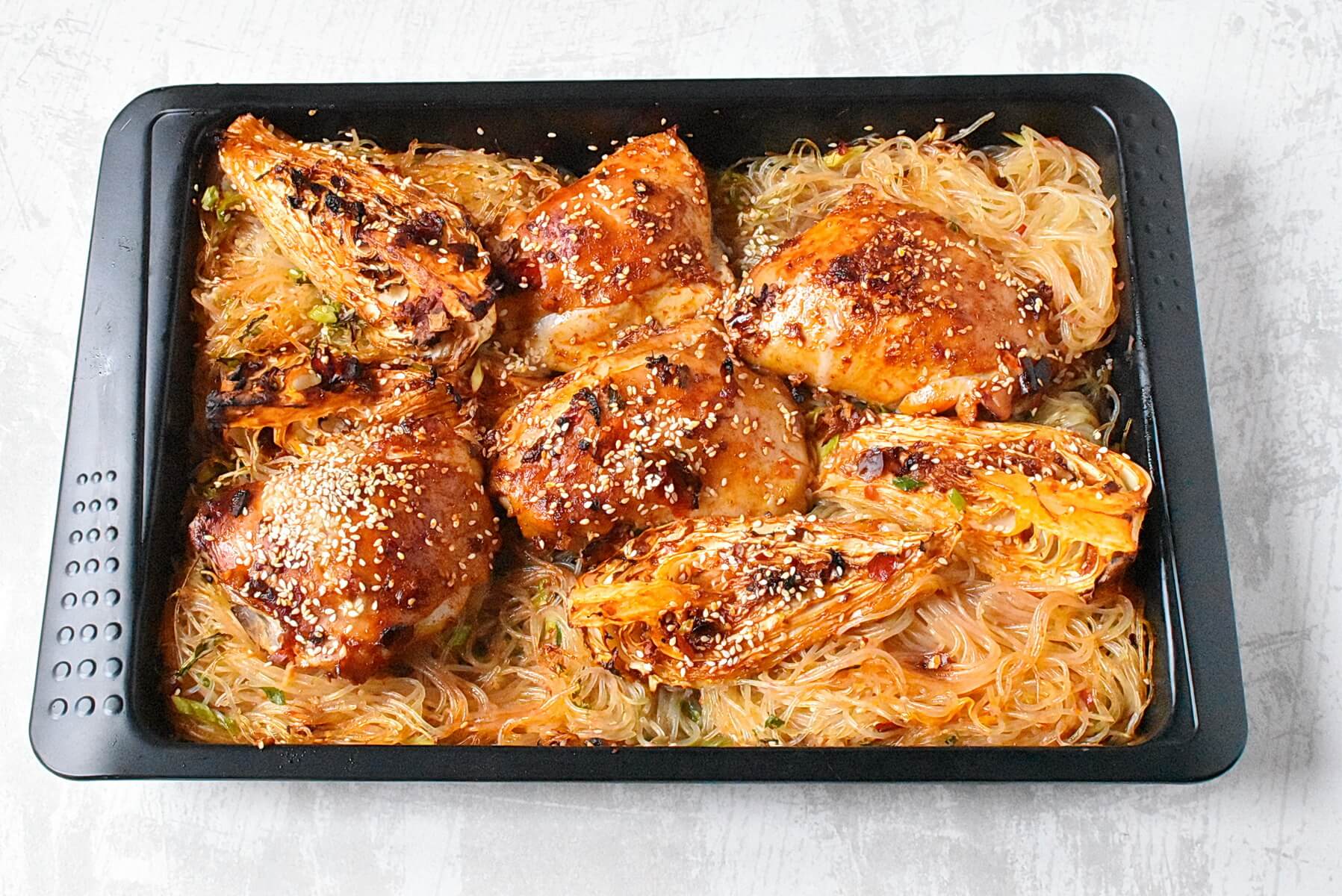
Carefully return the pan to the oven and bake for another 20 minutes or until the chicken is cooked through, the cabbage is tender and the noodles have soaked all the cooking juices.
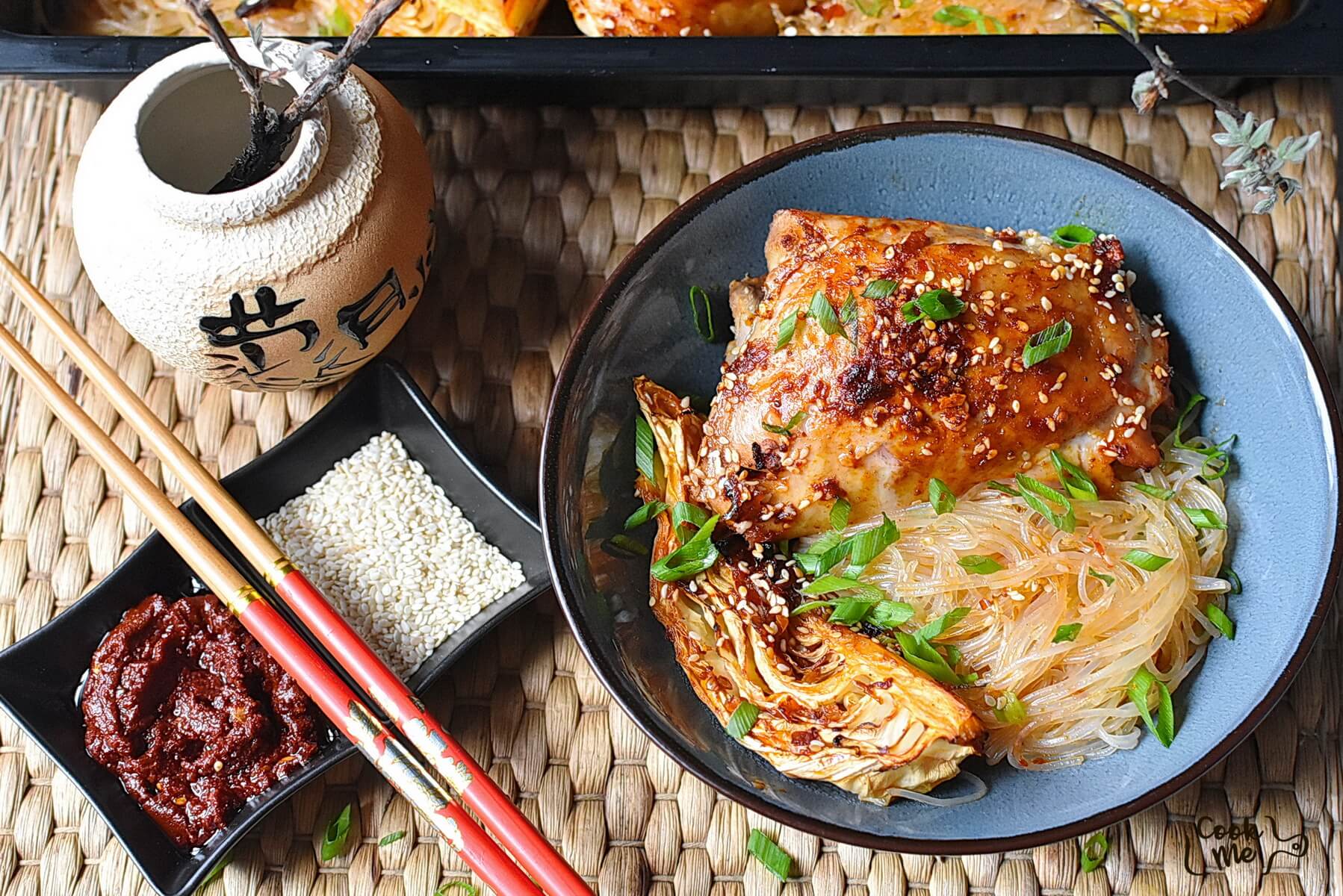
Serve immediately, garnished with the reserved spring onion tops. Enjoy!
For this recipe have a baking pan around ten by twelve inches so nothing feels crowded. I like ones with taller sides to catch the juices. A sharp knife and a sturdy cutting board make the ginger and garlic quick work. You will want tongs for moving chicken and for pulling noodles into the pan. A large heatproof bowl works for soaking the noodles in boiling water. Measuring spoons, a small bowl for sesame seeds, and an oven mitt or two finish the list. If you are missing something, improvise. A regular baking sheet lined with foil will work but keep an eye on the liquid.
Slice the ginger and garlic thin so they mingle into the pan juices rather than announcing themselves as chunky bits. Quarter the hispi cabbage through the core so the wedges hold together and caramelize on the edges while staying tender inside. It makes a nice contrast with the soft noodles.
Get your hands in there and really massage the gochujang, olive oil, and red wine vinegar into the chicken and cabbage so everything is evenly coated. This is how the flavor moves from surface to center and how you get crispy skin alongside juicy meat. A pinch of black pepper in the mix wakes things up without adding raw heat.
When you soak the rice noodles for a minute in boiling water, they soften enough to absorb the pan juices but not so much they break down. The noodles become proper sheet pan noodles, soaking up juices and sticking to the sauce. Add the cold water to the pan before the second bake so the steam finishes the noodles and keeps the chicken from drying out.
Sprinkle sesame seeds at the end for a toasty note and reserve the green tops of the spring onions for a fresh finish. For the best baked gochujang chicken let the paste sit on the meat for a short rest if you have time. Simple moves, big payoff.
Veggie forward: swap the chicken for pressed tofu or big mushrooms for a version without meat that still brings the fermented hit from the gochujang. Pressed tofu soaks up the paste and roasts to a chewy exterior, which is lovely with extra roasted bell peppers or carrots.
Turn up the heat by adding more gochujang or sliced chilies when you massage the mix in. I sometimes stir a spoonful of honey into the paste to balance the fire with a gloss that caramelizes on the skin. This method works if you want to make a bolder statement without losing the vinegar tang.
Low carb option: use spiralized zucchini or rice sticks instead of vermicelli. If you use zucchini, add it in the last ten minutes so it keeps some bite. With rice sticks, soak a bit longer so they are pliable. I like how these swaps keep the dish feeling seasonal.
This feeds well on its own, but steamed rice stretches the meal and soaks up extra sauce. For contrast make a quick cucumber salad with rice vinegar and sesame oil to cut through the heat. It is a quick weeknight dinner that feels special even when you are tired.
Garnish options include pickled radishes or cilantro for brightness. A chilled beer or iced jasmine tea pairs nicely. If you want to lean fully into the fermented theme, serve with kimchi on the side. I like bowls for serving, but it also works wrapped in lettuce for handheld bites.
Gochujang is a fermented chili paste made from red chilies, rice, soy, and salt. It tastes deep and funky with heat and a little sweetness. In this recipe use two heaped tablespoons mixed with olive oil and red wine vinegar, then massage it into the chicken and cabbage before the first bake. If your tub is very thick, thin it a touch with water. If you are sensitive to spice, start with one tablespoon and add more later.
Yes. Swap hispi cabbage for regular cabbage or bok choy and use boneless thighs if you want to shave bake time. The method is forgiving and the flavors hold up. I often prep the veg the night before to save time.
Use one tablespoon of gochujang and add a little honey to mellow the heat. You will still get that fermented umami without the sharp kick. Taste as you go; every tub of paste varies in intensity.
Yes. Replace the thighs with extra mushrooms or eggplant, toss them in the gochujang mix, and bake as written. Mushrooms give a meaty texture and honor the roasted umami that makes this dish feel satisfying.
Leftovers reheat well. Add a splash of water and warm in a skillet over medium heat so the noodles loosen up and the chicken warms through without drying.
I often make this after a long day and eat straight from the pan when my husband is late and Kimchi is asleep on the sill. It is forgiving, loud in flavor, and low fuss. I hope it finds a place in your weekday rotation the way it did in mine.
Make your sheet pan work for you with this easy and delicious Gochujang Chicken Noodle Sheet Pan. This hearty recipe starts with a gochujang chili paste that’s massaged into chicken thighs and cabbage for extra flavor, then baked together for a satisfying meal with minimal cleanup. Made it? Let us know how it went in the comments below.

Gorgeous! Thanks!
 Dairy-Free Recipes
 Gluten Free Recipes
 Spicy Recipes