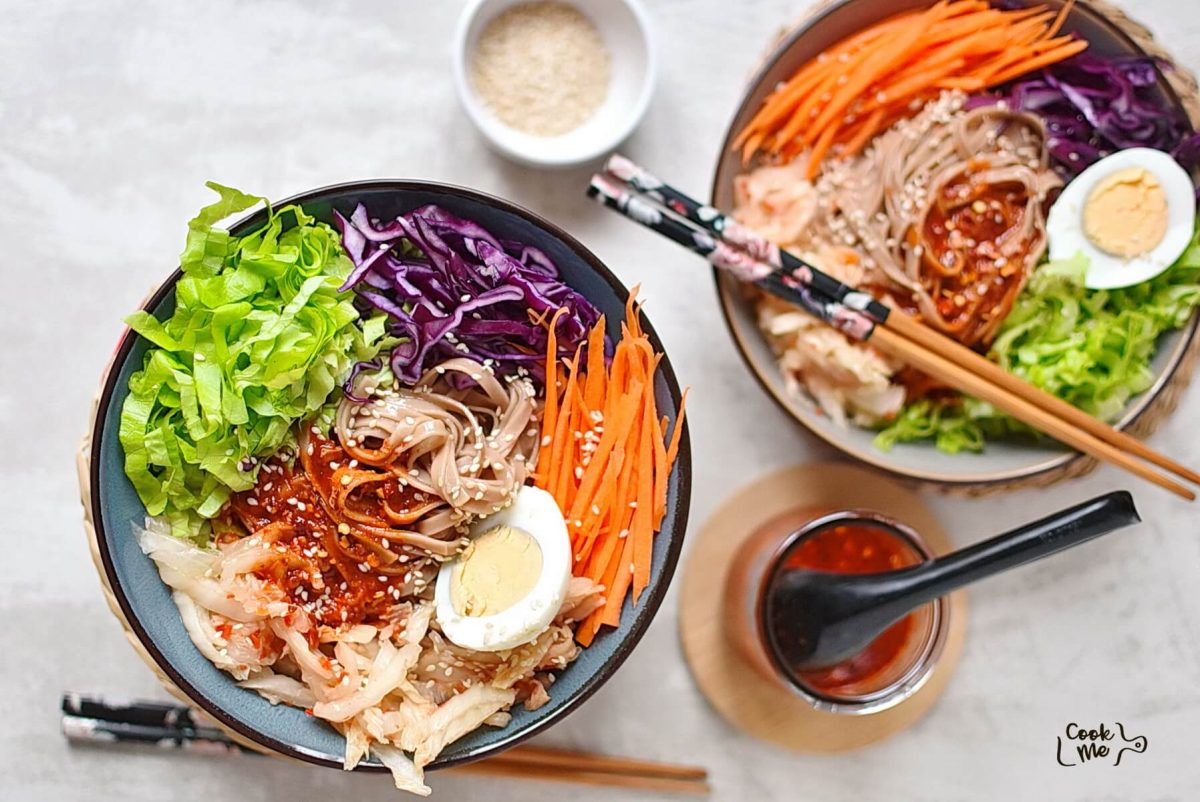
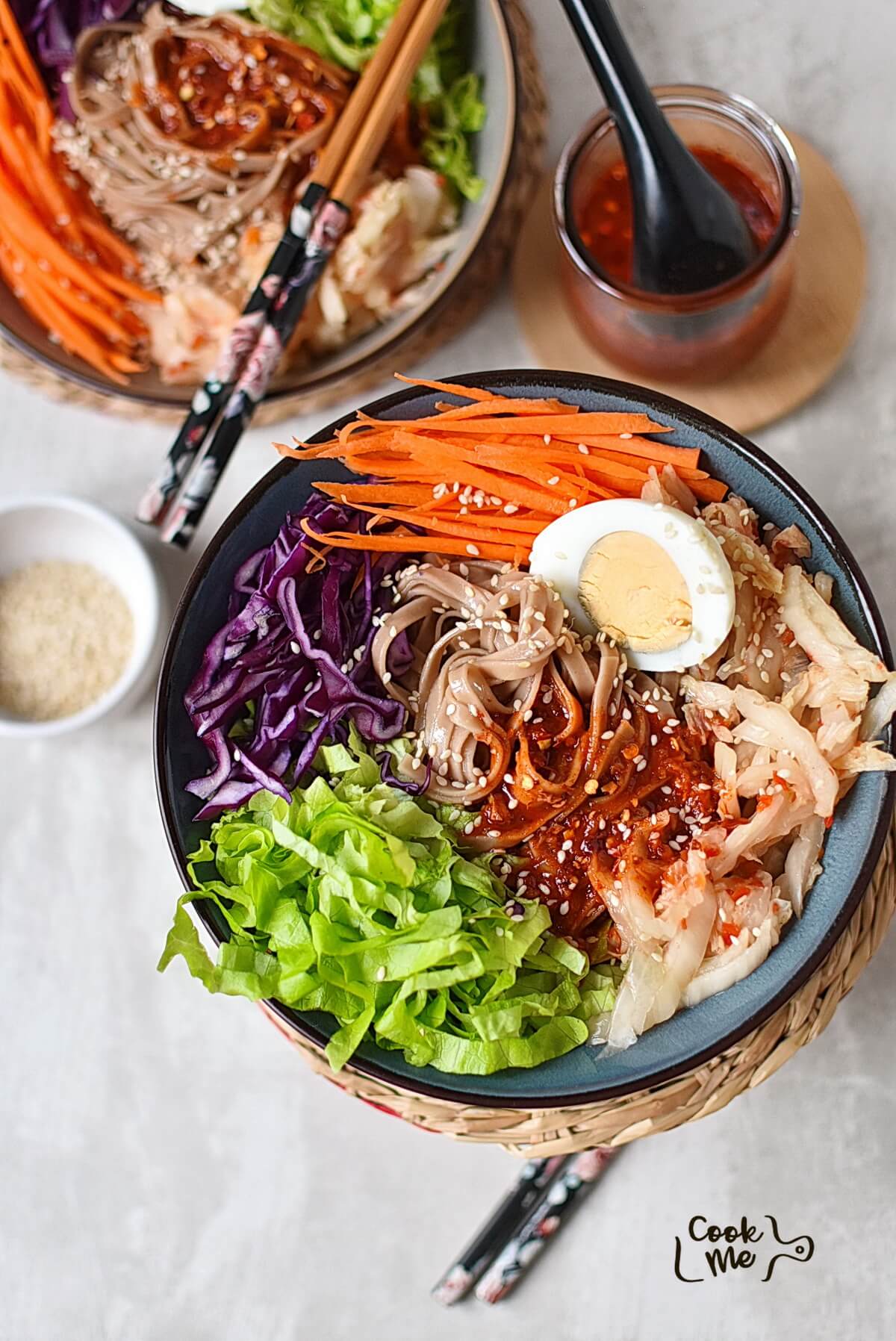
This Bibim Guksu recipe with gochujang is one I reach for when the heat asks for something clean and bright. I first met a bowl like this at a tiny stall I found in Bangkok, run by a Korean cook who used local fruit for a sweet lift. The memory is small and sticky a napkin with sesame on it, but the lesson stuck: simple ingredients arranged with care make a loud, honest dish.
What I love about this version is how it balances hot and cold in a way that actually feels measured, like a tiny physics experiment on a plate. The sauce has fermented depth from the gochujang and a little sweet lift that keeps it friendly. The noodles are rinsed ice cold so they keep a little snap, and the raw vegetables counter the spice with crunch.
It is quick. It is adaptable. It packs like picnic food and it makes the kitchen smell like my mom’s pantry which is comforting. Try it.
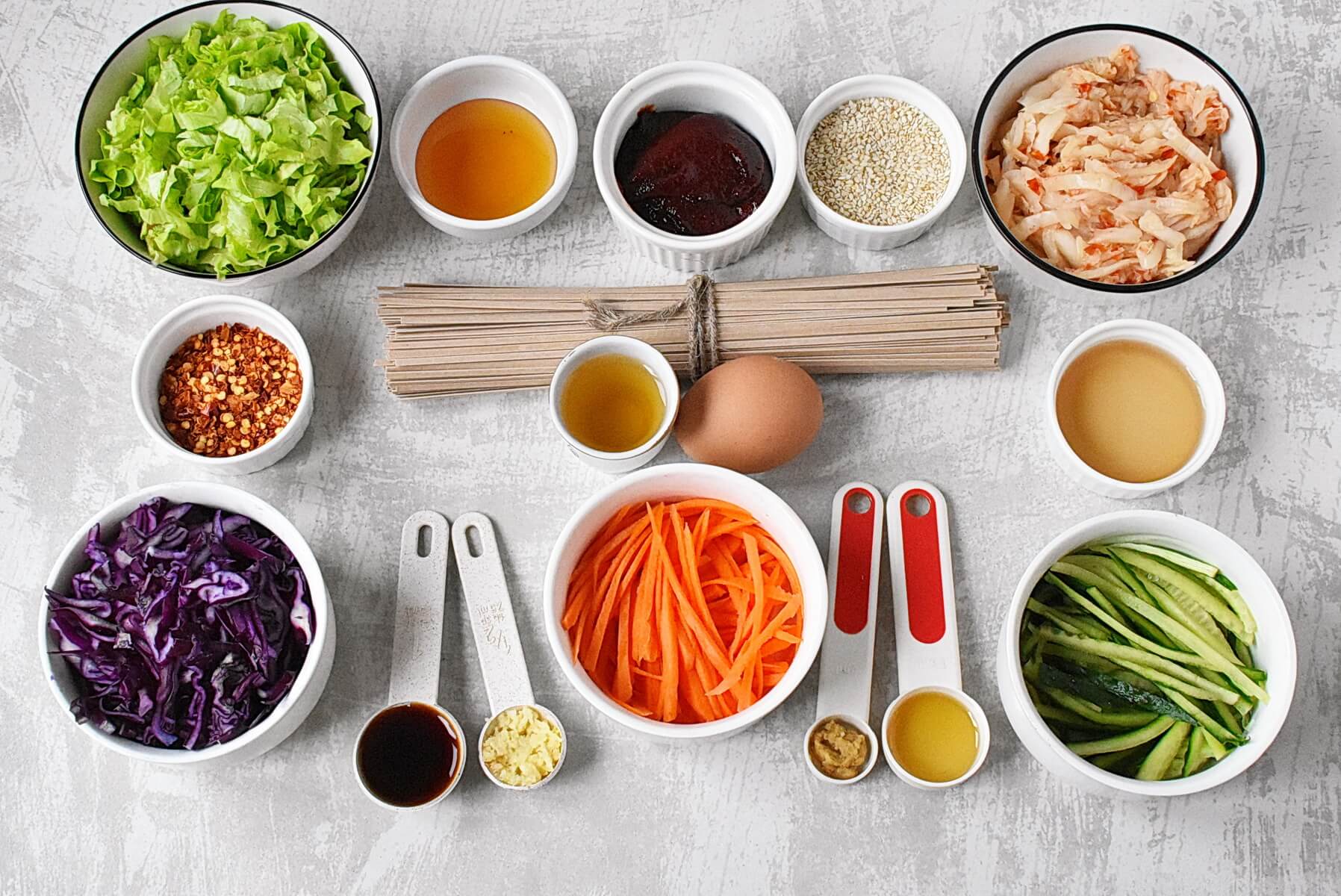
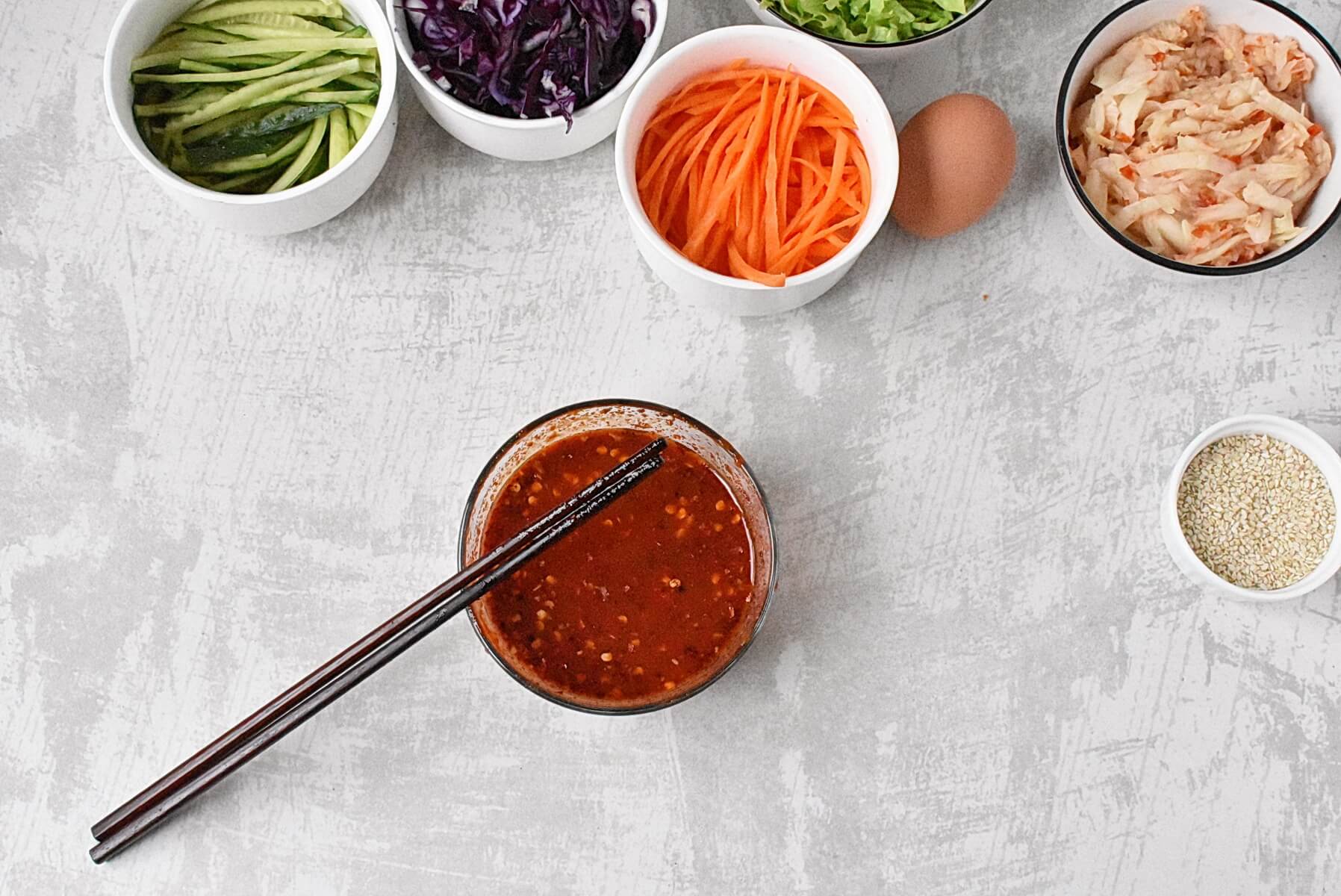
In a small bowl, mix together 3 tablespoons Korean chili pepper paste, 1 tablespoon Korean chili pepper flakes, 1 teaspoon Korean/Asian hot mustard paste, 2 tablespoons sugar or to taste, 2 tablespoons rice vinegar or to taste, 1 tablespoon soy sauce, 1 clove minced garlic, and 2 tablespoons soft drink of choice if using. Keep the sauce cool in the fridge. The sauce can be made ahead of time, and it will keep well in the fridge for up to 2 weeks.
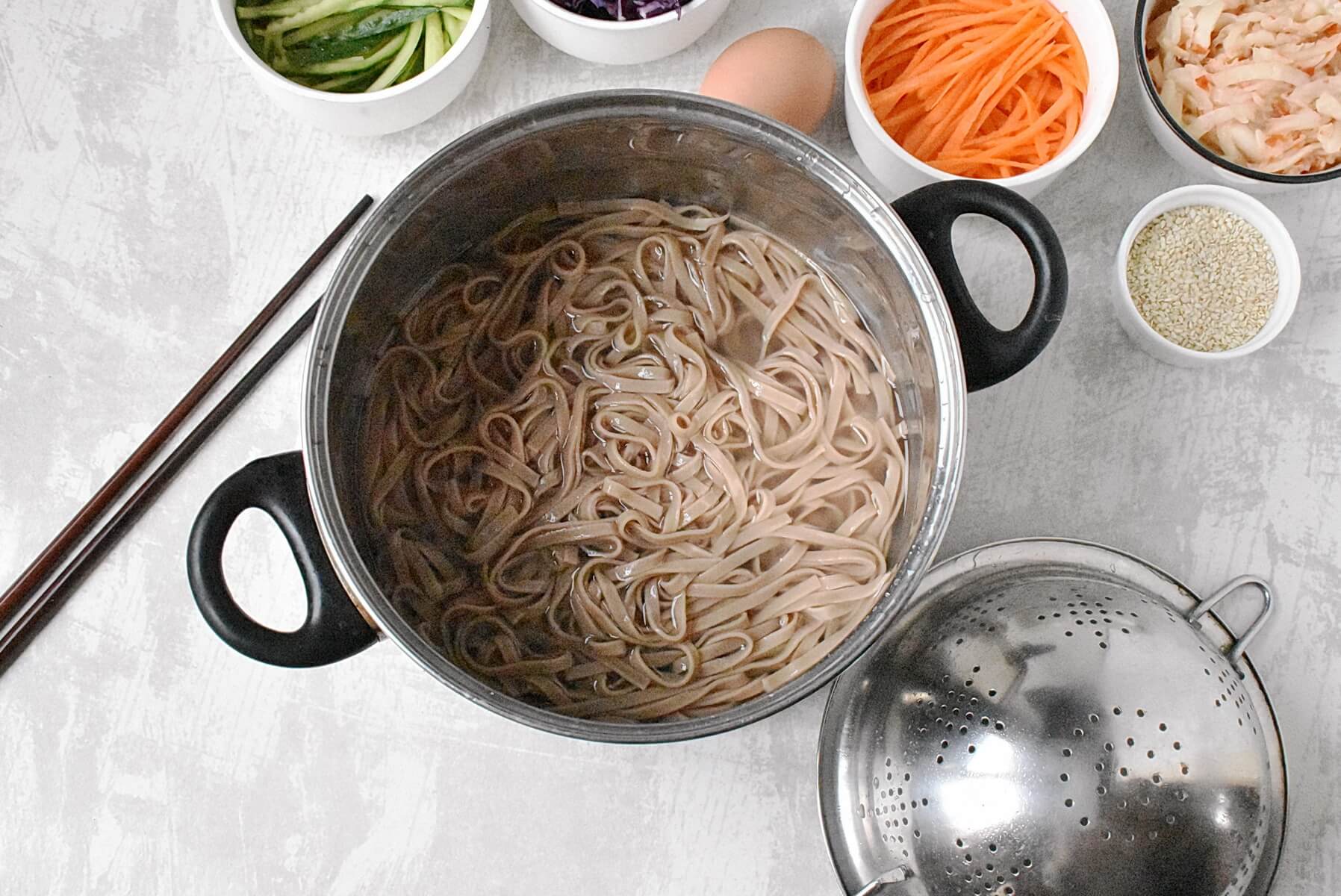
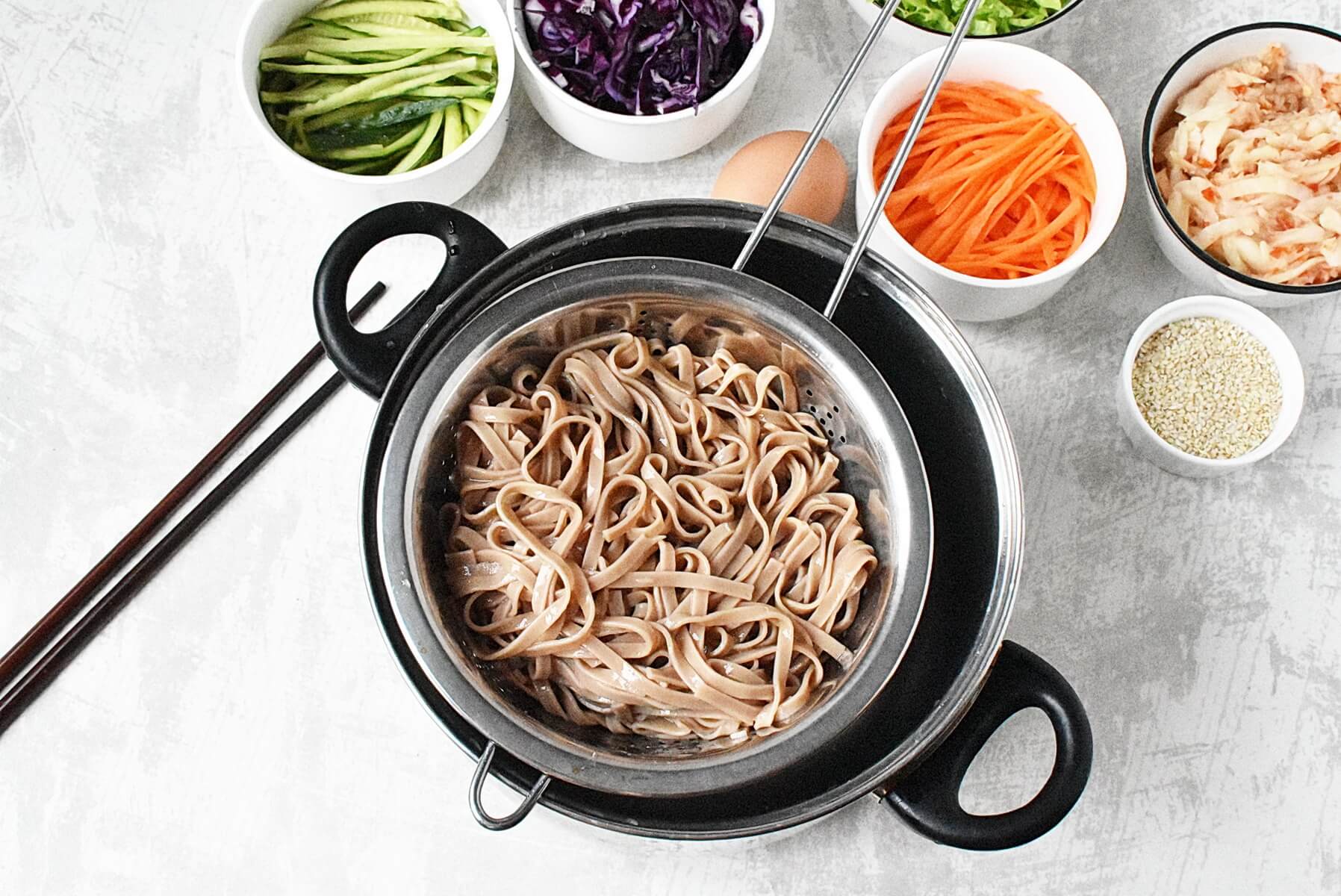
Cook 8 ounces buckwheat noodles in a medium pot of boiling salted water according to package instructions. Drain and shock in cold water to stop the cooking process.
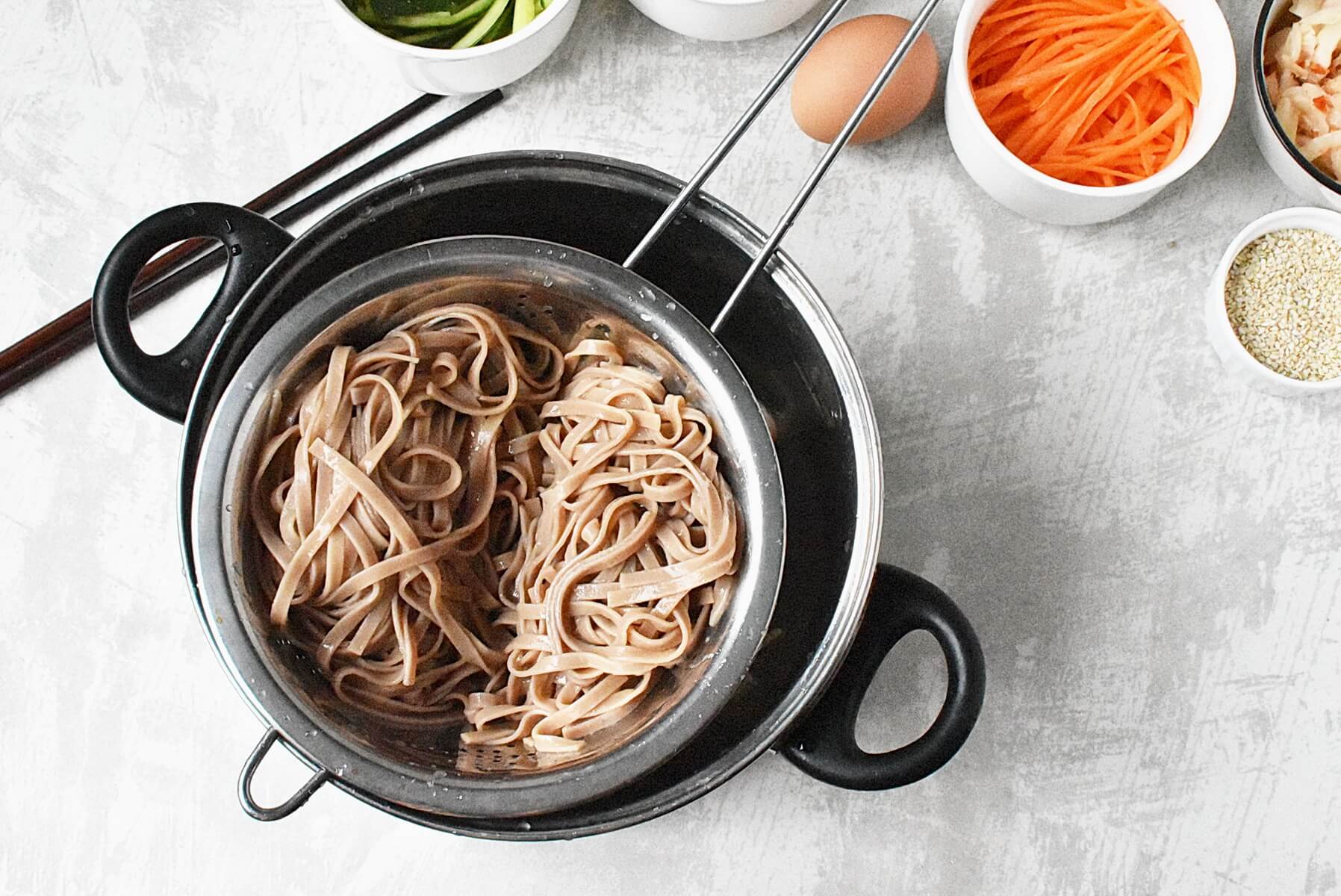
Drain and rinse in ice water until the noodles are very cold. Divide the noodles into two mounds. Transfer the mounds to a colander to drain.
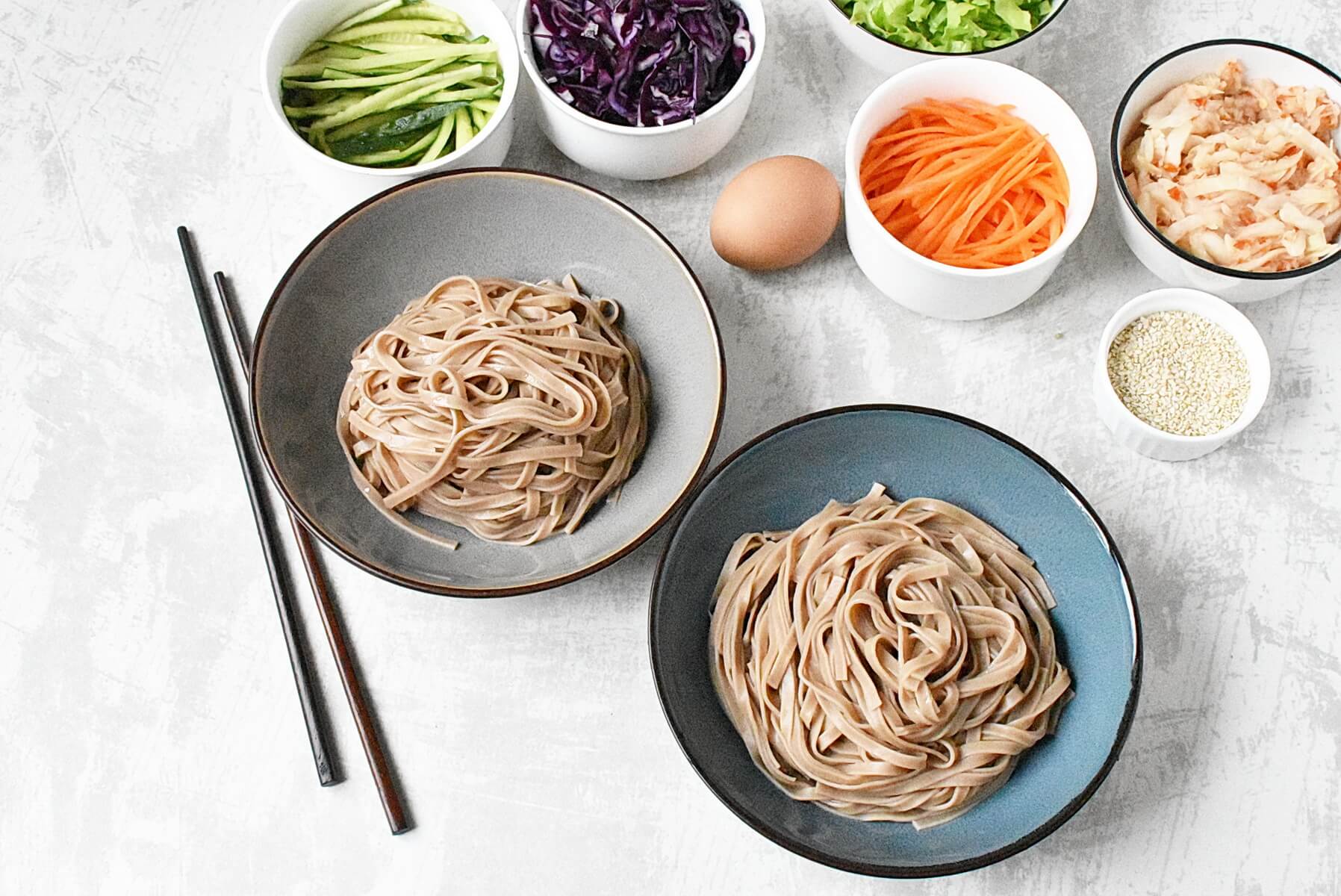
Place the drained noodles in the center of two serving bowls.
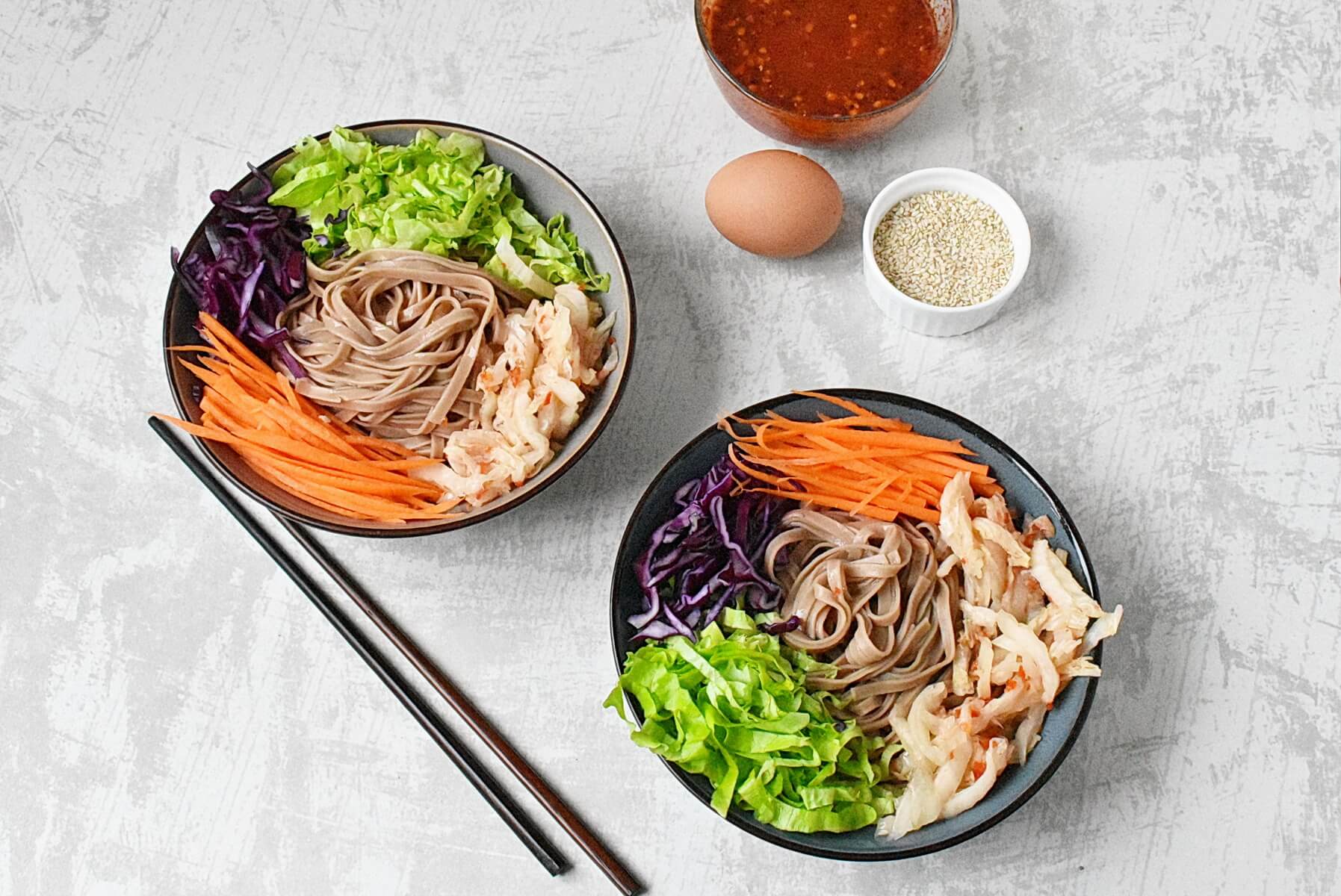
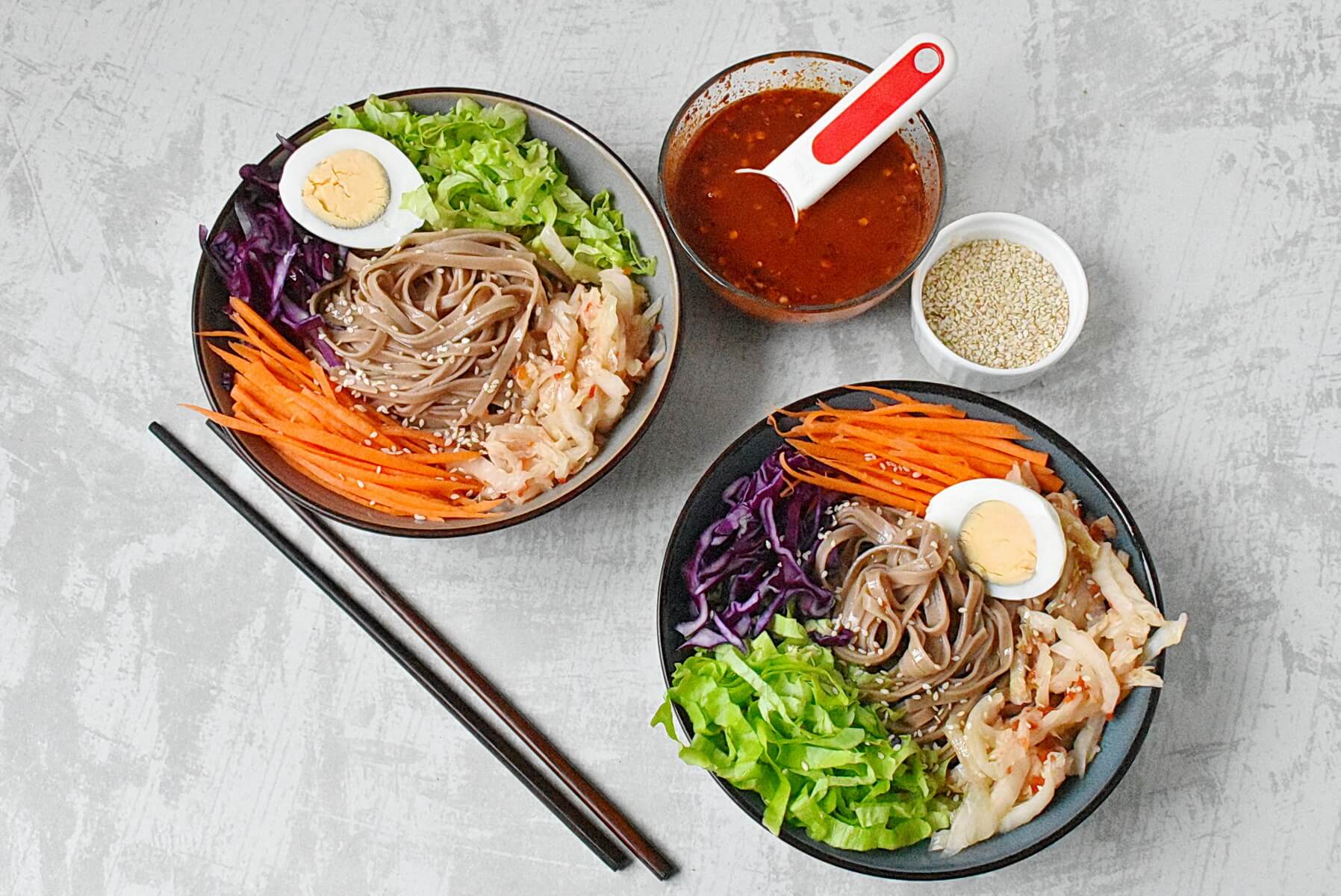
Arrange the sliced vegetables over the noodles. Drizzle ½ tablespoon sesame oil over, sprinkle with 1 teaspoon sesame seeds, and place one half of the boiled egg on top of each bowl.
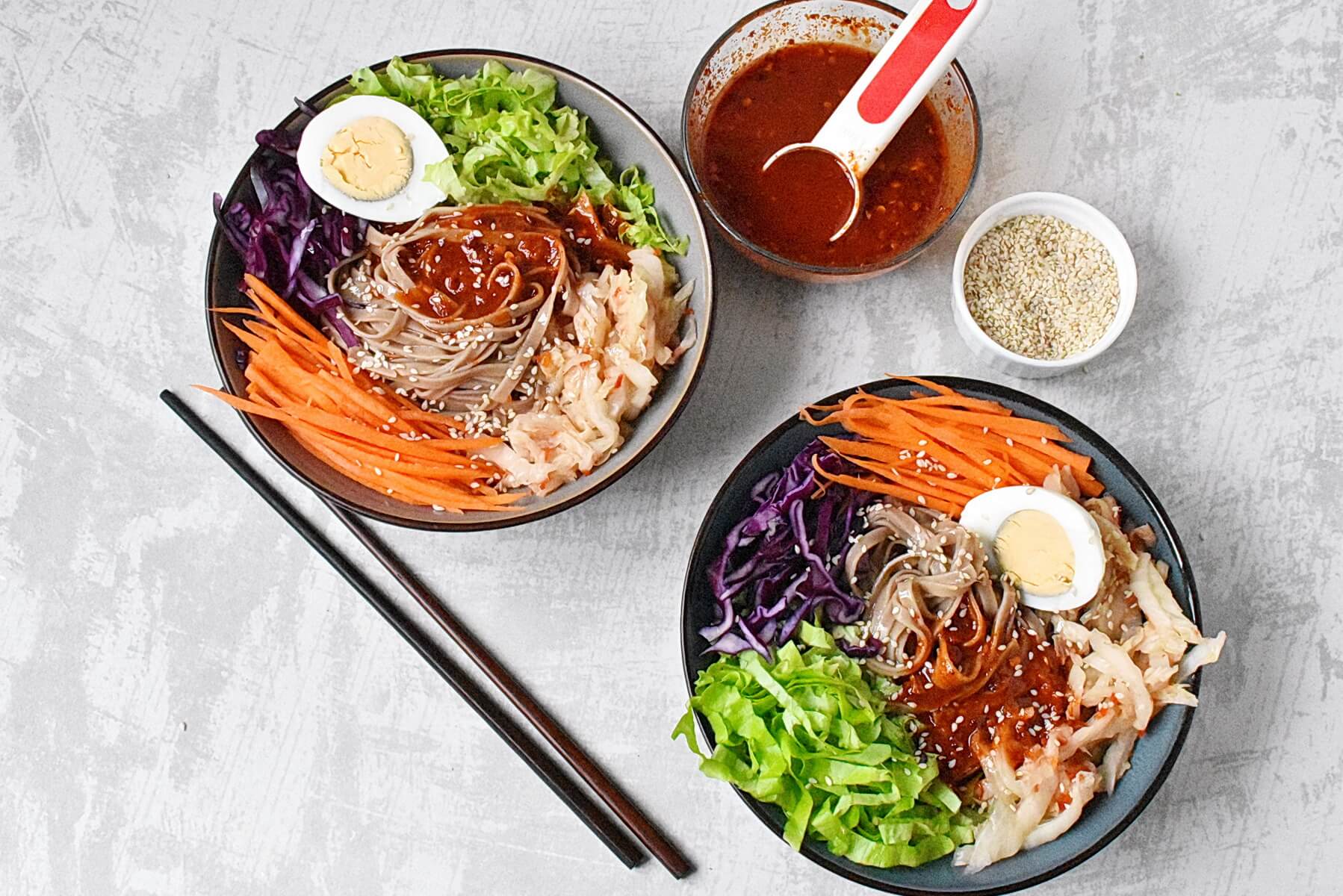
Serve the cold noodles topped with the prepared gochujang sauce or serve the sauce alongside for drizzling.
You only need basic gear: a medium pot to boil the noodles, a colander to drain and rinse them cold, a small bowl to mix the sauce, and a sharp knife for the vegetables. A whisk or fork is fine for blending the sauce. Wide shallow bowls work best for serving so the sauce meets every strand of noodle.
If you want eggs, use a small saucepan to boil them first, or reuse the noodle pot so you do not dirty more pans. I like measuring spoons for the sauce because a little change in the gochujang can alter the whole balance. Kimchi my cat watches is optional but recommended for moral support.
Taste as you go. Gochujang varies a lot by brand, so adjust the sweet and the vinegar until the sauce sings for you. For a gentler heat I add a splash more apple juice. This lets the fermented notes open up without searing everything.
Rinse the noodles in cold water until they are very cold. That step matters. It firms the noodles and stops them from getting gluey, and it helps the sauce cling rather than soak in. I learned this in Tokyo, when I rinsed until the water was near freezing. The texture change is worth the extra minute.
I call this a summer Korean noodle dish on hot afternoons because the cold components refresh, and the sauce is bright enough to feel like a meal without weighing you down. Add a few toasted sesame seeds and a drop of sesame oil at the end for a nutty perfume that makes people lean in.
Turn this into a hearty bowl by adding silken or firm tofu, cubed and briefly marinated in soy and garlic. This turns it into a more filling Soba noodle spicy salad when you use soba. Edamame is a good add if you want extra bite and color. Be careful with portions so the tofu does not overwhelm the other textures.
Fold in lightly poached shrimp or squid rings for a briny contrast. The kimchi and seafood create a Spicy kimchi noodle salad vibe that is bright and coastal. Use wheat noodles if soba feels too earthy, and brighten with extra rice vinegar.
Scatter chopped Thai basil or mint for a fragrant lift. This fresh turn makes the bowl feel more herbal and less chili forward. It is my pick when I want a version that smells like the garden. It leans into the idea of an Easy Korean cold noodle salad for days when you want something light.
Serve in chilled bowls and let people add sauce to taste. For a shared meal, mound noodles in the center and arrange vegetables around so guests can compose their own bowls. Kimchi or pickled radish on the side is excellent if you want a bibimmyeon recipe feel to the spread.
Pair with iced jasmine tea for a cooling counterpoint, or a light beer if you prefer bubbles. A simple miso soup starter warms people gently before the cold main. For dessert, fresh melon or citrus cleans the palate.
Yes. Make the sauce up to two weeks before and keep it in the fridge. Cook the noodles a day ahead, rinse them cold, toss with a small drizzle of sesame oil to stop sticking, and keep the veggies separate so they stay crisp. Assemble just before eating.
If gochujang is hard to find, try mixing miso with a hot sauce and a bit of brown sugar. It will not be identical but will keep the fermented backbone. For authentic results, check an Asian market or order a jar online.
Reduce gochugaru and gochujang and add more sweet or apple juice to soften the spice. You can also omit the mustard altogether. Small tests will help you land the right level for kids or sensitive eaters.
Keep components separate in airtight containers. Noodles with a light splash of sesame oil, vegetables chilled, sauce alone. They will keep for two or three days in the fridge. Do not freeze the noodles, they get gummy.
I make this all summer long. It is forgiving, fast, and full of small pleasures. One of my favorite memories is teaching this at a workshop in Vancouver when a too spicy batch taught me better balance. Lesson learned and then I served it again, softer and kinder and everyone ate the whole bowl.
Okay. One more tip. If you want the sauce to feel silkier, let it rest in the fridge for a few hours. It changes in good ways.
Refreshing and spicy, these Bibim Guksu Korean spicy cold noodles are packed with fresh veggies and flavor. Give this recipe a try, and let us know what you think in the comments!

 Dairy-Free Recipes
 Gluten Free Recipes
 Low Cholesterol Recipes
 Vegetarian Recipes