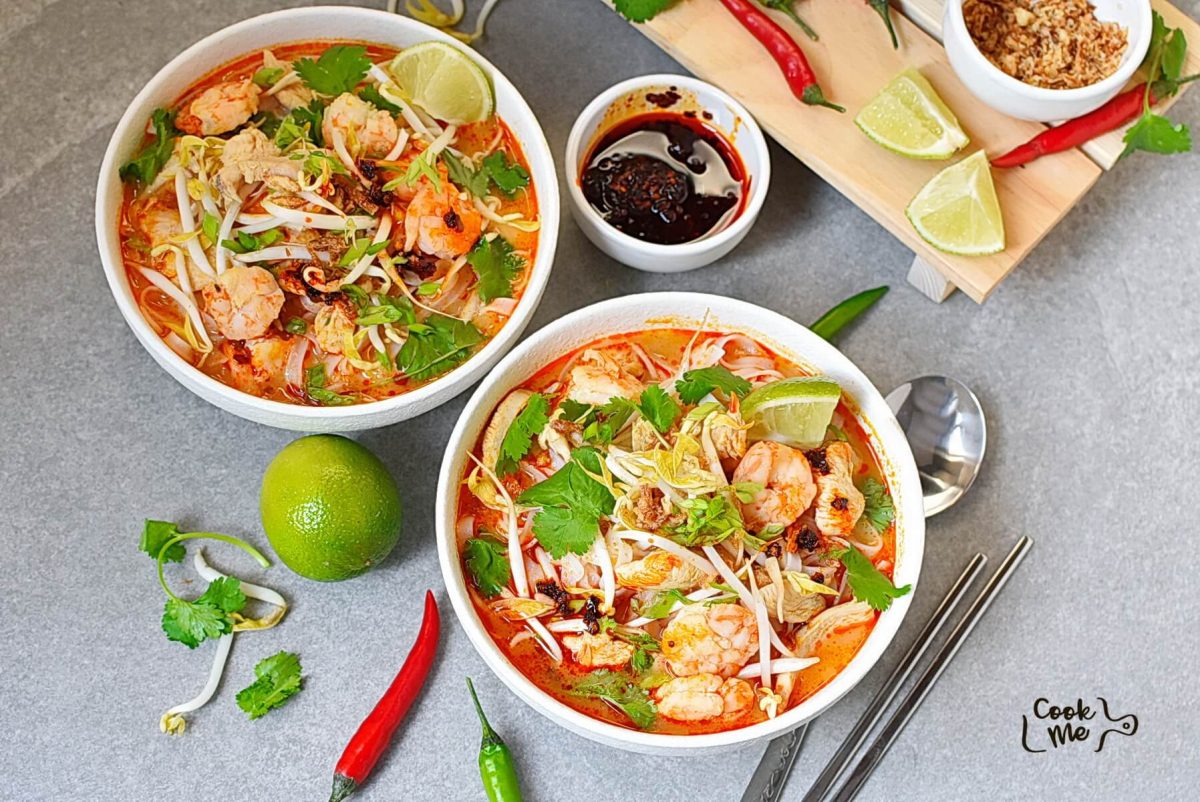
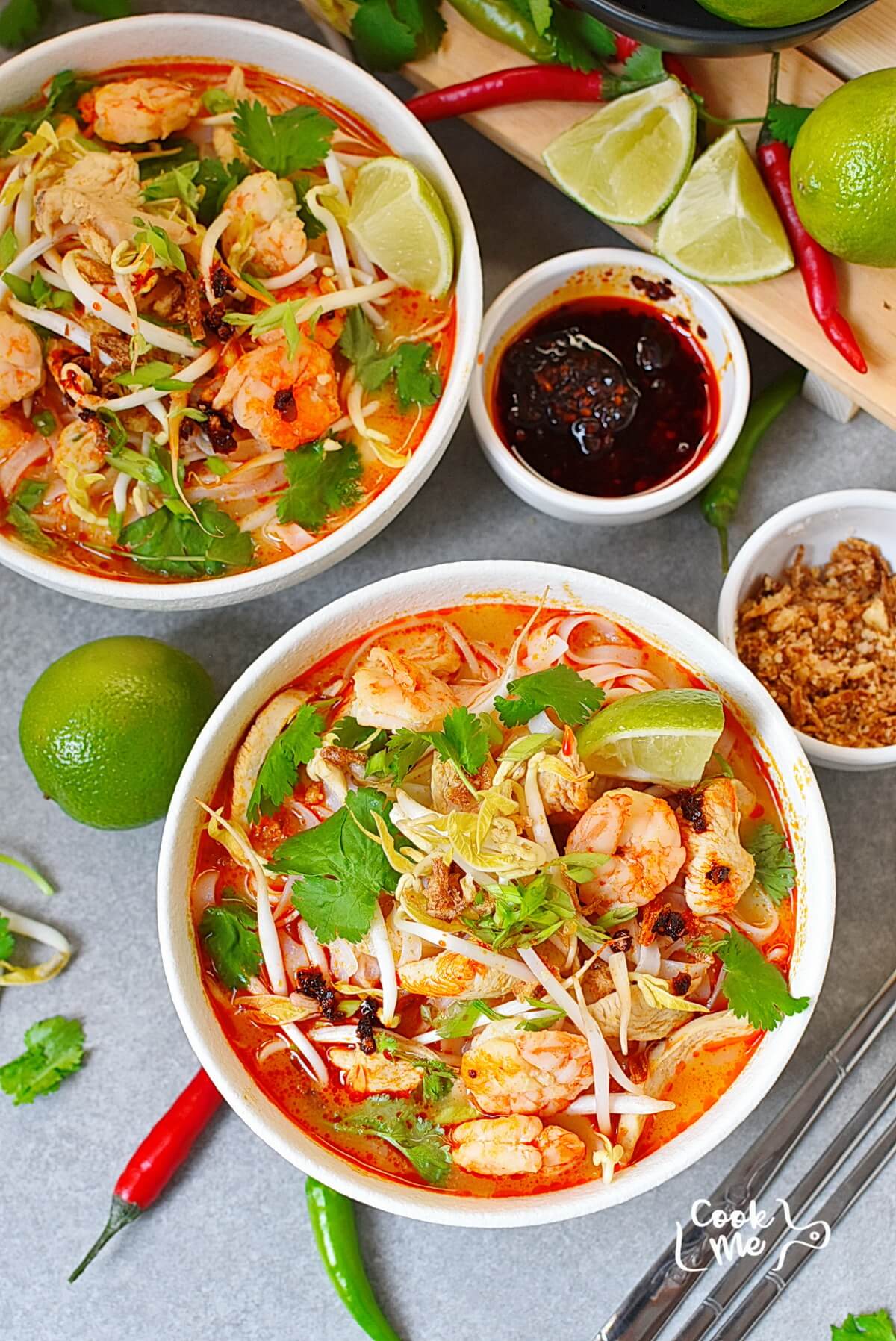
You know those bowls that warm you from the inside out on a foggy Port Townsend morning? That is laksa to me. The malaysian chicken and shrimp laksa I make layers spice and coconut milk in a way that feels both familiar and new, like finding an old sketch in a travel notebook.
First time I had something like this was at a tiny stall near Chatuchak Market. The vendor’s ladle had a dent and I burned my tongue because I could not wait. That memory stuck, the heat and the citrus and the steady, creamy hush of coconut. I have tried to chase that balance ever since, and this version aims to do just that.
What I love about this version is the way it conducts heat, almost like a physics experiment where flavor finds balance. Coconut milk smooths the edges, lime leaves lift the brightness, and the chicken and shrimp give you little moments of comfort in every spoonful. It is homey and street food at once. You can make it on a weeknight. I promise.
Okay. Quick note.
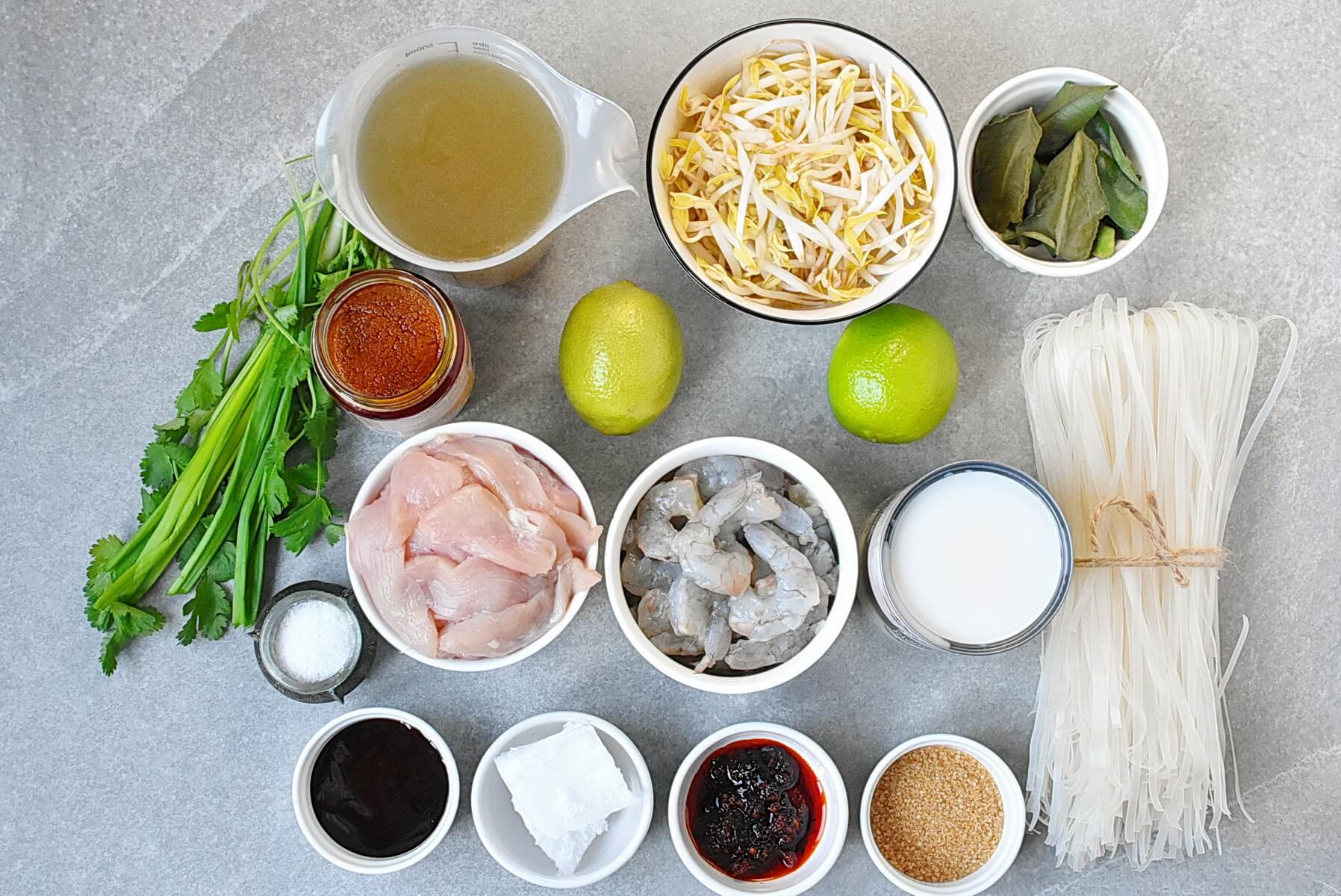
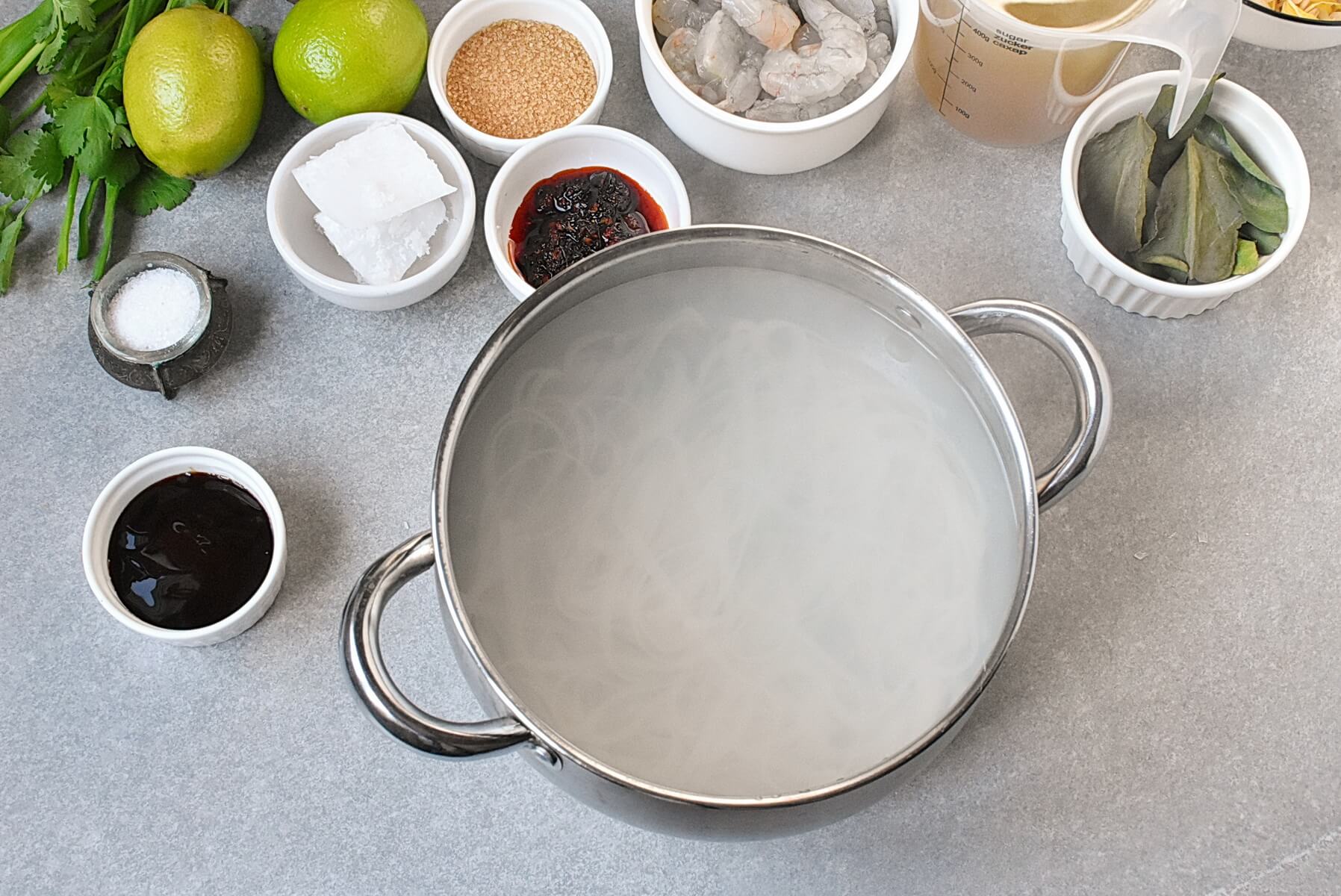
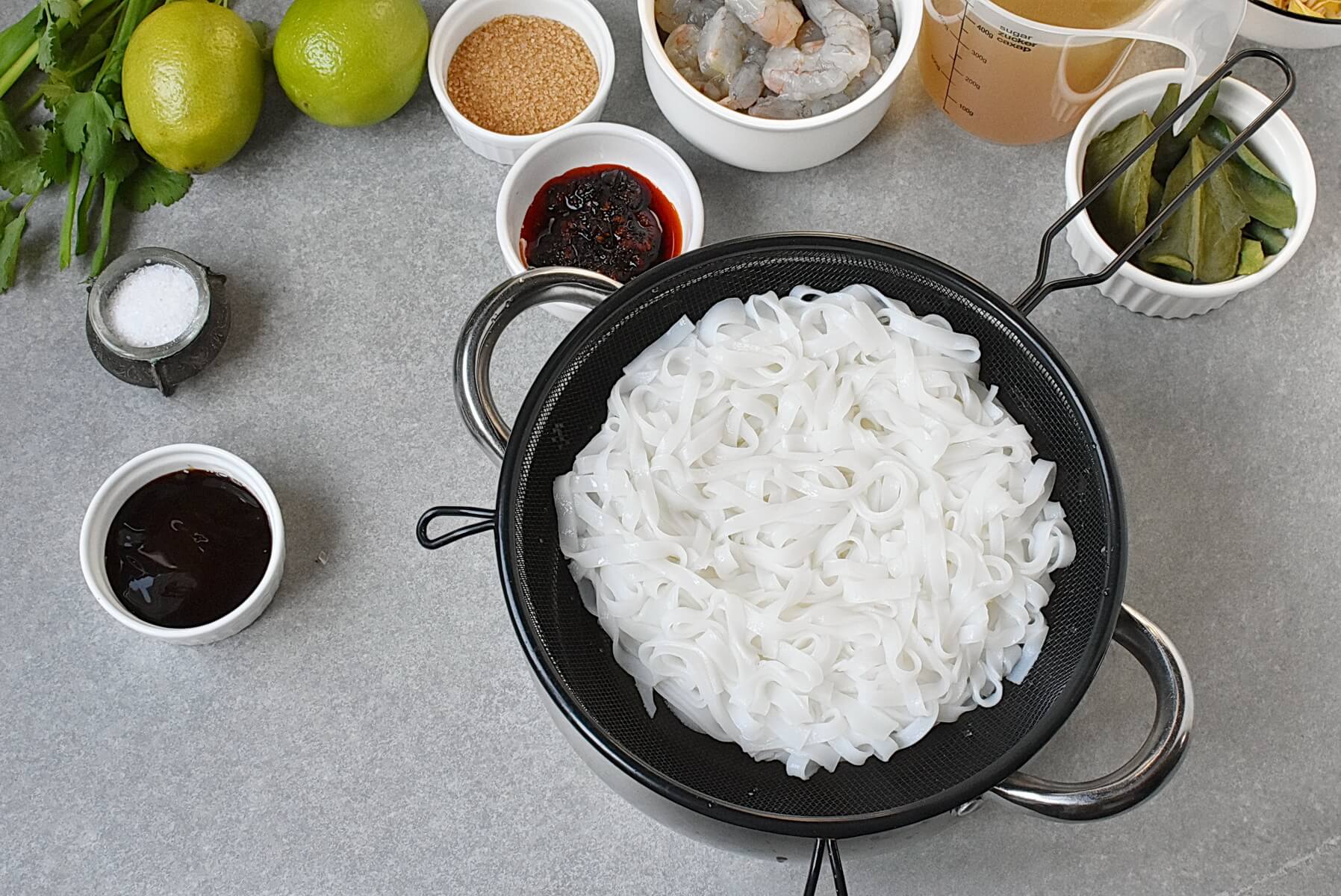
Cook 1 pound rice noodles according to package instructions. Set aside.
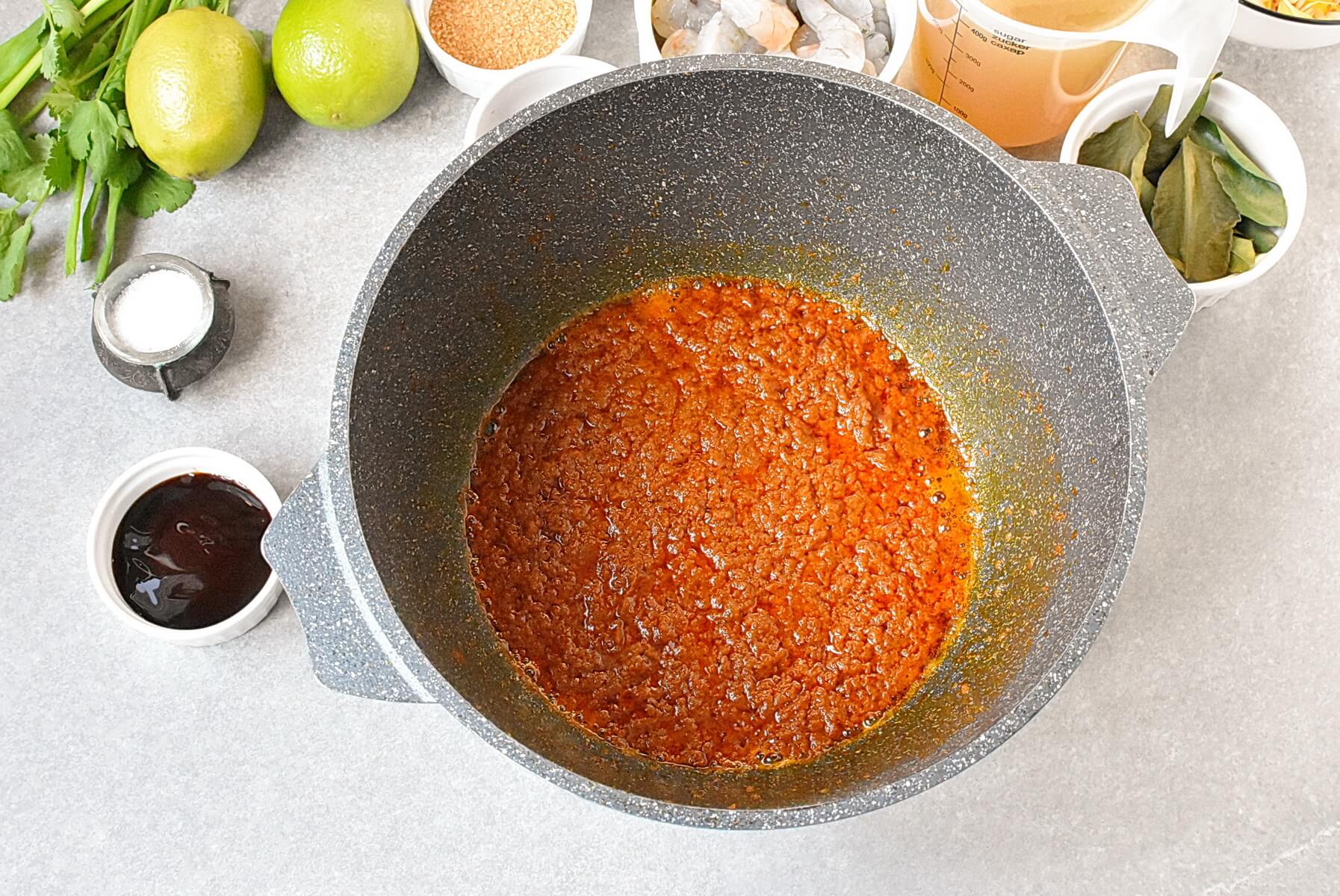
Heat 3 tablespoons peanut or coconut oil over medium-high heat in a large heavy-bottom pot or Dutch oven. Add the laksa paste and sauté, stirring constantly until very fragrant and deep in color, about 2-3 minutes.
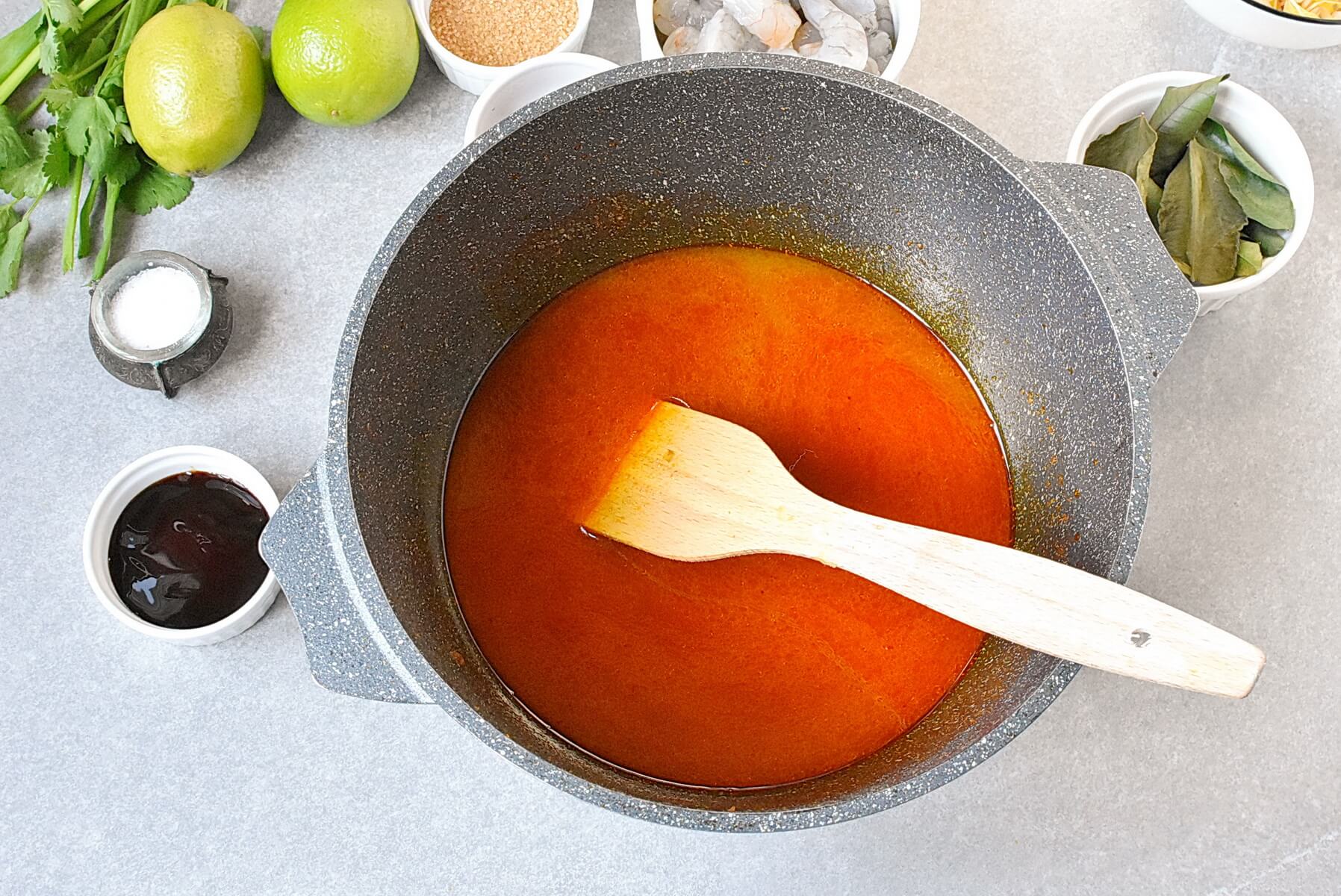
Add 6 cups chicken stock or broth, scraping up all the brown bits from the bottom of the pot.
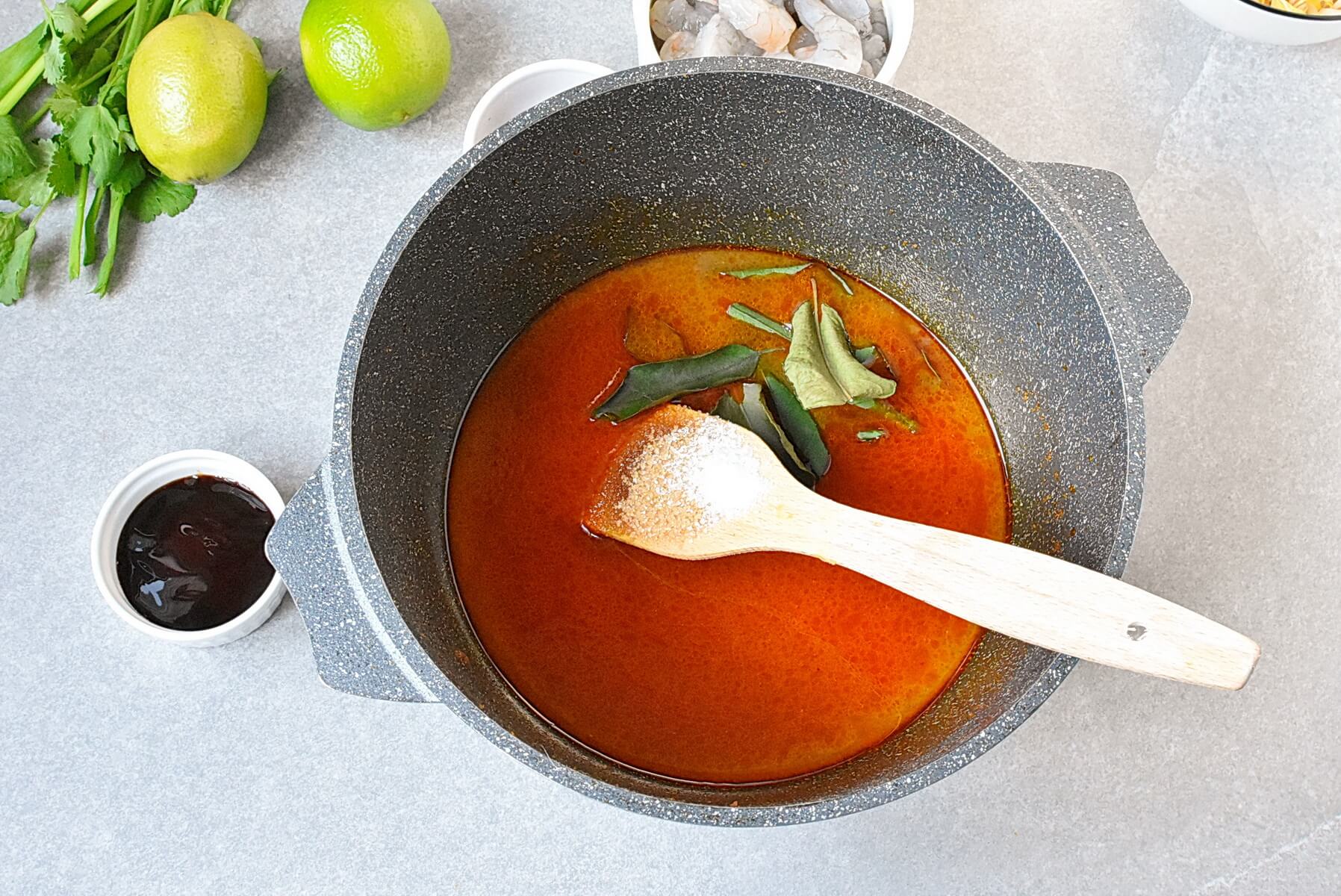
Add 8 lime leaves, 1 teaspoon salt, and 1 tablespoon brown sugar and bring to a simmer.
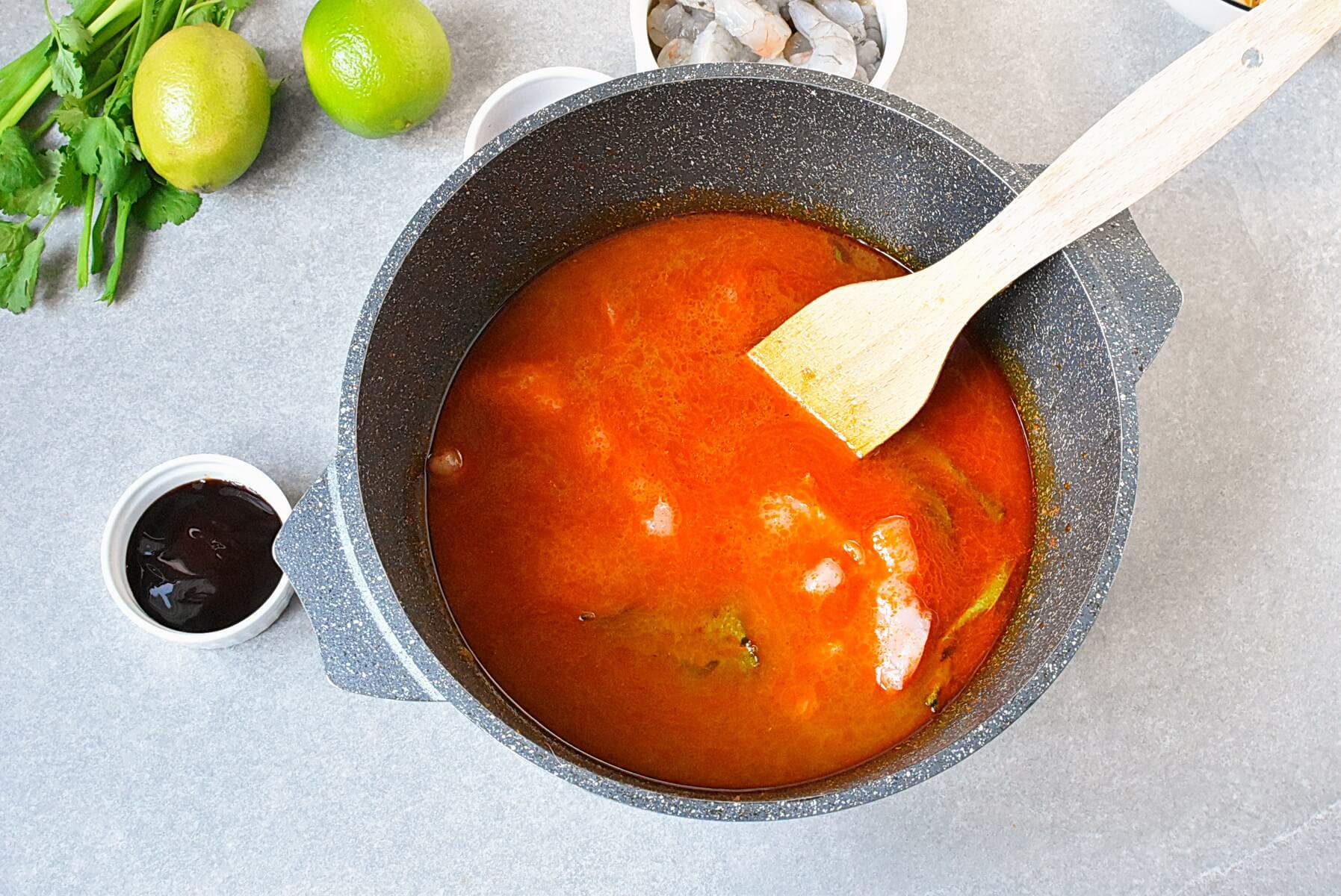
Add 1 ½ pounds raw bite-sized chicken pieces and simmer for 4-5 minutes.
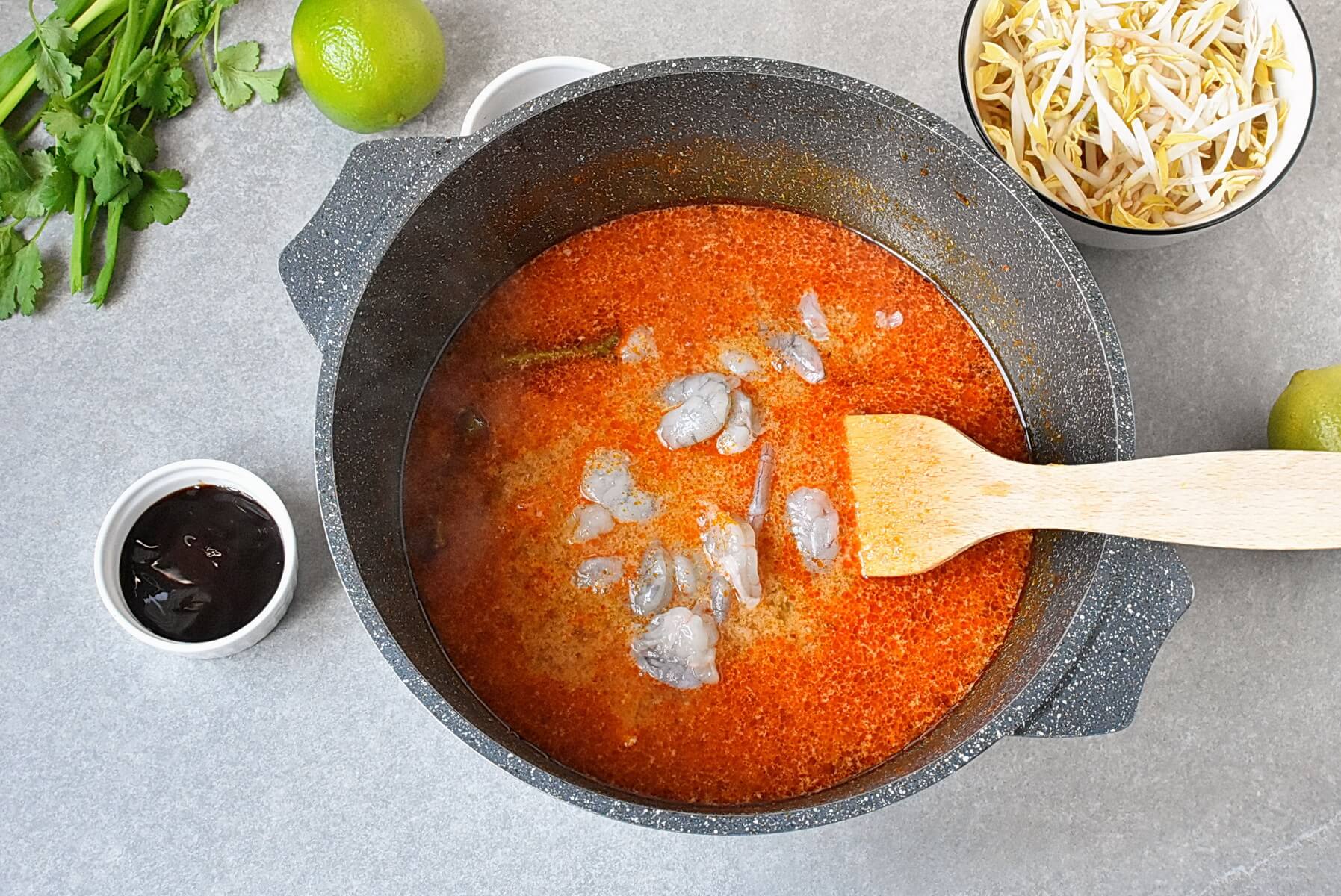
Add 1 pound raw, peeled large shrimp and cook for 2-3 minutes.
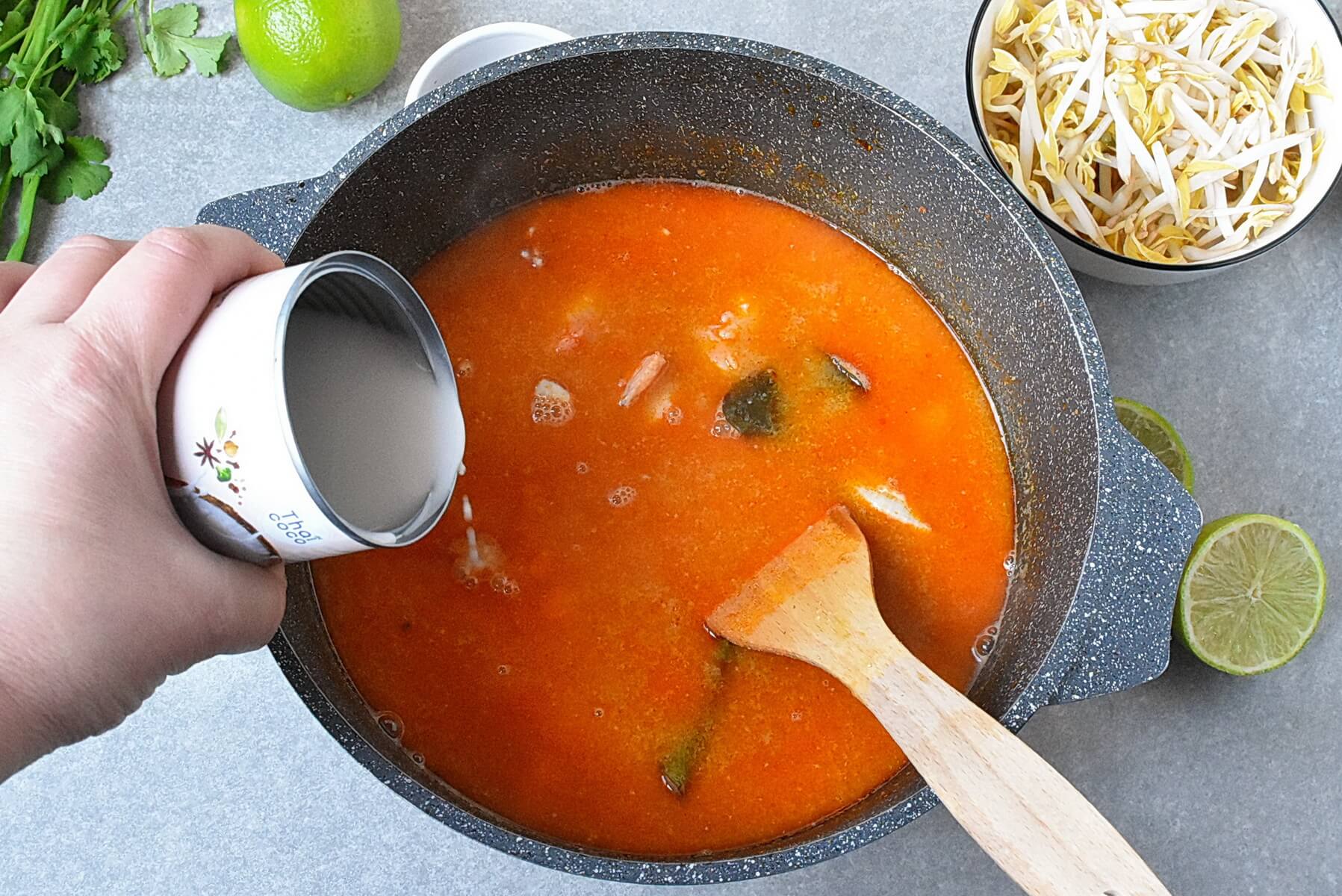
Add 2 cans full-fat coconut milk and simmer until just heated through. Do not boil.
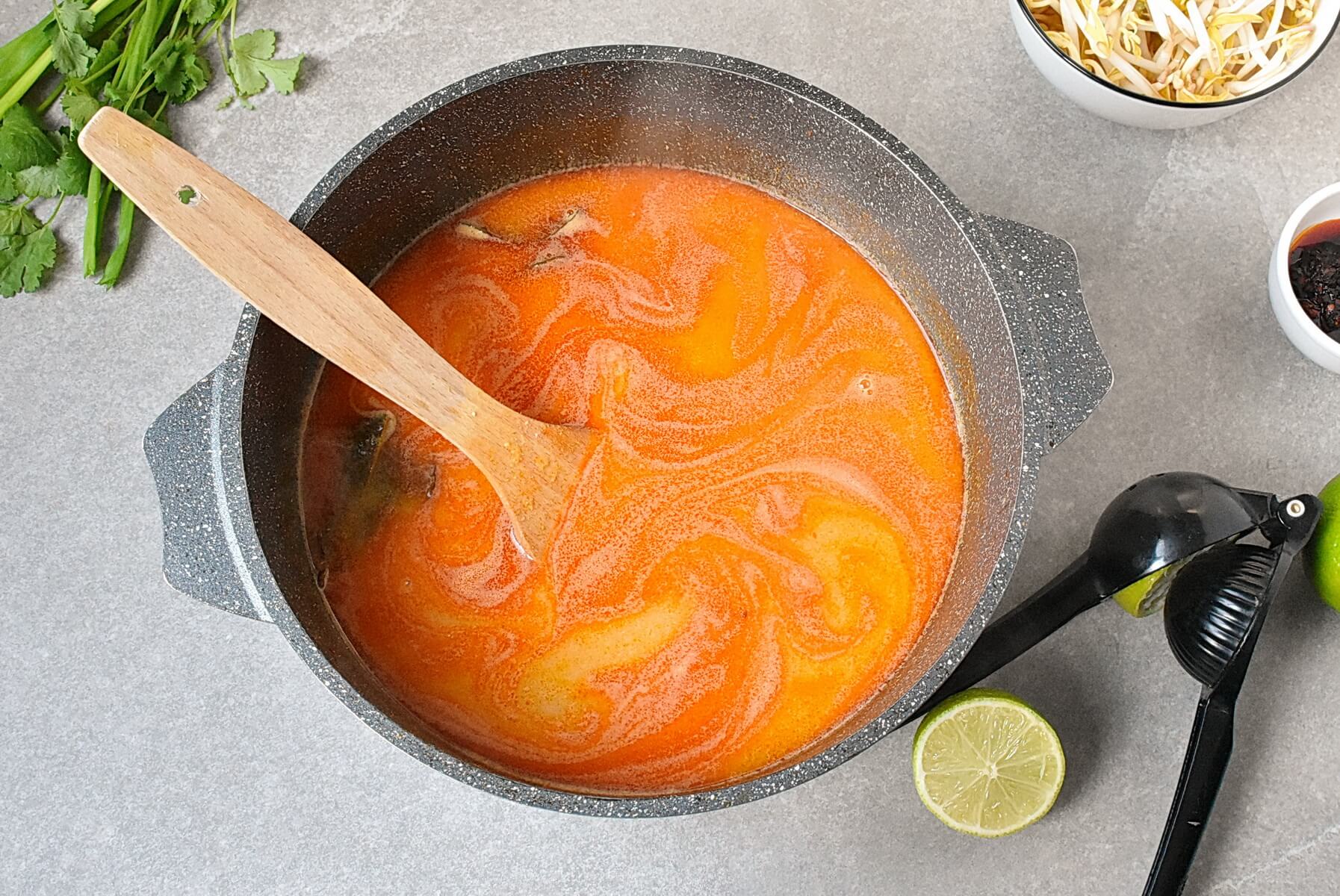
Add the lime juice, starting with 1 lime, and add more to taste. Add the fish sauce to taste, adding one teaspoon at a time. The broth should taste rich, deep, and slightly salty and just a little limey. If the broth tastes too fishy add more lime juice. Add chili flakes or chili paste if you want it more spicy.
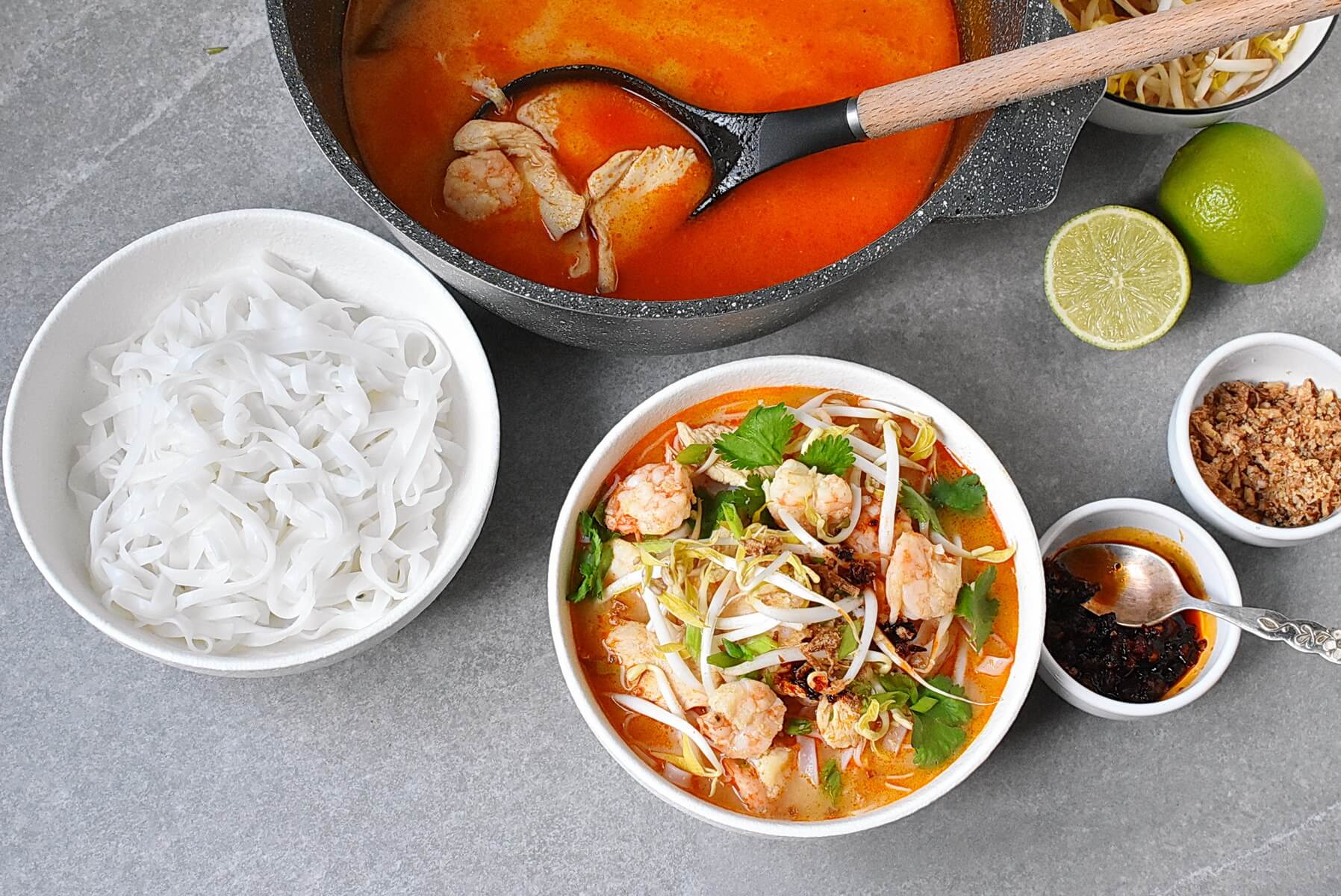
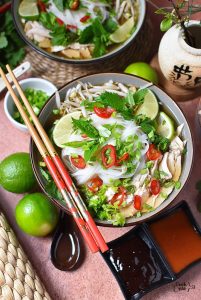
Divide the cooked rice noodles between bowls and ladle the broth over the top. Top each bowl with a handful of fresh bean sprouts, cilantro, and scallions. Serve with chili sauce and lime wedges on the side.
Start simple. A large pot with a heavy bottom or a Dutch oven is best so the broth can simmer without scorching. I use cast iron and it behaves like an old friend, spreading heat evenly so the paste browns rather than burns. Bring a wooden spoon to the counter. It just feels right for stirring.
Keep a sharp knife and a sturdy cutting board handy for cutting chicken into pieces small enough for one bite and for slicing scallions. You will also want a colander for the rice noodles, measuring cups and spoons for accuracy, and a ladle for serving. Wide bowls show off the toppings best.
If your kitchen is spare, you can still make this. A regular pot will do, just watch the heat closely. I once made it in a borrowed Melbourne kitchen with almost nothing, and it still fed everyone like a proper meal.
This is the part where we get into the heart of it, the steps that make this authentic laksa recipe sing. You must sauté the laksa paste in oil until it deepens in color and smells like toasted lemongrass and chilies. Do not rush this. The heat breaks down aromatics and makes the paste taste alive instead of flat.
When you add the chicken stock, scrape the bottom of the pot. Those caramelized bits are where the deep flavor lives. They turn the broth from simple to something that coats a noodle and asks for another bite. I learned that lesson from a gruff Thai cook who would not stop me until I had scraped every last bit.
Cut the chicken thin and add it early but keep the broth at a gentle simmer. High heat tightens proteins and squeezes out juices. Same for shrimp: add them toward the end so they stay plump instead of rubbery. Tear the lime leaves a little before they go into the pot to release their oils. That brightness keeps the coconut milk from feeling heavy.
If you are wondering how to make laksa from paste without it tasting thin, sauté the paste longer than you think and add a touch more garlic or ginger if needed. A good store bought paste can save time but choose one with real aromatics. I tested this across kitchens from Austin to Tokyo and a decent paste makes weeknight bowls worth the effort.
Swap the chicken and shrimp for eggplant, bell peppers, and tofu for a lighter, earth focused bowl that is perfect for my green days. The veggies soak up the spicy noodle soup flavors like sponges, adding crisp and silky textures that hold up nicely. Crisp the tofu first for a pleasant chew and use soy sauce or a fish sauce alternative for umami.
If you want more heat, add fresh chilies to the paste and try squid or mussels with the shrimp for a briny lift. Extra spice makes the coconut milk feel even more comforting by contrast. Watch cooking times for shellfish so textures stay delicate.
For a milder version, blend in cashew cream or a bit of almond milk with the coconut and go lighter on the paste. Nuts add a buttery thickness without overwhelming the bowl, which is great for kids or spice shy friends. I like this one on foggy Portland evenings when calm is the point.
Divide cooked rice noodles between bowls and ladle the broth over so each bowl gets chicken, shrimp, and coconut. Top with a handful of fresh bean sprouts for crunch, chopped cilantro for lift, and sliced scallions. Wedges of lime belong at the table so everyone can add brightness to taste.
If you are thinking what to serve with laksa try a simple cucumber salad dressed in rice vinegar for cooling contrast, or serve steamed jasmine rice on the side to soak up extra broth. I have paired it with chilled beer for spice taming and jasmine tea when I want the herbal notes to echo the lime leaves.
Leftovers are fine. Reheat gently with a splash of water and add fresh noodles and toppings when you serve. It is best fresh, but also forgiving.
I used to have a batch that tasted forgettable until I learned to sauté the paste until it darkens and smells toasted. Stir it in oil and let the aromatics wake up. If it still seems mild, add grated ginger or extra garlic, or a little more paste and taste as you go. Took me a burned tongue in Bangkok to learn this one, but it works.
A common search is what are lime leaves so here is the short answer: they are the leaves from the kaffir lime tree and they add a bright, citrusy perfume. If you cannot find them, frozen ones from Asian markets work, or use a strip of lime zest plus a bay leaf as a stand in. The result will be close but not identical. I skipped them once in Austin and missed the lift they give the broth.
Yes, but do the broth separate from noodles. Noodles go mushy when frozen. Portion the broth into airtight containers and freeze up to three months. Thaw gently, reheat, and add fresh noodles and toppings when you serve. Proteins may soften a bit so eat within a month for best texture.
Use less paste, add more coconut milk, and taste as you go. Coconut mellows heat while keeping the body of the soup. I once made a toned down batch for neighborhood kids and a little extra brown sugar won them over. Top with bean sprouts for fun texture.
Don’t panic. It is common with coconut milk that is full of fat. Gentle heat and a slow stir usually bring it back together. If it is stubborn, whisk in a small cornstarch slurry and warm through. I did this in a rushed workshop and it saved the day.
This classic Malaysian Laksa (Coconut Curry Noodle Soup) is bold, flavorful, and luscious. And it is surprisingly easy to make at home. If you give this recipe a go, remember to tag us @cookmerecipes on Instagram – we love seeing your creations!

This spicy coconut noodles soup is revered all over the world - with good reason! Thanks for sharing the recipe!
 Dairy-Free Recipes
 Gluten Free Recipes
 Spicy Recipes