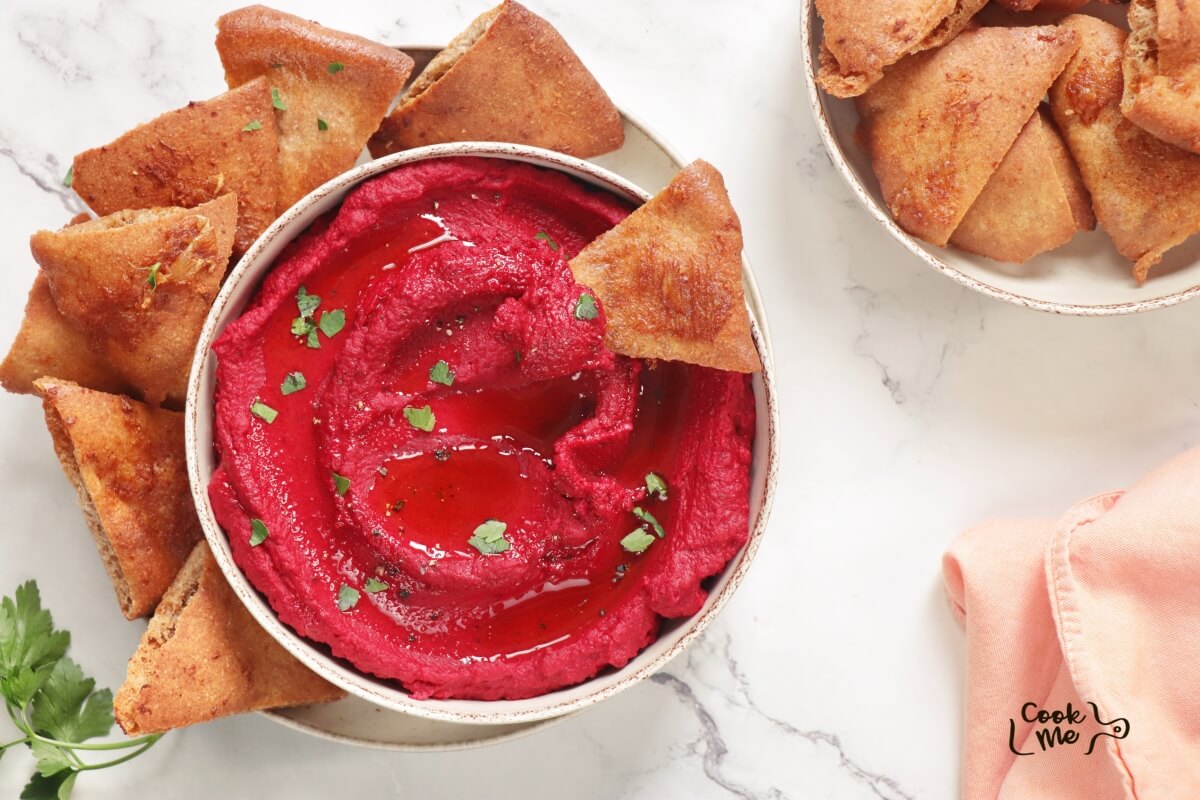
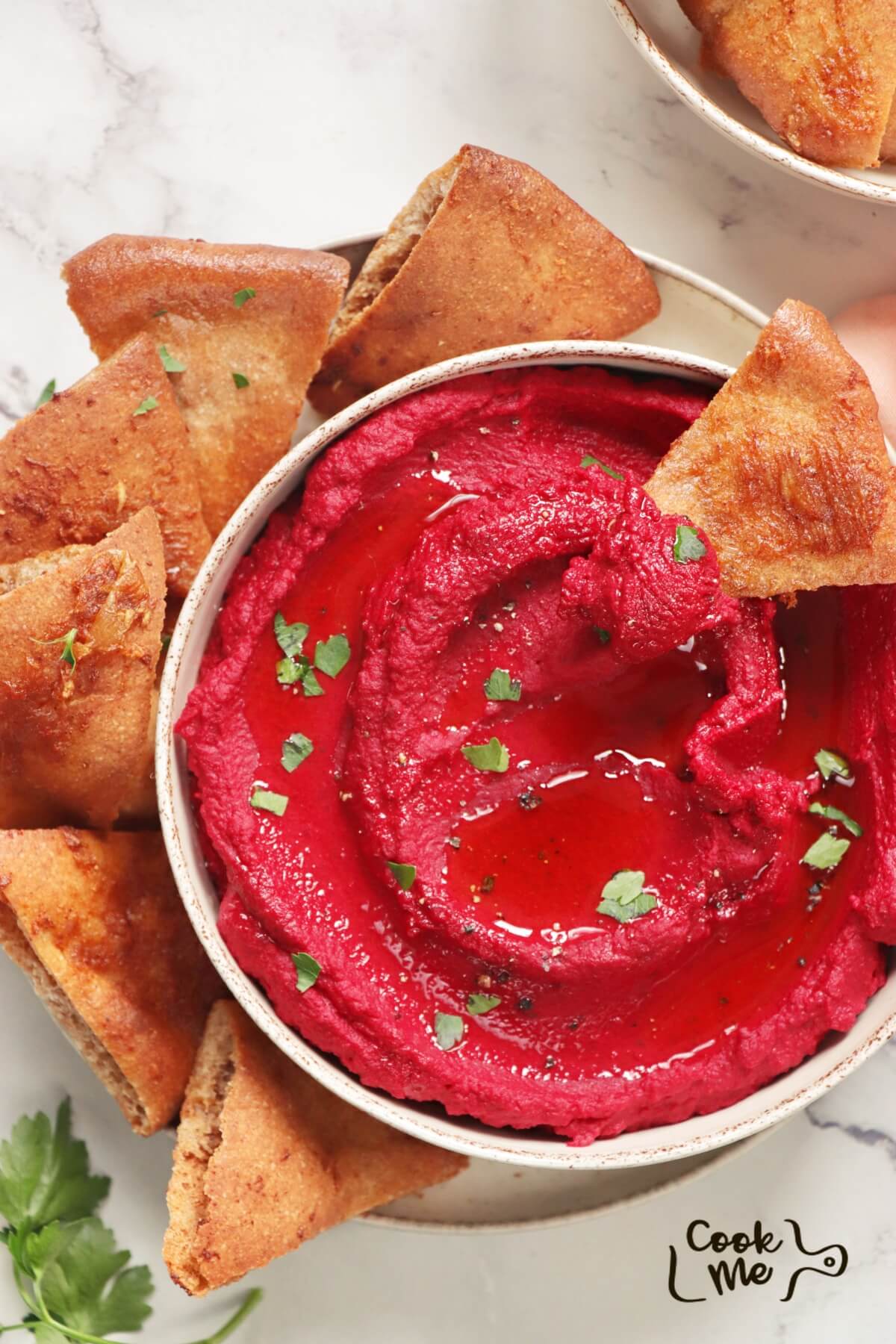
I started messing with beets in hummus the year I moved back to Bristol. Olive the cat watched every move, and I learned that roasted beets bring a quiet sweetness that steadies the whole mix. You get a red lentil and beet hummus that is creamy yet hearty, perfect for anyone dipping their toes into eats from the plant world.
Roasting the beets and garlic softens them and tames any raw edge. It turns simple roots into something bright on the plate, a color that almost makes people forgive you for bringing the container to a party. Actually, scratch that. People forgive the container and they come back for more.
It is my kind of quiet rebellion: a dip that feels indulgent but slips in good things. It is a recipe I bring to cooperative events and to small, boisterous dinners, the sort that ends with someone asking for the recipe and a second helping of bread.
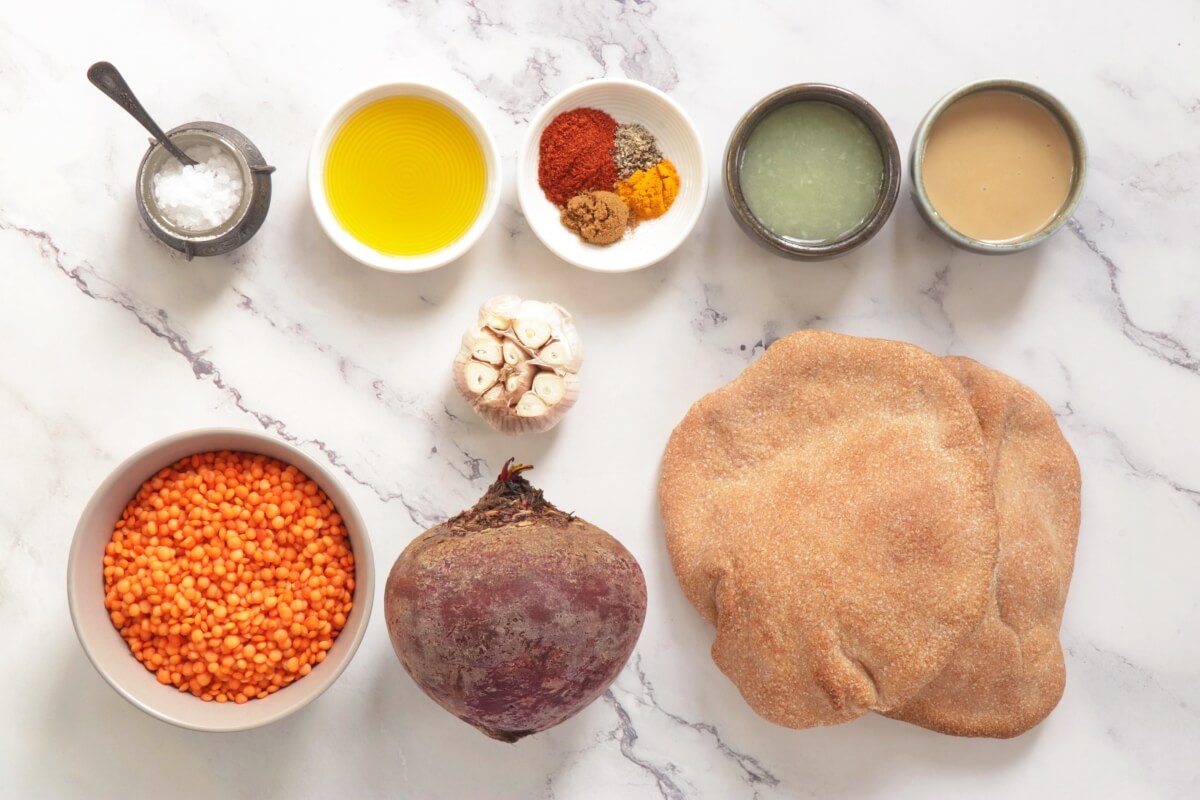
Preheat the oven to 375 ℉.
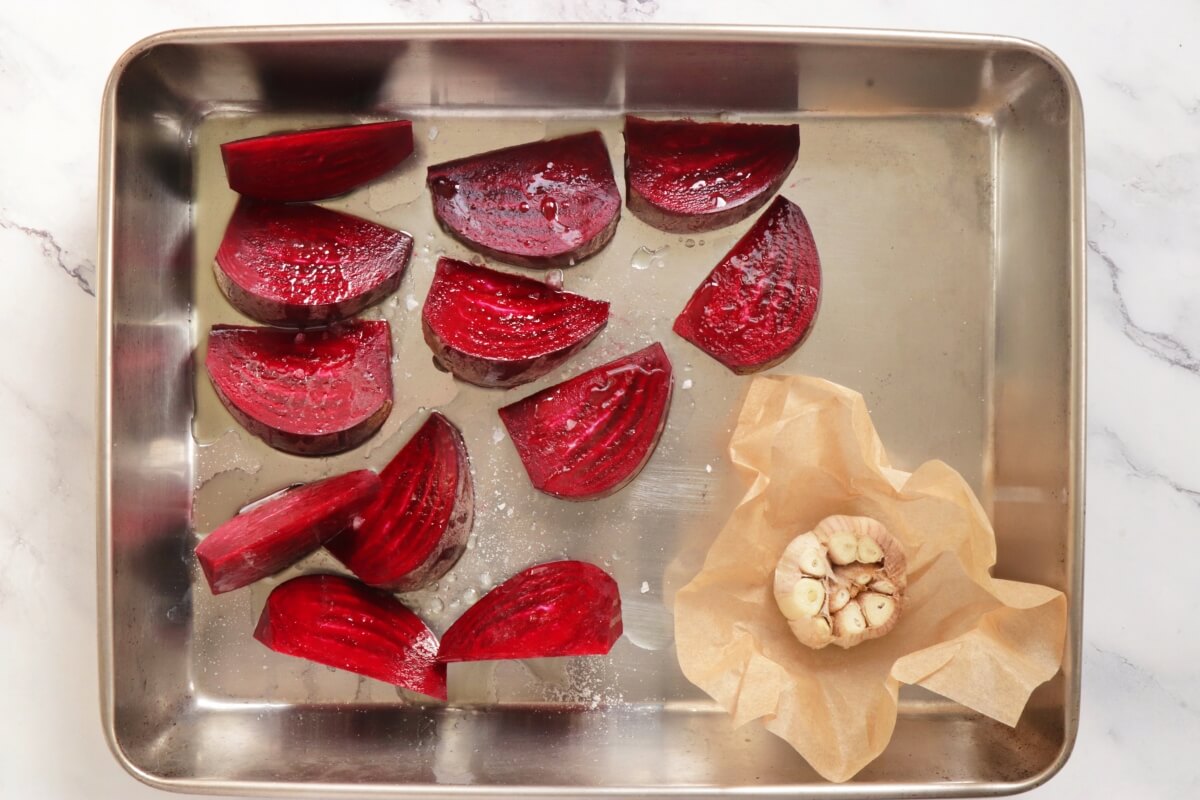
Place beet wedges and 1 head garlic on a baking sheet. Drizzle with 1 tablespoon olive oil and sprinkle with salt to taste. Toss to coat. Wrap the garlic in parchment paper.
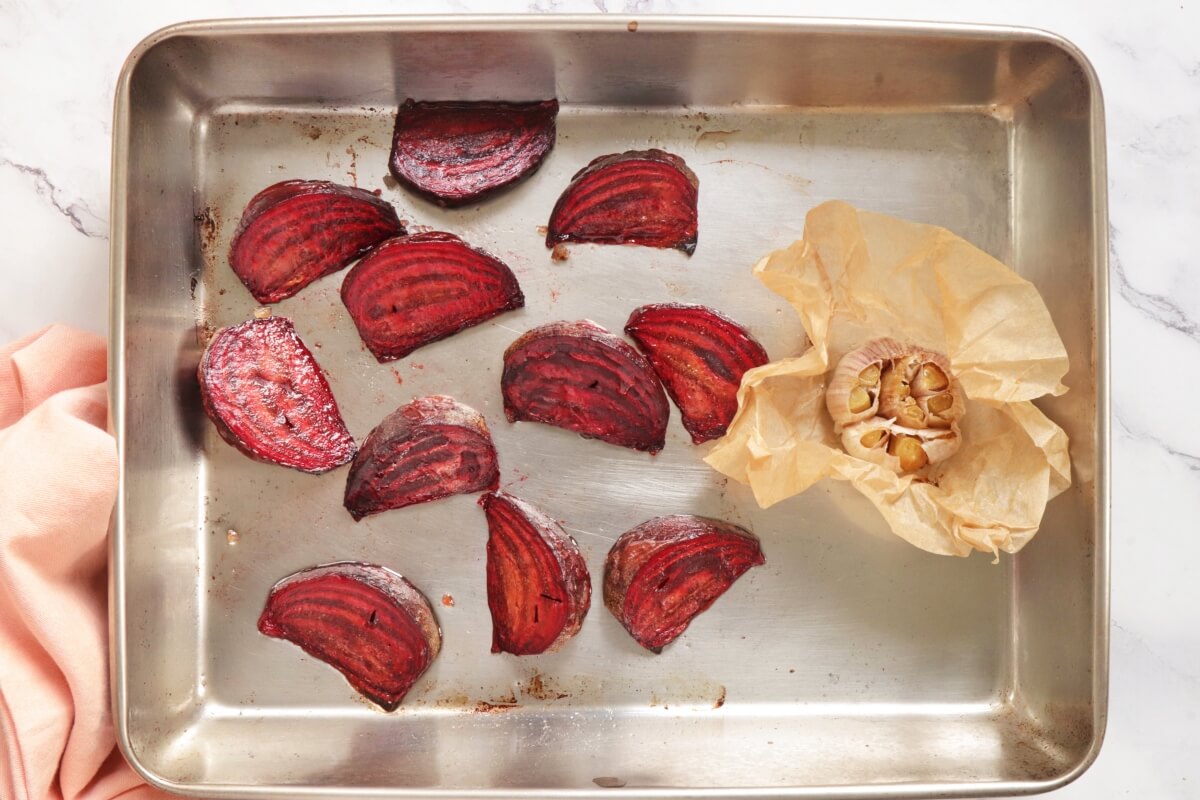
Roast for about 35 minutes or until the beets are fork-tender.
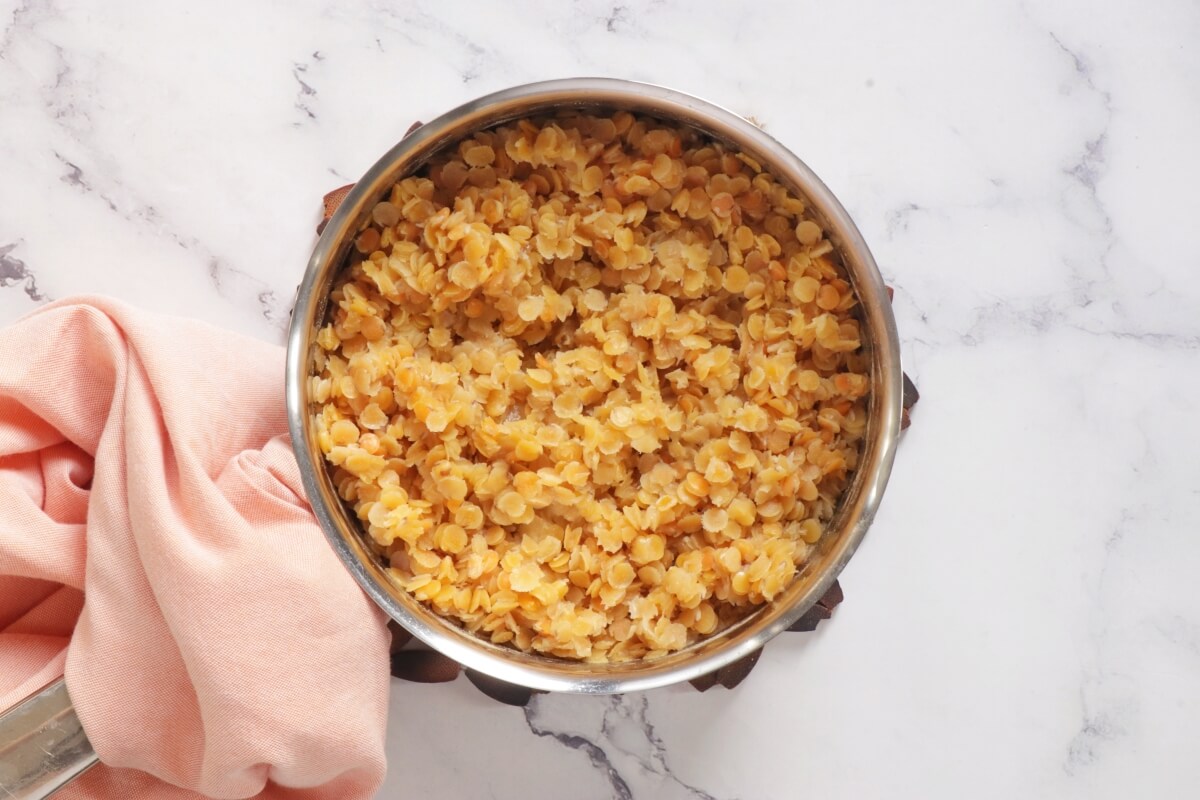
Meanwhile, in a saucepan, combine ¾ cup red lentils and 1 ½ cups water and bring to a boil over medium-high heat. Reduce the heat to a simmer and cook for 10 minutes. Strain to remove any excess water.
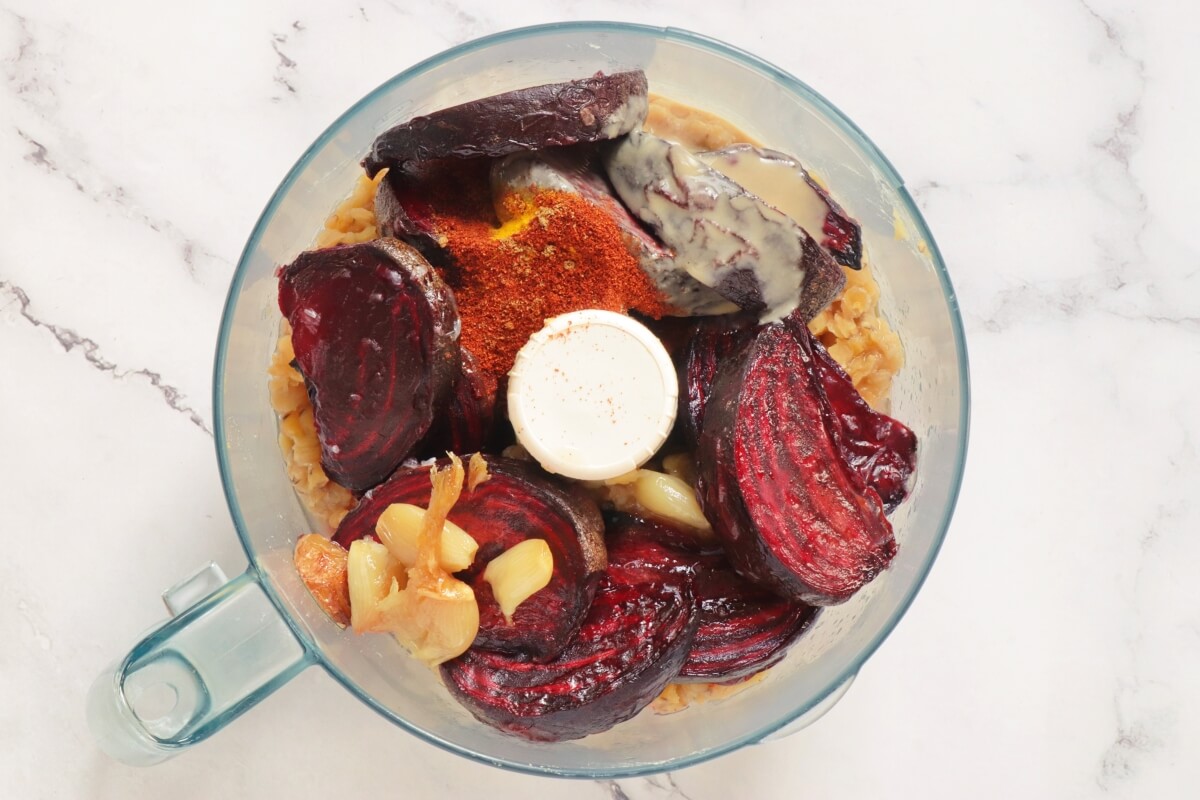
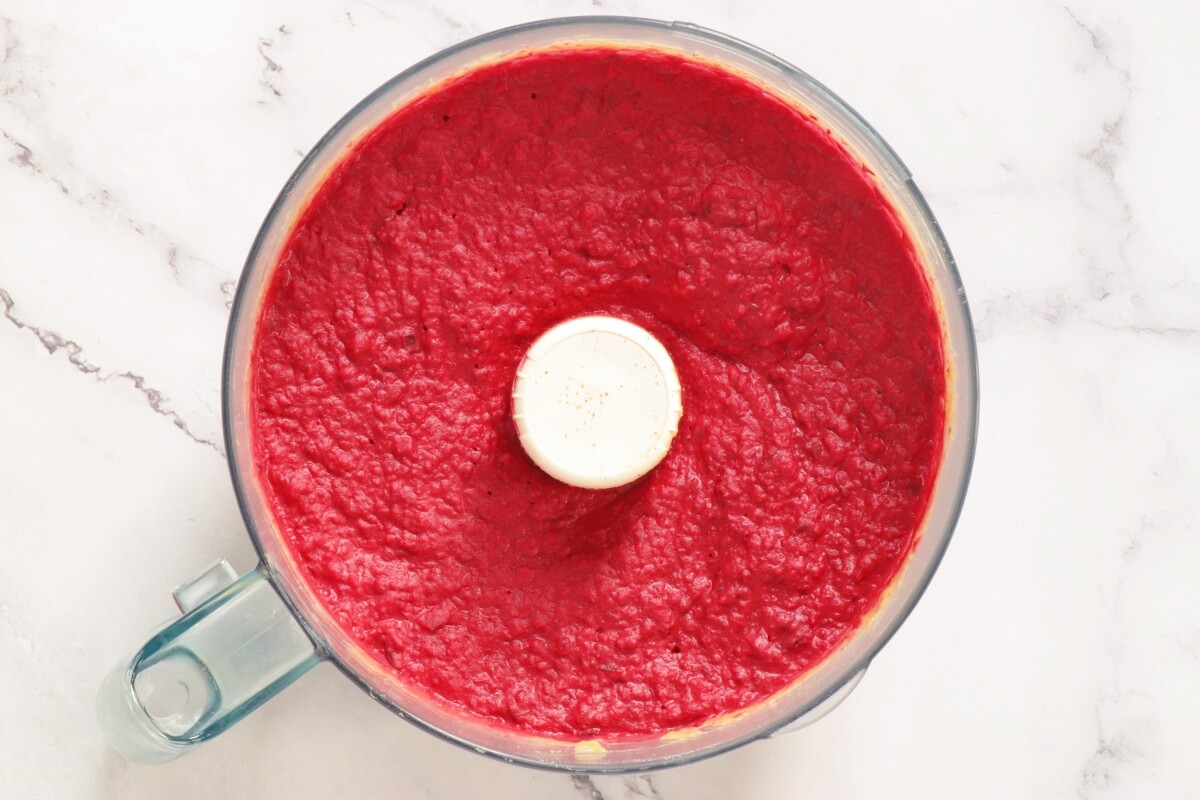
In a food processor, combine the cooked red lentils, roasted beet wedges, half of the roasted and peeled garlic cloves, 2 tablespoons tahini, 3 tablespoons lemon juice, 1 teaspoon smoked paprika, 1 teaspoon ground cumin, ¼ teaspoon turmeric, ⅛ teaspoon black pepper, and the remaining 1 tablespoon olive oil. Blend all until smooth for 2-3 minutes, pausing halfway to scrape down the sides. Add more oil or cold water, 1 tablespoon at a time, to reach the desired texture.
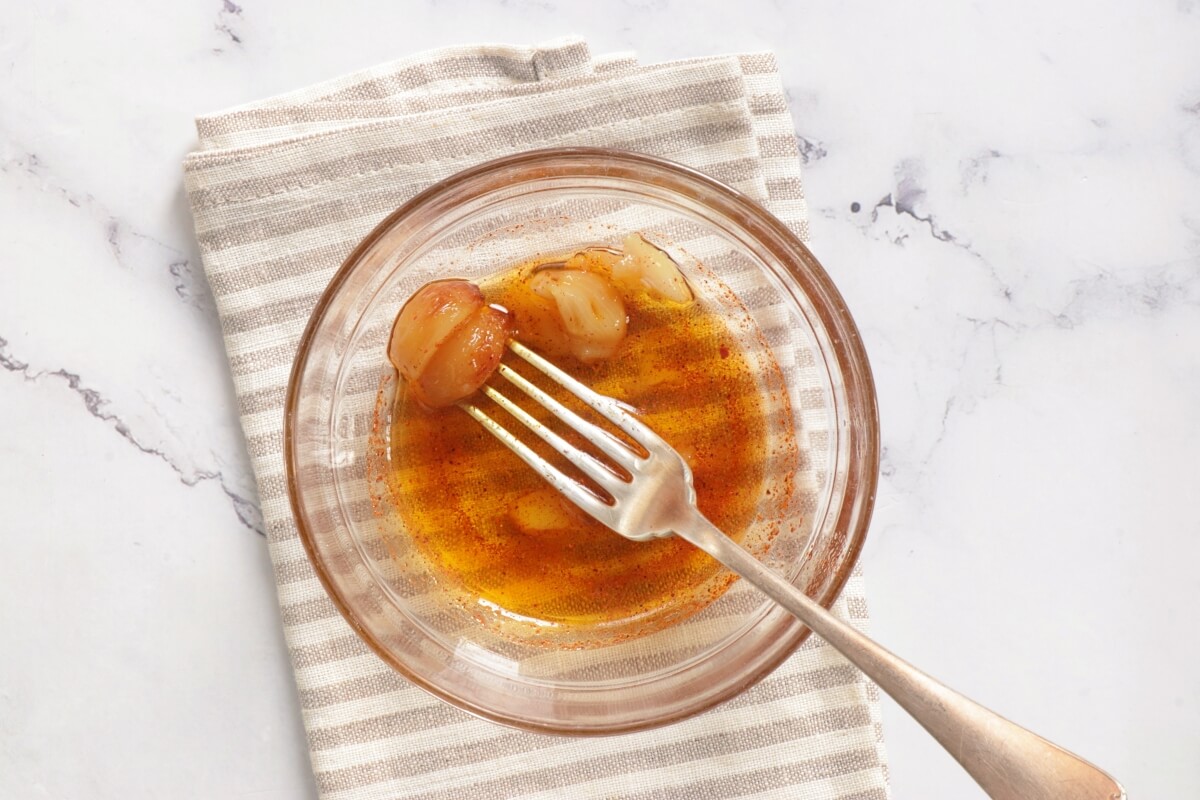
To a small bowl, add the remaining roasted and peeled garlic cloves, 2 tablespoons olive oil, and a pinch of smoked paprika and salt. Mash the garlic with a fork.

Place the pita wedges on a baking sheet and brush with the garlic olive oil mixture. Roast at 375 ℉ for 5 to 10 minutes until crispy and golden brown.
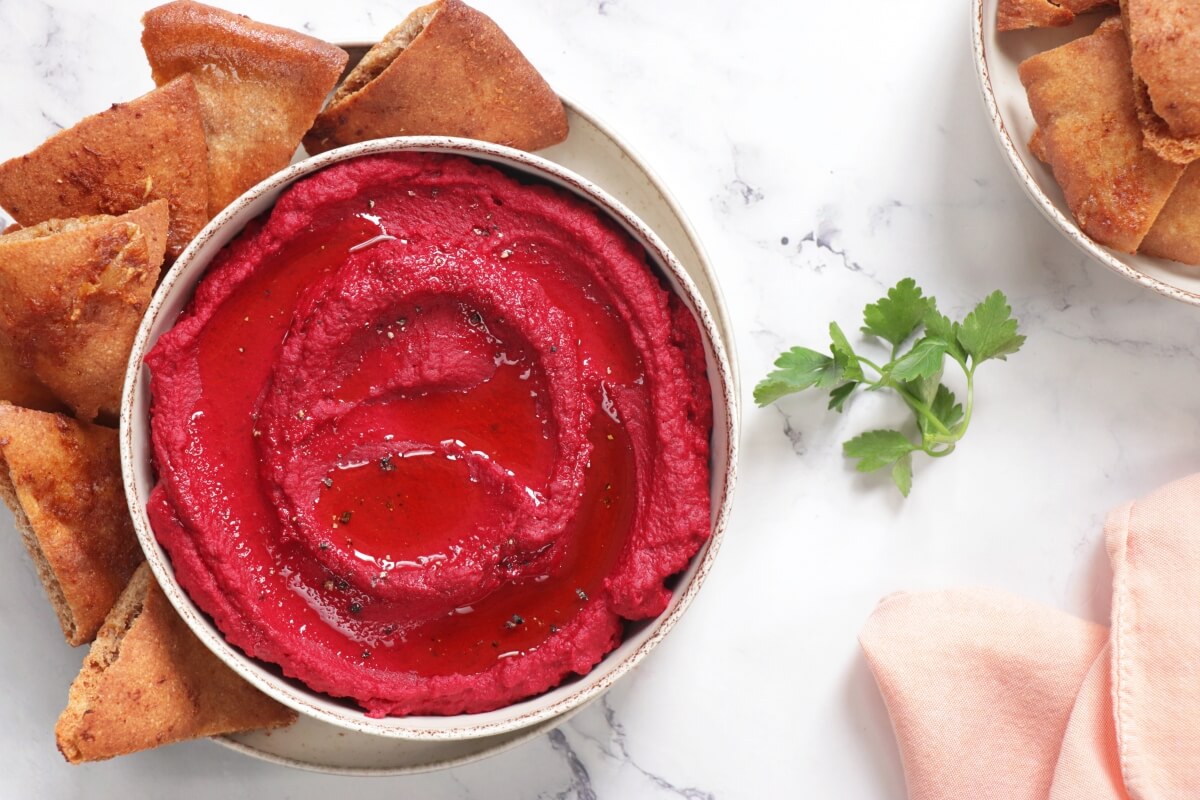
Serve with an extra drizzle of olive oil and pita chips.
Preheat the oven to 375 degrees Fahrenheit. You will need a baking sheet, some parchment paper, and a saucepan with a lid for the lentils. A food processor makes the job quick; mine is an old trusted friend in the kitchen and it does the heavy blending without complaint. If yours is small, blend in batches so you do not overload it. A strainer is useful to drain the lentils, and a sharp knife and sturdy board make the prep much easier.
For the pita chips, use another baking sheet or reuse the same one after the beets cool. A small bowl to mash the remaining roasted garlic with oil and a brush to spread it on the wedges will get you golden, crunchy chips. Measuring spoons help, though I often eyeball the lemon for my own tang.
Roast the beets in two inch wedges so they caramelize on the outside and go tender through the middle. Toss them with a tablespoon of olive oil and a pinch of salt before they go in the oven. That little coat of oil helps the heat do its work and draws out the natural sugars. Patience here beats hurry every time; rush roasting leaves a tough edge.
Wrap the head of garlic in parchment with the top sliced off so the cloves steam into a squeezable paste. Use half the roasted garlic in the hummus and save the rest for the pita chips. Mash the leftover cloves with oil and a pinch of smoked paprika and salt and brush on the wedges before a quick roast. homemade pita chips that way have a mellow roasted garlic note and they hold up well to scooping.
Cook the red lentils in one and a half cups of water until they are tender but not falling apart, then strain to keep the hummus thick and dippable. In the food processor, combine the cooked lentils, roasted beets, half the roasted garlic, tahini, lemon juice, smoked paprika, cumin, turmeric, black pepper, and the remaining tablespoon of olive oil. Blend, pausing to scrape down the sides, and add oil or cold water one tablespoon at a time until you reach the texture you like.
Taste as you go. A squeeze more lemon brightens the whole thing. If you want a deeper charred note, a quick sprinkle of extra smoked paprika on top helps. So good.
Firecracker Beet: Add a small diced jalapeo or a pinch of chipotle powder when you blend for more heat. Roast the jalapeo with the beets so it picks up some char and layers in a smoky temper to the sweetness. You might want a little extra lemon to keep the balance right.
Herb Garden Beet: Stir chopped mint or cilantro in after blending to keep their freshness. This lifts the dip and makes it feel lighter for spring plates.
Sesame Swirl Beet: Increase the tahini to a quarter cup and toast sesame seeds to scatter on top. The extra sesame deepens the nutty tone and makes each spoonful feel richer.
Serve with homemade pita chips for a classic match, or offer raw veg like carrot sticks and cucumber for a fresh crunch. Warm flatbreads or roasted vegetables such as zucchini and eggplant echo the roasted notes in the dip. A drizzle of olive oil and a sprinkle of extra smoked paprika make it look and taste finished.
For gatherings, pack it in a shallow bowl with a ring of dippers around it so the color pops on the table. Pair with a bright salad dressed in lemon to cut through the richness. It is a healthy vegan dip that feels like a treat, so portion with vegetables for a lighter plate.
If you do not have a food processor, mash the roasted beets and lentils with a potato masher or a sturdy fork. Make sure the beets and lentils are very soft so they break down easily. Add the tahini, lemon, spices, and oil gradually and keep mashing until it is as smooth as you can get it. It will be a bit more rustic, but it will taste just as honest and homemade.
Slice leftover beets into salads, toss them into grain bowls with quinoa and greens, puree them into soups, or pickle them for a tangy counterpoint. You can freeze cooled slices in airtight bags for up to three months. My grandmother always said to use every scrap, and that rule has saved many dinners.
Yes. Bake them up to two days in advance and store in an airtight container at room temperature. If they soften, a quick ten minute revive in a hot oven brings back the crisp.
Try bell pepper strips, celery, rye crackers, warm flatbreads, or dollop the hummus onto grain bowls. Olives and pickles add a briny contrast that cuts the richness and keeps the plate interesting.
The lentils bring protein and the beets bring fiber, so it is filling and nourishing. Tahini and olive oil do add fats, but they are mostly the good kind. I suggest using it with plenty of vegetables to keep portions balanced.
The Best Beet Hummus is healthy, deeply flavorful and easy. Made this recipe? Let us know what you think in the comments below!

Red lentils? Great substitution!
 Dairy-Free Recipes
 Low Cholesterol Recipes
 Vegan Recipes
 Vegetarian Recipes