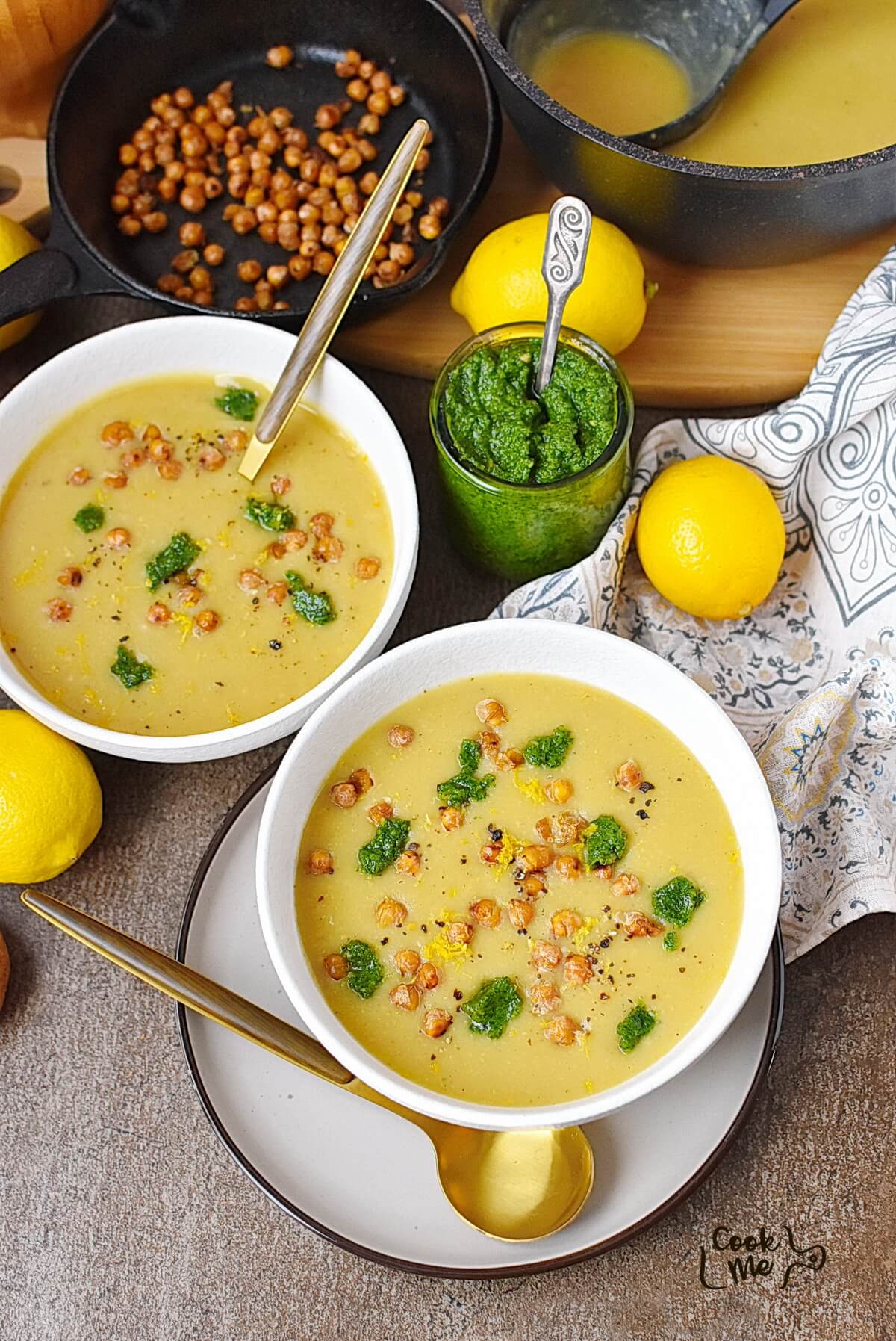
Alright, listen up. I usually preach the gospel of a perfect sear or a slow smoked brisket, but every now and then I want vegetables to do the heavy lifting. So what’s the big deal with this soup? Call it an easy vegetarian potato soup that eats like a full meal and keeps the kitchen simple.
Potatoes and chickpeas simmer in broth until the potatoes break down and the whole pot tastes built, layer by layer. It is hearty. No cream needed. The starch from the potatoes gives you silk without dairy, and the chickpeas add body and a nutty bite so the bowl feels like dinner, not a starter.
Then there is the arugula pesto. It cuts into the richness like a clean file through wood. Sharp, garlicky, oily and nutty, it lifts each spoonful right when you need it. Balance is everything. Too much roundness and the soup goes flat. With the pesto the bowl snaps awake, a little like firing up an internal furnace on a bitter Buffalo night.
I found this by accident on a Friday experiment. I had old potatoes, a can of chickpeas, and a stubborn need to make something filling without wasting food. Long story short: it worked. My neighbor, a confessed meat man, asked for seconds. That surprised me. Actually, scratch that. It surprised him more than me.
So yes, it is simple. It is honest. It fills you up the way a Sunday roast does, but without a roast taking hours. Try it when you want comfort without fuss.
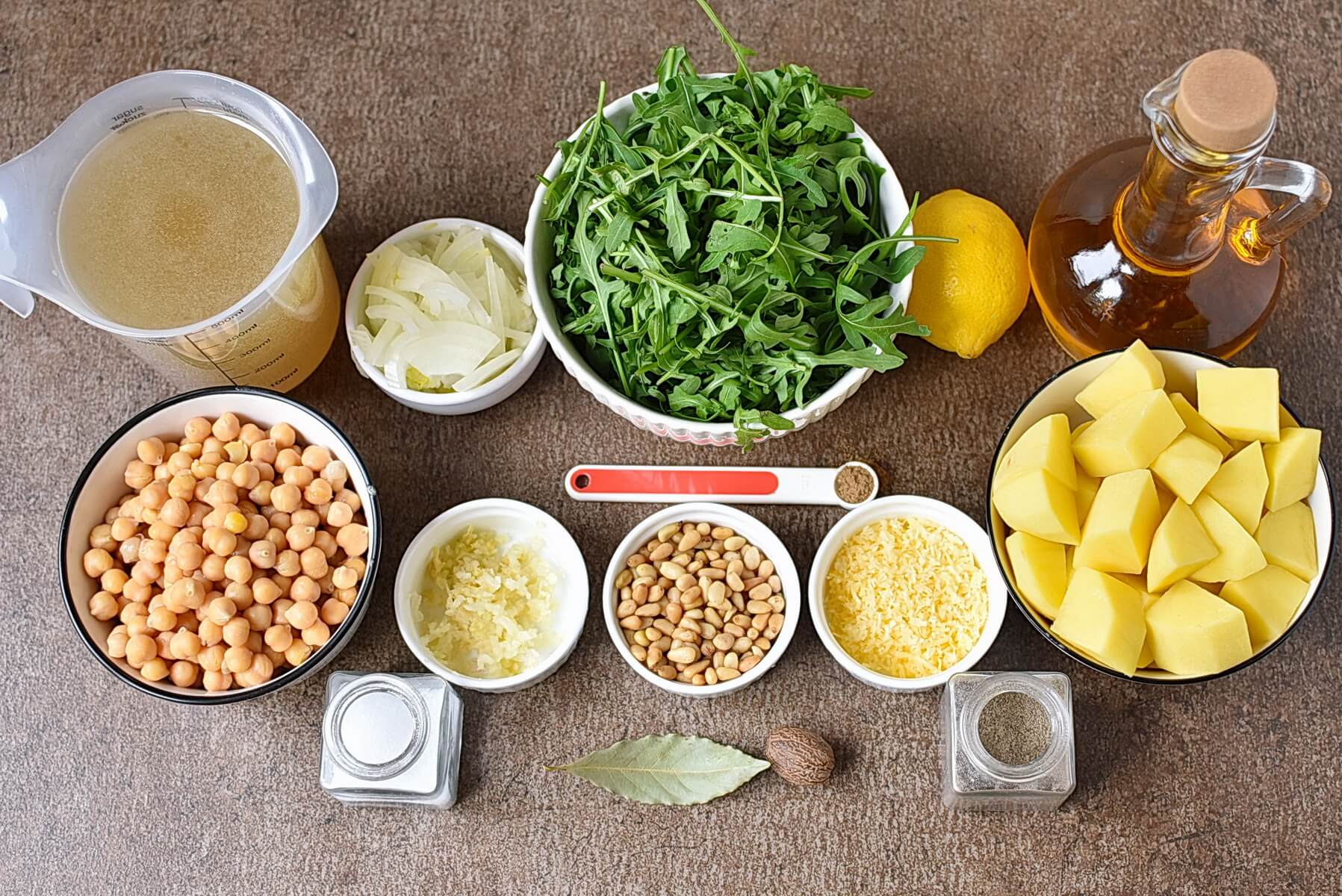
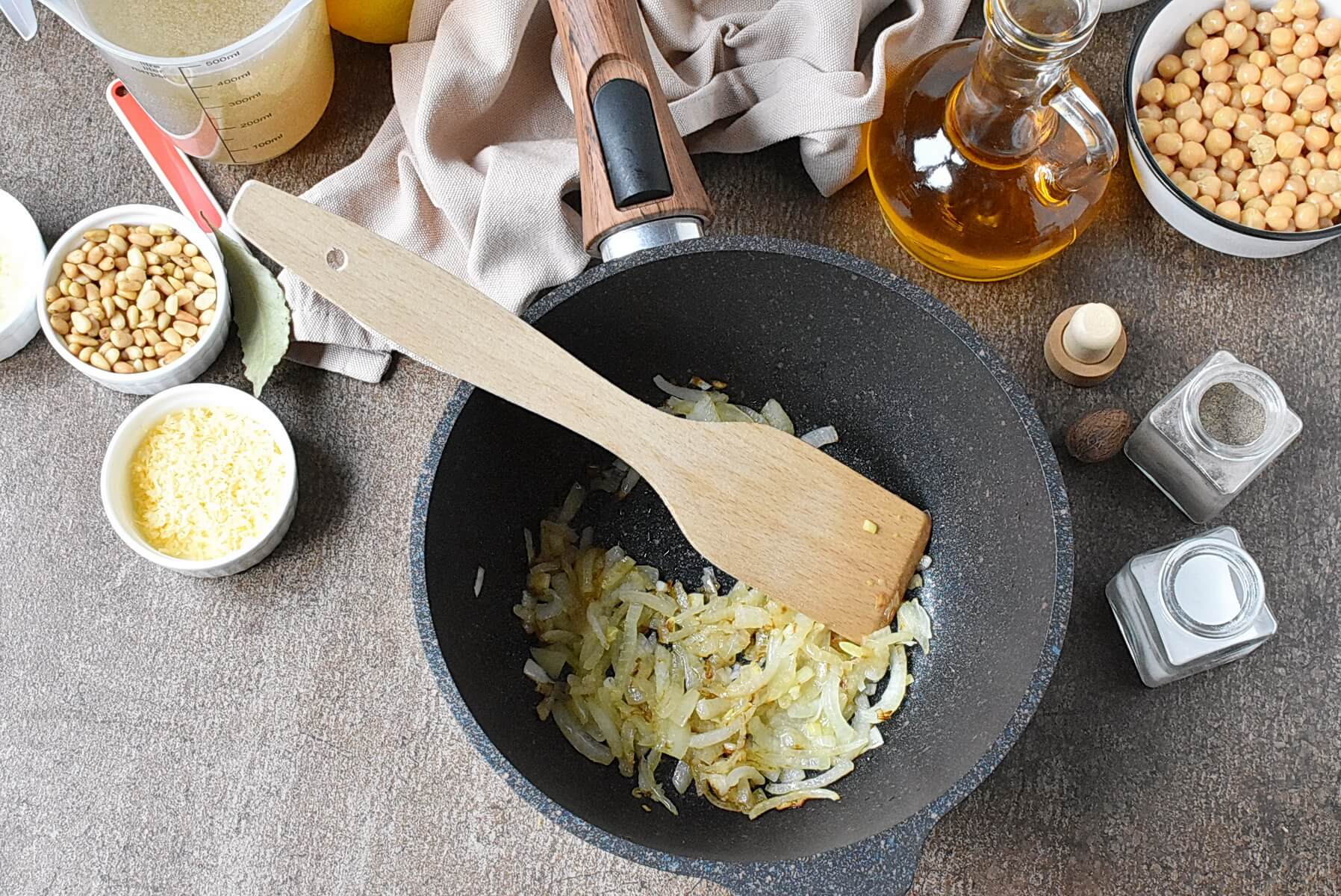
In a large pot over medium heat, heat a splash of olive oil and add 1 chopped onion. Sauté for a few minutes until soft and golden.
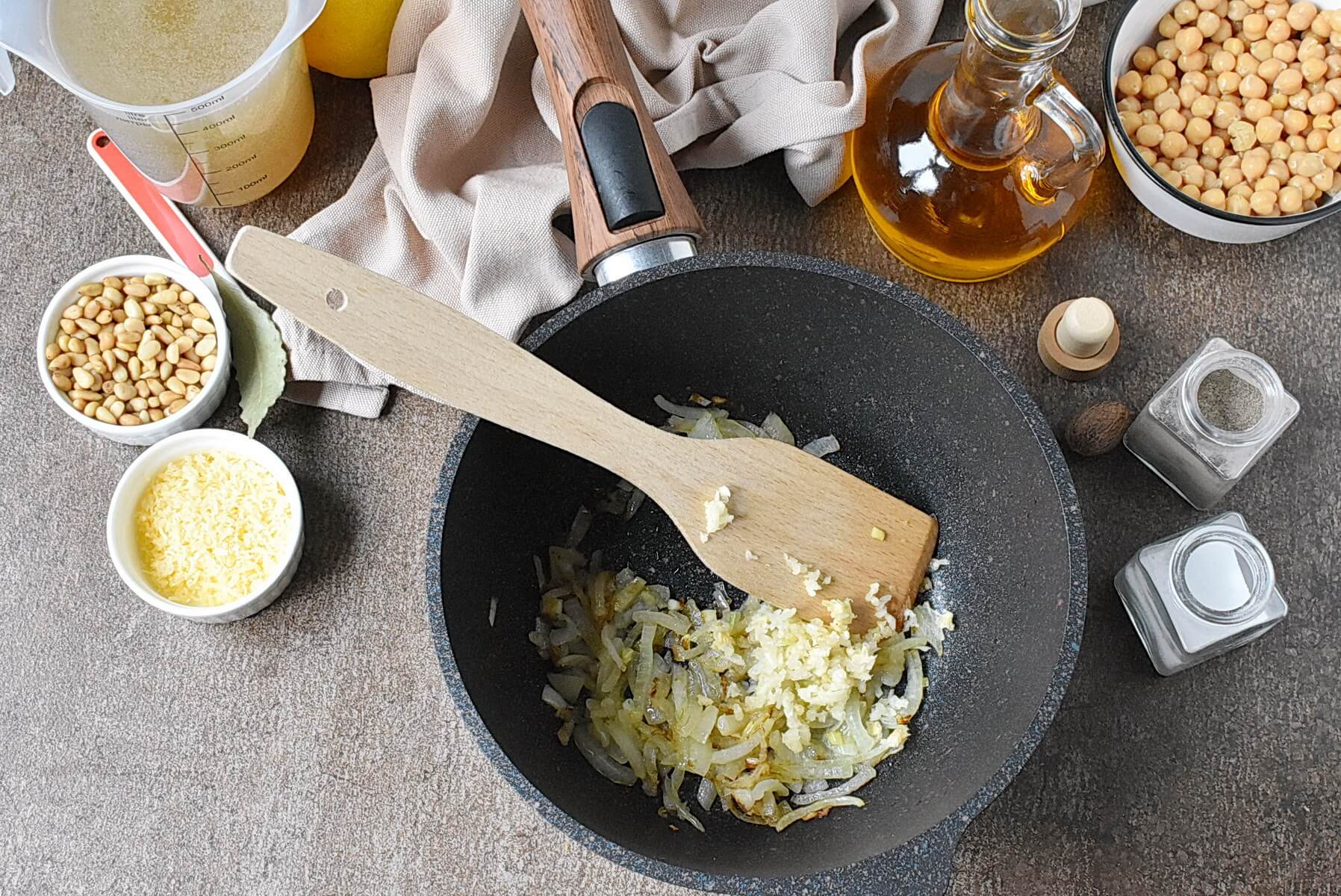
Add 2 crushed garlic cloves and cook for another minute.
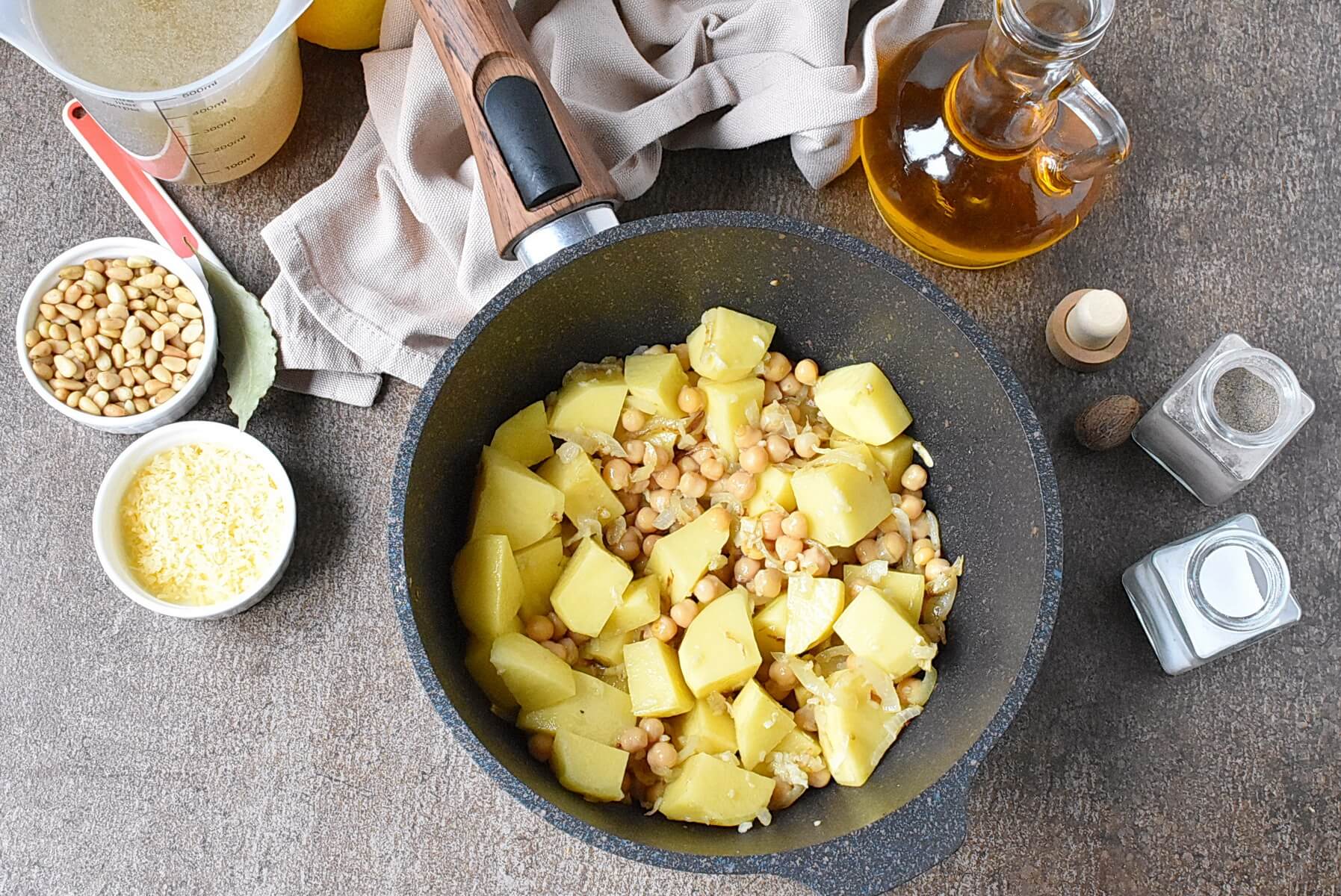
Add the chopped potatoes and rinsed and drained chickpeas (reserving 4 tablespoons for topping) and stir to mix. Cook for 1 minute.
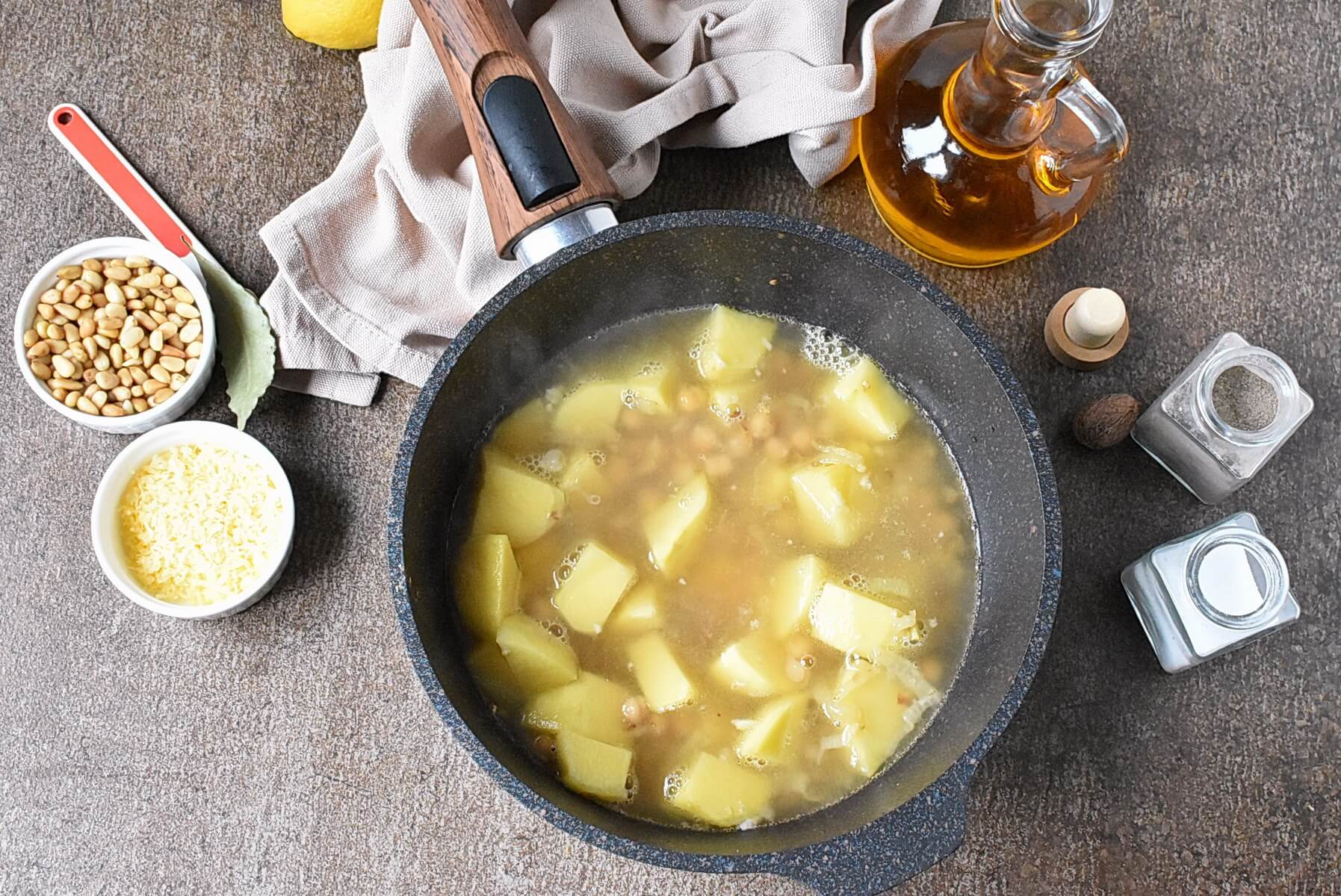
Add in 3 ¾ cups vegetable broth, 1 bay leaf, and a pinch of salt and black pepper. Reduce the heat to a simmer and cook, uncovered, for 20-25 minutes or until the potatoes are soft.
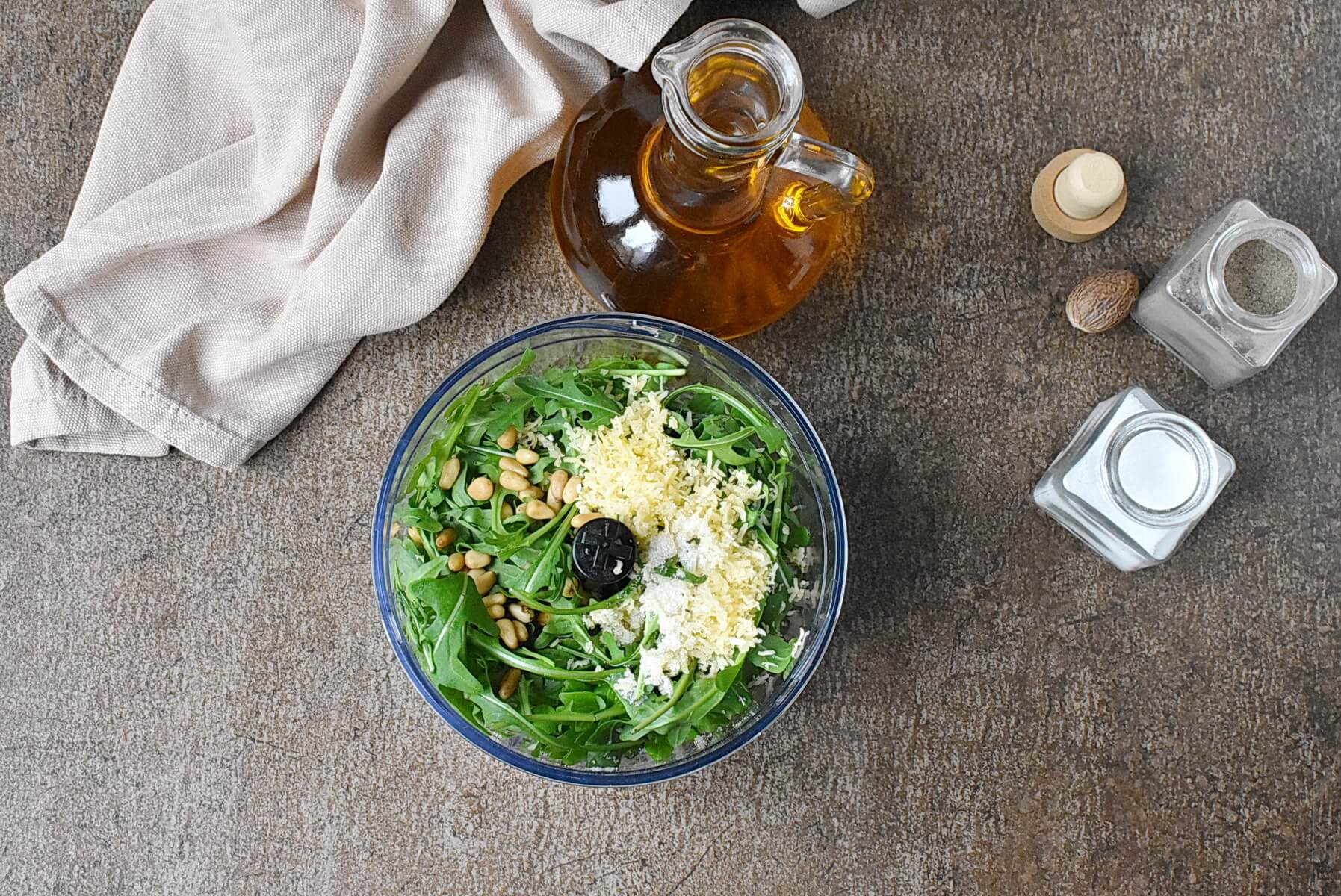
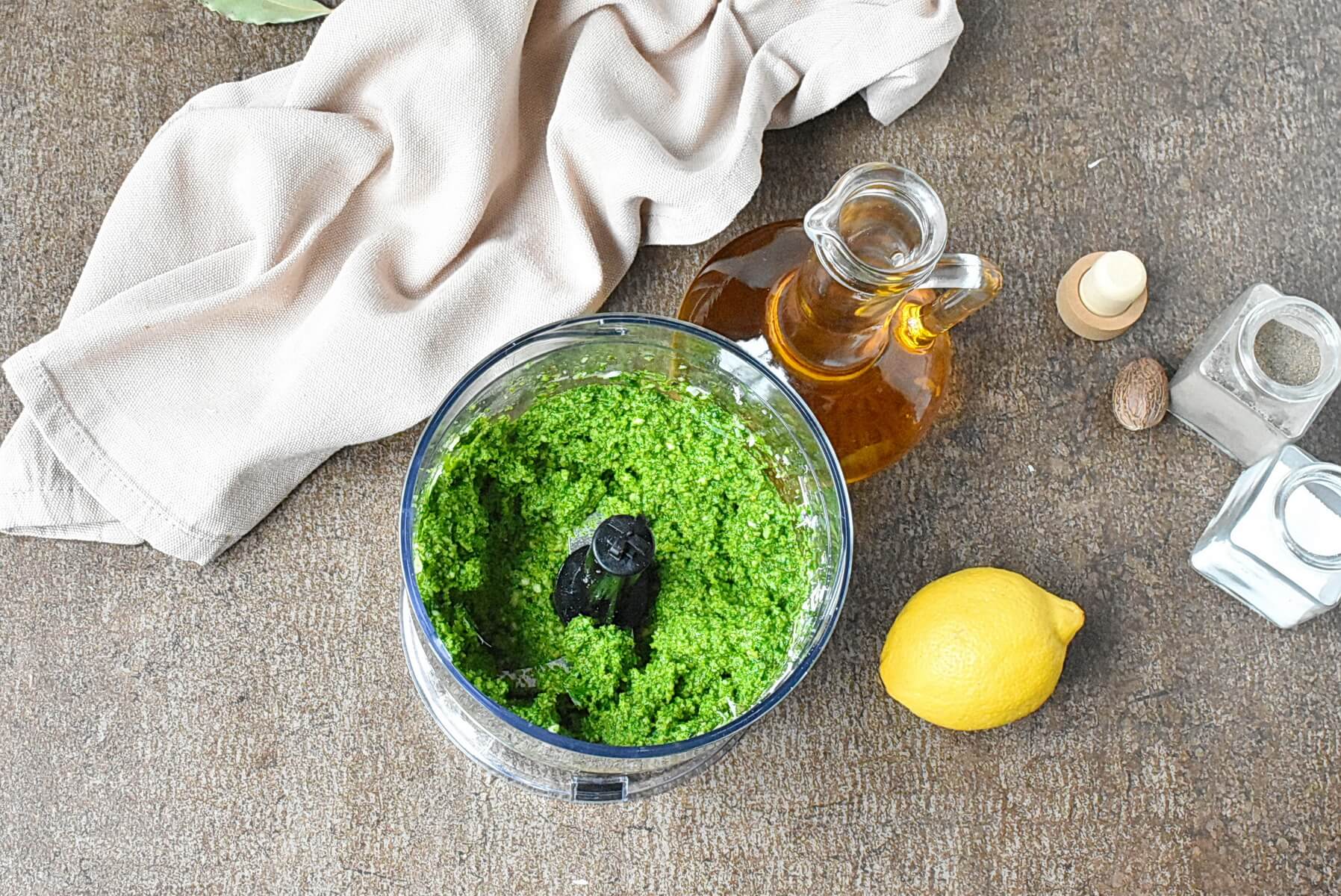
Meanwhile, in a blender or food processor, combine 2 ounces arugula, 1 ounce grated Parmesan, 1 ounce pine nuts, ⅓ cup olive oil, and ⅛ tsp salt. Pulse until smooth. Taste and adjust for seasoning if needed. Set aside.
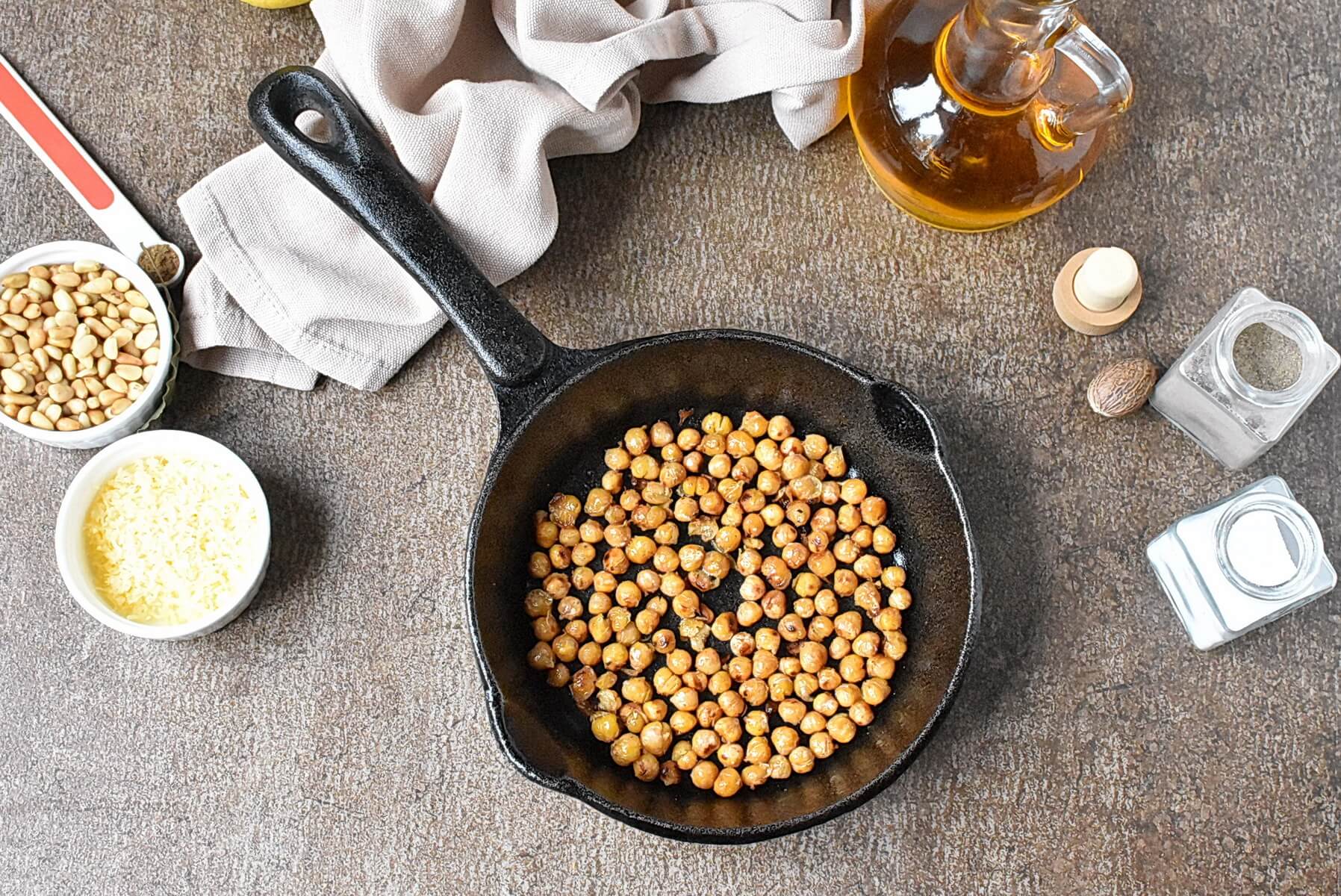
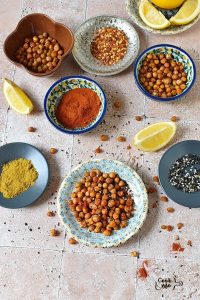
In a small, heavy-bottomed pan over high heat, heat a splash of olive oil. Add the reserved 4 tablespoons chickpeas and immediately close with a lid. Fry for 1 minute or until golden. Remove the pan from the heat.
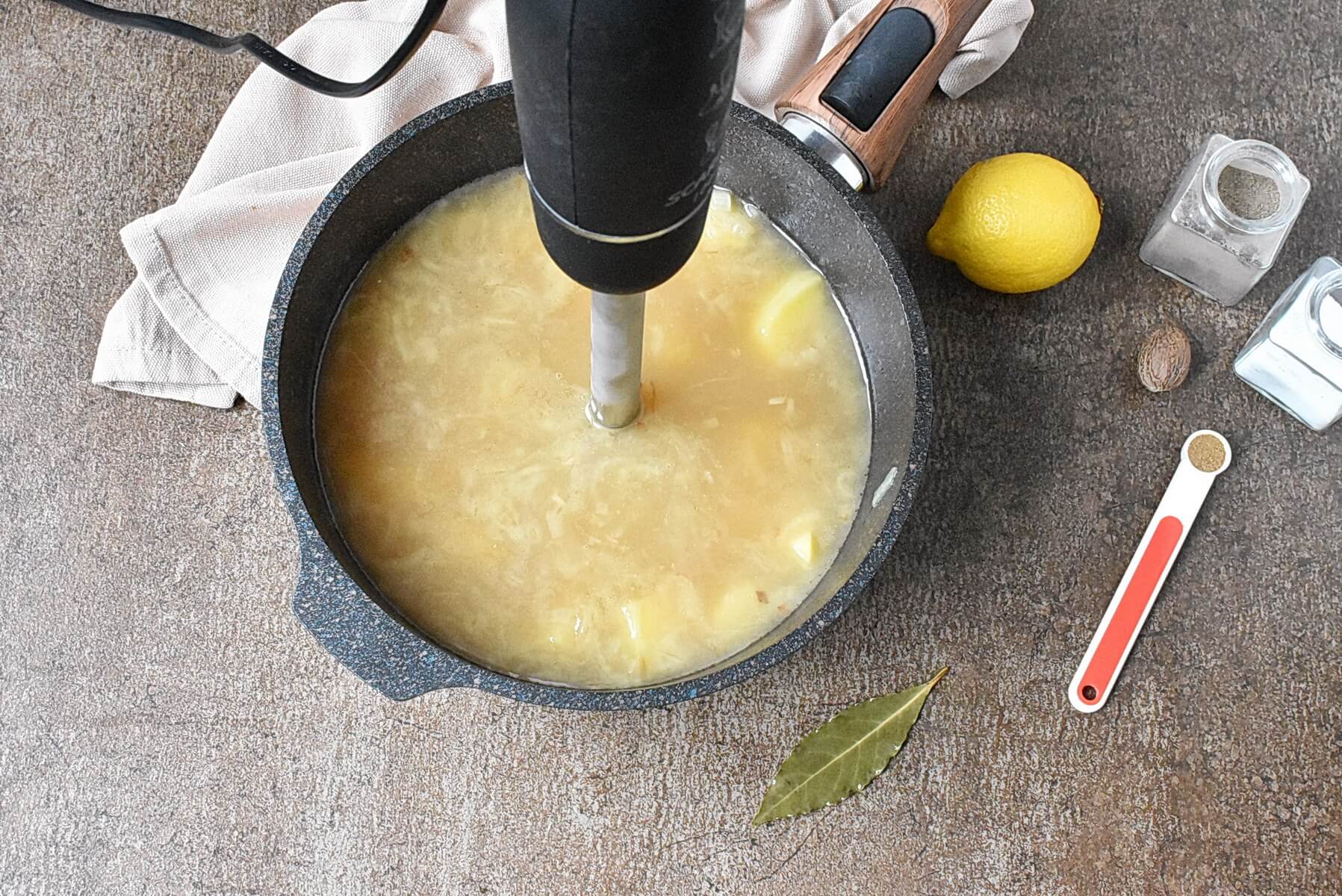
Once the potatoes are soft, discard the bay leaf and purée the soup in a blender, food processor, or with the help of an immersion blender until smooth.
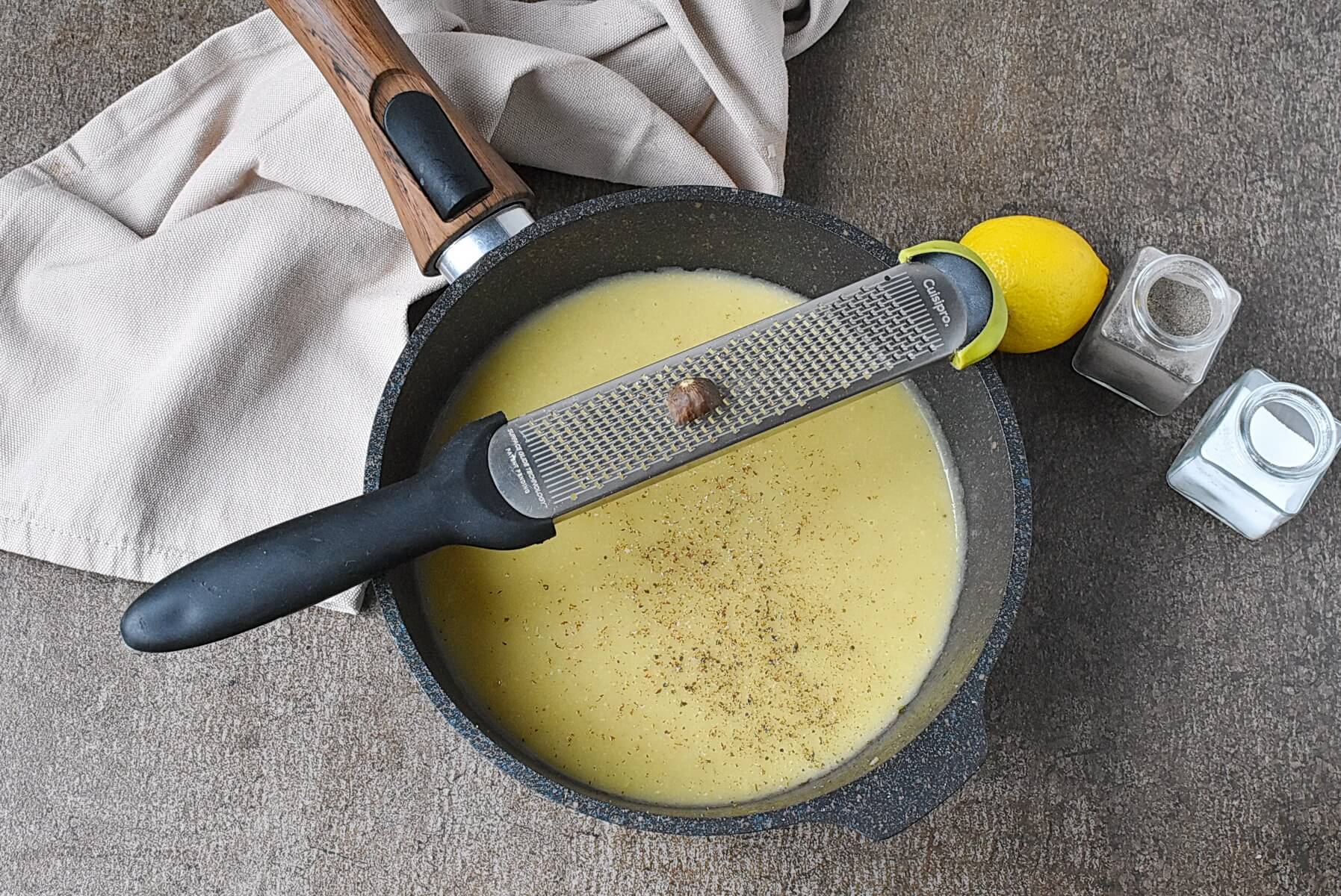
Season the soup with salt, black pepper, nutmeg and cumin to taste and bring to a boil. Simmer for 1 minute, stirring constantly.
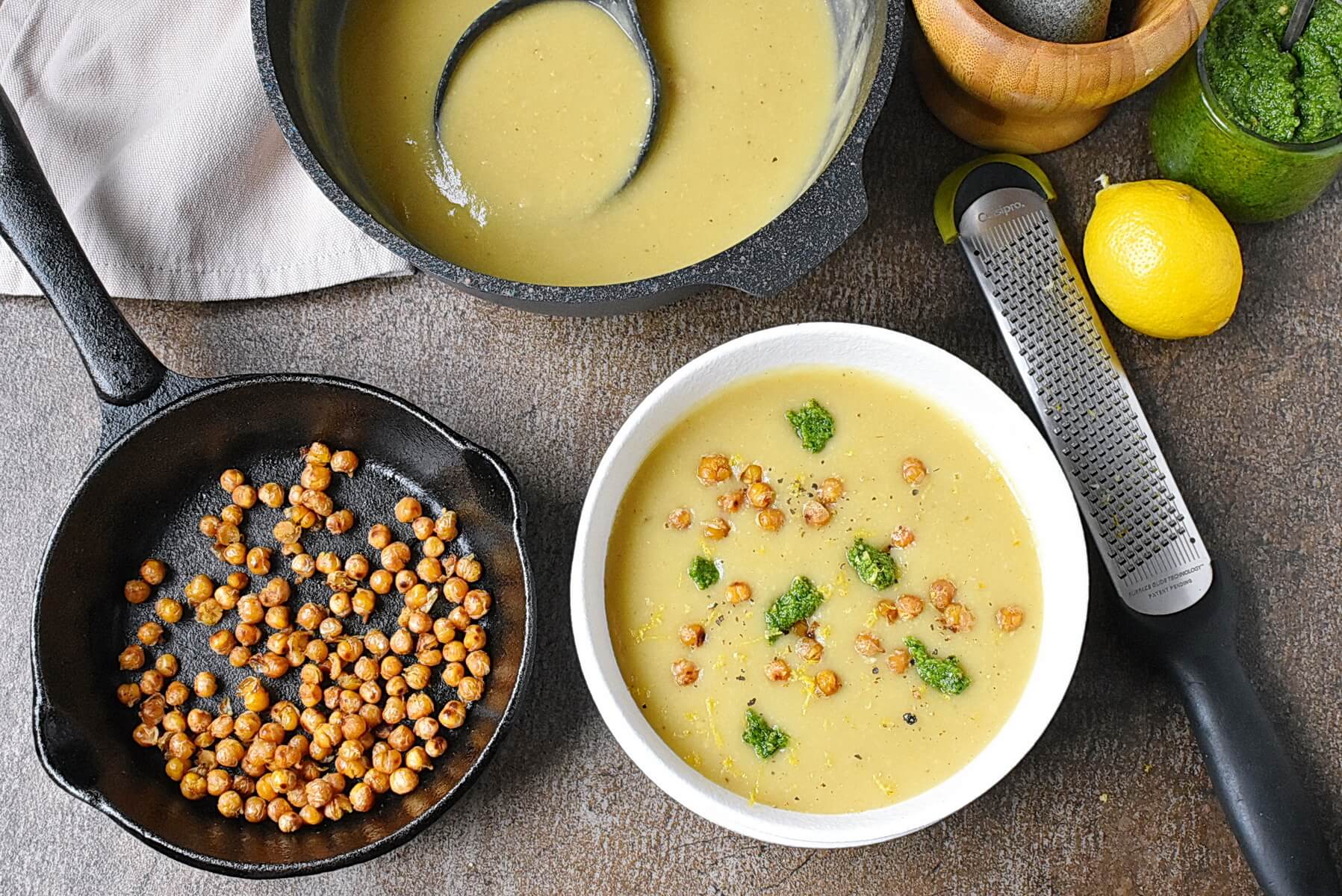
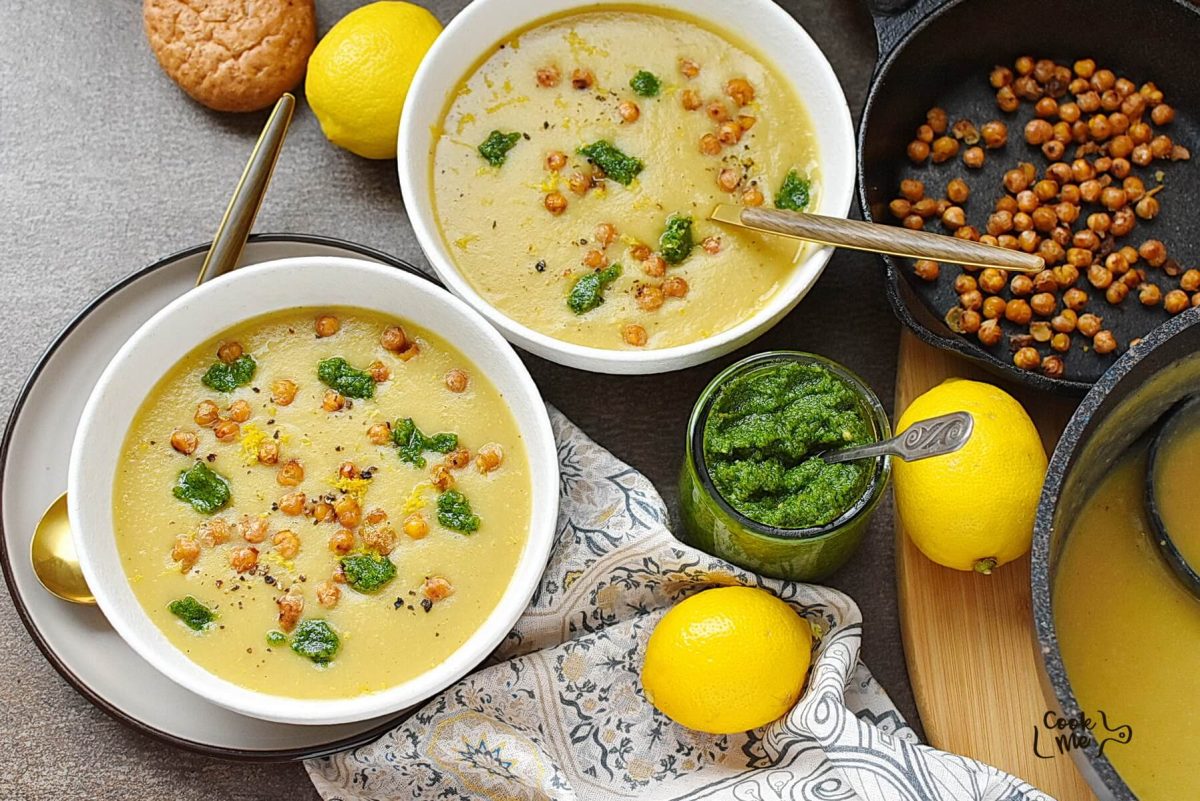
Ladle the soup into bowls, drizzle with a little lemon juice and olive oil, and sprinkle with arugula pesto, lemon zest, and crushed black pepper. Garnish with fried chickpeas and serve.
Start with a large pot or Dutch oven that holds heat steady. You want something that will not scorch when you simmer the potatoes. A sharp chef knife and a stable cutting board are worth the fuss. Chop the onion and cube the potatoes without thinking too much about perfect sizes.
An immersion blender is a big time saver. This is an immersion blender soup recipe. It purees right in the pot and keeps things tidy. No immersion blender? Use a regular blender but let the soup cool a bit and work in batches.
Also have a small heavy pan for crisping those reserved chickpeas, a wooden spoon, a ladle, a fine grater for the Parmesan and nutmeg, and a blender or food processor for the pesto. That is it. Nothing exotic. Just reliable tools that behave when the heat is on.
First tip: sweat the onions low and slow until they go golden. Do not rush this. That color is not decoration; it is flavor. Let them sit and soften until they smell a little sweet and rich. If you try to hurry them you will lose that depth.
Reserve a few chickpeas for garnish and fry them hot so they get a crisp skin. That contrast makes the whole bowl interesting. Think texture as much as taste. The Maillard reaction is your friend here. Let that brown crust form and the chickpeas will taste almost meaty in the best way.
Puree gently. For pureeing? Go easy. Use that immersion blender but just pulse it. You want to leave some texture. Why not blend it to death? Because all that potato starch goes rogue and turns the whole thing into wallpaper paste. Leave a little chunk and the mouthfeel stays alive.
If you are wondering how to make a creamy soup without dairy, this is the trick: use starch from potatoes and a drizzle of olive oil or a handful of nuts in the pesto. Nutmeg and a pinch of cumin at the end add warm notes that cut the starchy feel. Taste as you go. Salt is not an exact science. It probably will need more than you think.
Spice it up by adding chili flakes or smoked paprika when you sweat the onions. I call this the Spice Infused Vortex because it wakes the bowl without stealing its soul. It makes a good healthy winter soup when you want a bit more heat against the cold.
Want more green? Toss spinach or kale into the pesto or blend extra greens into the pot. I like the extra lift. It is a good way to sneak more vegetables in and keep the soup feeling fresh.
Try swapping pine nuts for walnuts or almonds in the pesto and use pecorino in place of Parmesan for a nuttier, richer edge. Different nuts change the oil and mouthfeel, and they can make the topping feel almost like a sauce you spoon at the table.
Serve in deep bowls with a spoonful of arugula pesto on top and a drizzle of olive oil. The pesto topping for soup is worth the tiny extra step. Add lemon juice and zest for brightness and a few fried chickpeas for crunch. Shaved Parmesan or a little yogurt are optional but welcome.
Pair with crusty bread to soak up the bowl or a simple green salad if you want contrast. For drinks, a crisp white wine or a casual beer works fine. This is comfort food recipe material, the sort of thing you want on cold evenings and when you need a meal that does not demand a lot of attention.
How do I make this without an immersion blender? Use a regular blender, work in batches, and let the soup cool a bit first. It takes longer but the result is the same.
What if I want it thinner? Add more broth before you puree. Potatoes release starch and that thickens things fast, so adjust by thinning and then adjusting seasoning.
Can I use fresh chickpeas instead of canned? Yes. It takes longer because you must soak and cook them until tender, but fresh chickpeas have a cleaner flavor. I keep some aside to fry for garnish. That answers what to do with chickpeas in a practical way.
Is this freezer friendly? Totally. Freeze without the pesto and the fried chickpeas. Add those fresh when you reheat for best texture and color.
How do I make it more filling for meat eaters? Stir in cooked sausage or bacon at the end if you want more heft. It works, and it keeps the spirit of the soup while answering carnivore cravings.
Simple and comforting, this Chickpea Potato Soup is a real treat for colder spring nights. It’s packed with flavor and texture and simple to make with a few pantry staples and fresh veggies. Made it? Tag @cookmerecipes using the hashtag #cookmerecipes and share on Instagram!

 Dairy-Free Recipes
 Gluten Free Recipes
 Low Cholesterol Recipes