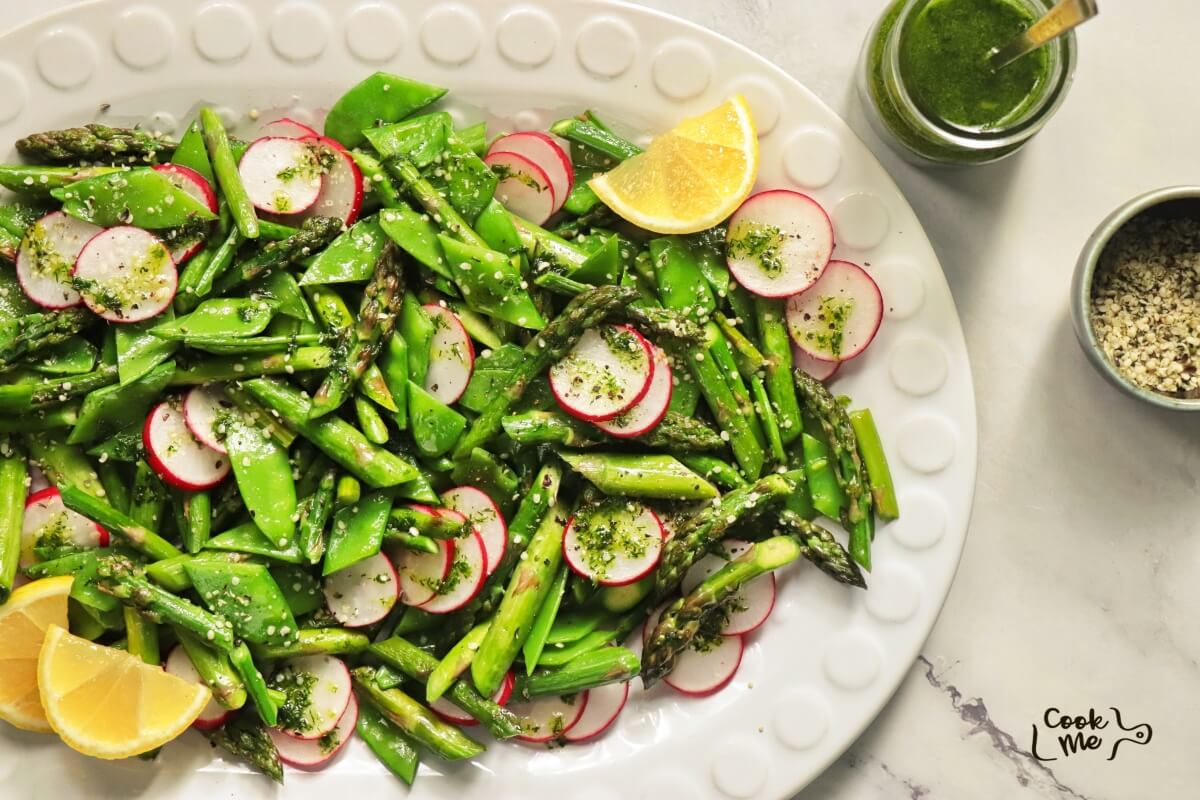
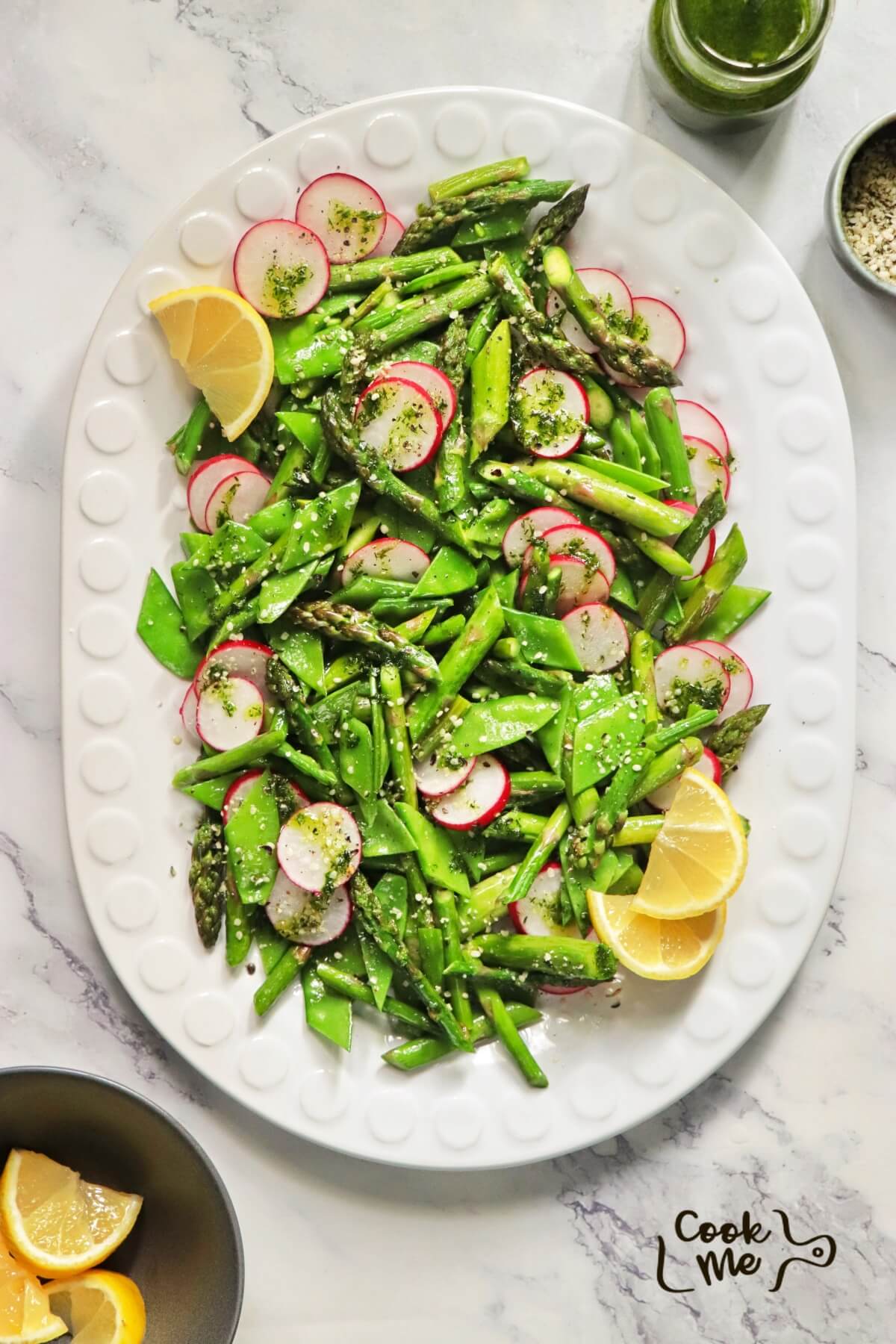
Sometimes the simplest things quietly reset your whole day. This easy asparagus and snow pea recipe does exactly that for me: bright, fast, and honestly a little persuasive about eating more plants. I first started making it in Berlin when the markets were stacked with asparagus and everything felt urgent in the best way. A quick saute, a drizzle of herb brightened oil, and dinner happens.
What I love is the texture play. The asparagus and snow peas keep a crispness that makes your teeth smile, while thin radish slices add a sharp little surprise. Hemp hearts bring a mild, grounding nuttiness that somehow makes the plate feel grown up. It is not showy. It is steady food that does its job and asks for seconds.
Cook kindly. That is my small rule. Use the freshest spring produce you can find, avoid waste, and keep the cooking short so the greens stay vivid. Actually, scratch that. Short and nimble is the rule, but if you linger at the pan a moment longer, the scent of lemon and dill becomes more convincing. And just like that, it feels like spring in a bowl.
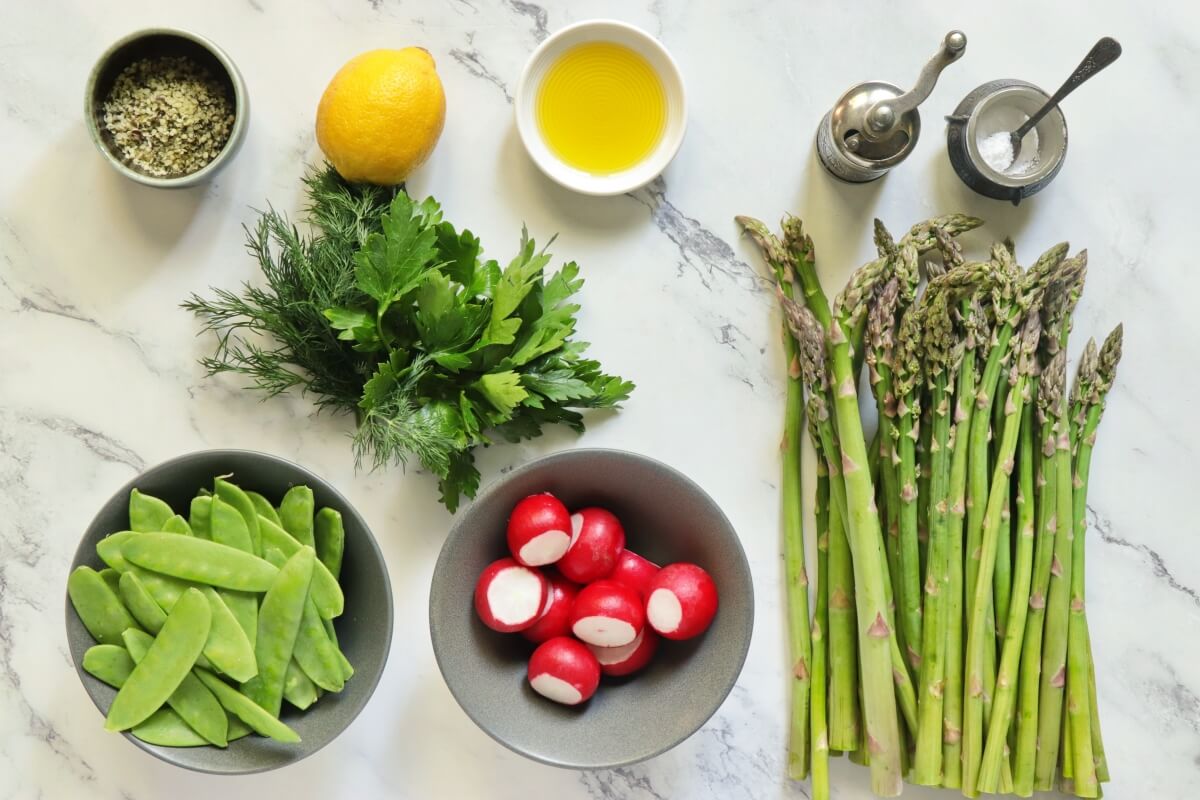

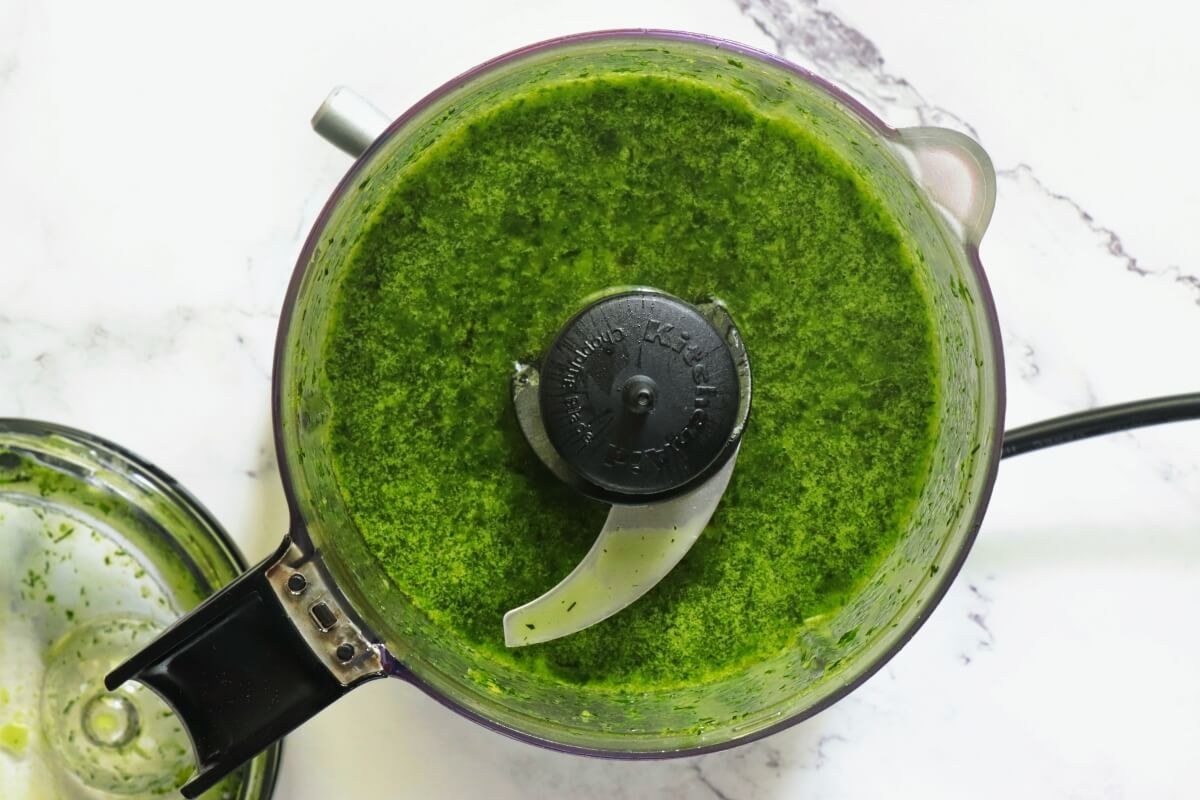
In a small food processor, place ¼ cup fresh dill, ¼ cup fresh parsley, ¼ cup extra-virgin oil oil, zest of ½ lemon, and ¼ teaspoon fine sea salt and pulse until well blended and smooth. Transfer to a jar and set aside.

In a large pan over medium heat, heat 1 tablespoon extra-virgin olive oil and add the chopped asparagus and snap peas. Sprinkle with ¼ teaspoon fine sea salt and cook, stirring frequently, until bright green and crisp-tender, about 2-3 minutes.
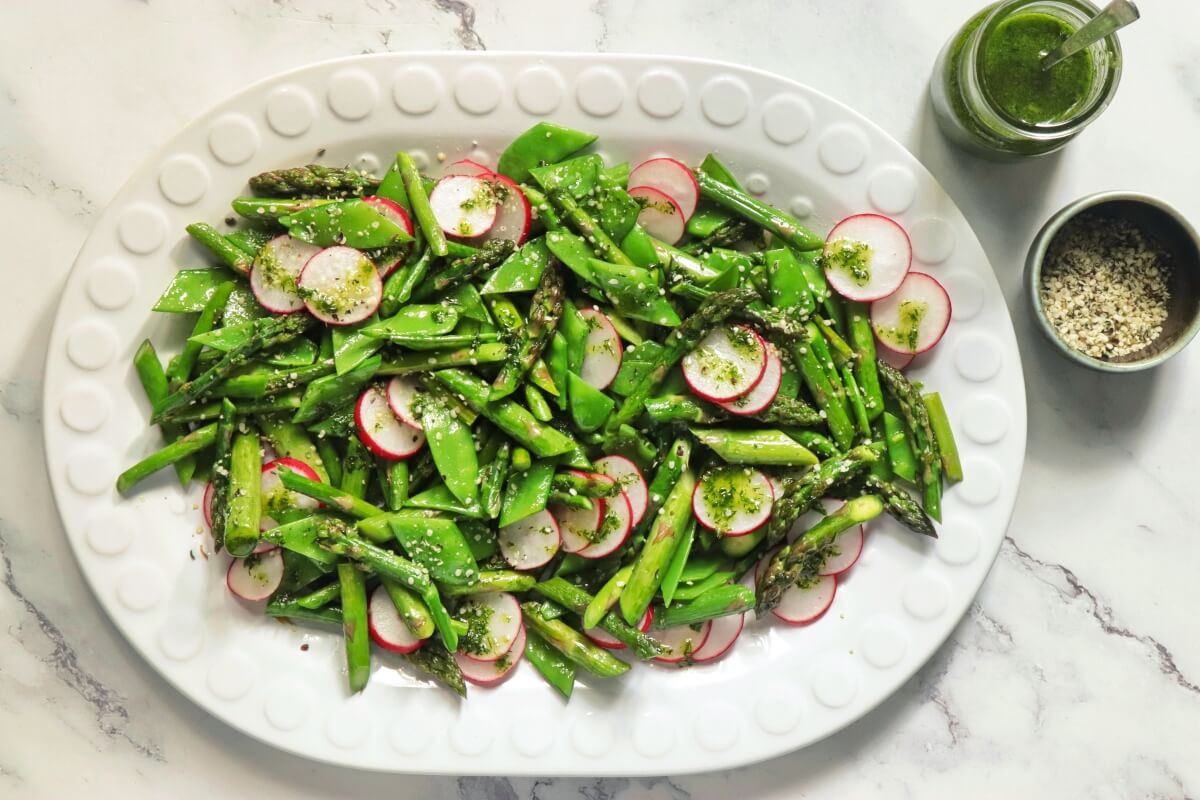
Toss the asparagus and snow peas with 4 ounces sliced radishes and 2 tablespoons of the prepared lemon dill oil. Sprinkle with 2 tablespoons hemp seeds

Serve with lemon wedges on the side. Enjoy!
You will need a small food processor or blender to make the lemon dill oil. If you do not have one, a sharp knife and a bowl will do; I explain below how to mix things by hand. For cooking, use a large pan over medium heat, one where vegetables can glide and dance without catching, or a well seasoned cast iron that gives even heat. A sharp knife for trimming and diagonal cuts, a zester for lemon, and tongs for tossing will make the whole thing easier. I keep a small jar ready for the oil because I save jars like people save postcards.
When you blend the lemon dill oil, pulse the herbs until they are bright and just smoothed. Over blend and the oil loses some of that fresh pop. A little texture in the oil releases in the mouth as you eat. Cut asparagus and snow peas on the diagonal so they cook evenly and pick up more oil. Sprinkle the sea salt while they are cooking rather than after; it helps the vegetables keep color and draws out just enough moisture to concentrate sweetness. It reminds me of something Dr. Ramsey said in lectures about how physics explains cooking better than recipes. It is just science, really. Salt coaxes the water out and the flavors tighten up.
Toast hemp hearts in a dry pan for a minute or two so their mild nutty aroma opens up before you scatter them over the finished dish. For the radishes, slice them very thin and add them raw at the end for a peppery snap that cuts the lemony oil. If your lemon dill oil separates, give the jar a shake before drizzling so every bite gets that citrus herb hit. If you need to know how to make lemon dill oil without a processor, finely chop the dill and parsley, stir them with oil, lemon zest and salt, and let it sit for ten minutes so the flavors marry.
Zesty twist with orange: Replace half the lemon zest with orange for a sweeter lift. Add thinly sliced fennel for a soft anise note and you have a pleasant spring greens recipe that feels almost festive for picnics.
Nutty boost: Stir in toasted almonds or walnuts along with the hemp hearts to make the plate more filling. Swap snow peas for snap peas if you like a slightly sweeter snap. This makes it more of a vegetarian side dish that can stand in as a light meal.
Mediterranean herb swap: Use basil and mint in place of dill and parsley, keep the lemon, and add halved cherry tomatoes at the end. It becomes an easy summer pairing for pasta or grilled veggies.
This is a quick and healthy side dish next to grilled tofu, roasted potatoes, or a simple quinoa bowl. Serve warm with lemon wedges so people can add more tang at the table. For a casual lunch, pile it over mixed greens and add marinated tofu for creaminess. Use it as a topping for avocado toast or fold into wraps with hummus for portable meals.
Use a sharp knife to finely chop 1 scant quarter cup dill and the same of parsley, then stir them into a quarter cup extra virgin olive oil with the zest of half a lemon and a pinch of salt. Let it rest for ten minutes so the oil takes on the herbs. Stir before using and you have the same brightness without gadgets.
If radishes bite too hard, soak the slices in ice water for fifteen minutes. That softens the heat but keeps the crunch. It is a small trick I learned working on urban farms with kids who did not like sharp things, and it saved many lunches.
Make the lemon dill oil up to three days ahead and keep it chilled. The flavor settles and gets deeper. Cook the veggies just before serving for the best color and bite, but if you must store them, keep oil and greens separate and rewarm gently with a splash of water to revive crispness. Leftovers are decent the next day but, honestly, this is happiest fresh.
Yes. Start with two tablespoons and toast them lightly to release flavor. They add protein and a quiet nutty layer that does not take over the dish.
Add cooked chickpeas or lentils to the pan at the end to warm through. Serve with rice or crusty spelt bread and you have a balanced plate that is still quick to pull together. That is what I do when I am feeding myself after a long day of classes or volunteering.
Need an easy and quick side dish? Make this recipe for Sautéed Asparagus and Snow Peas! Every bite of this dish is layered with crisp-tender veggies and delicious spring flavors. If you make this recipe, please let us know! Leave a comment below, and be sure to rate the recipe too!

Gourgeous recipe! Thanks for sharing!
 Dairy-Free Recipes
 Gluten Free Recipes
 Low Cholesterol Recipes
 Vegan Recipes
 Vegetarian Recipes